

You’ve seen the videos. A woman in her kitchen holds up a bowl of rice and whispers about a “weird rice hack” that melted 40 pounds off her belly in three weeks. No exercise. No calorie counting. Just rice, apparently blessed by the weight loss gods.
I’ve spent years reading nutrition research and watching diet trends explode and die, and the rice hack is one of the most misunderstood ideas floating around right now. Here’s the twist though: there IS real science buried under the nonsense. Most people just grab the wrong half of it.
So let’s sort out what’s garbage, what’s legit, and what you can do tonight with the rice already sitting in your cupboard.
What the “rice hack diet” is supposed to be
Ask ten people and you’ll get ten answers. That’s problem number one.
The phrase “rice hack” has been hijacked by at least three completely different things, and the marketing industry loves that confusion. Confusion sells supplements. Here’s the breakdown:
- The supplement scam version. Sketchy ads promise a “5-second rice hack” that turns out to be a funnel for a $69 bottle of powdered nothing.
- The rice diet version. A real medical program from Duke University dating back to 1939. Documented, published, and far stricter than TikTok admits.
- The resistant starch version. You cook rice, cool it, and change its starch structure. This one has genuine peer-reviewed research behind it.
Guess which one gets the most views? Yep, the scam. Guess which one works? Keep reading.
The version everyone gets wrong (and why it’s costing you money)
Let’s kill the vampire first. Those ads with the shaky phone footage and the “doctors HATE this” energy are selling you an affiliate product.
The typical pitch goes like this: a mysterious rice-based “hack” flips some dormant metabolic switch. Then, right as you lean in, the video pivots to a supplement full of ingredients you’ve never heard of at doses nobody measured.
The U.S. Federal Trade Commission has warned about exactly this pattern again and again: miracle weight loss claims with no clinical backing. The FTC’s guidance on supplement advertising is blunt. If a product promises substantial weight loss without any change to diet or exercise, that’s false advertising. Full stop.
Red flags to watch for
- “Ancient secret” framing with zero cited studies
- Countdown timers and “only 7 bottles left” urgency
- Before and after photos with suspiciously different lighting
- A “doctor” whose credentials vanish when you search their name
- No ingredient dosages listed anywhere on the page
IMO, if the pitch spends more time on drama than on data, close the tab. Your wallet will thank you.

The original rice diet: real medicine, brutal execution
Now for the part almost nobody mentions. The Rice Diet was a legitimate clinical program built by Dr. Walter Kempner at Duke University in 1939. He designed it to treat malignant hypertension and kidney disease, back when those diagnoses were basically death sentences.
Did it work? Shockingly well. Patients dropped their blood pressure, reversed kidney damage, and lost serious weight. Kempner published results on thousands of cases.
So why isn’t everyone doing it? Because the original protocol was miserable.
What Kempner’s patients ate
- White rice, fruit, fruit juice, and sugar. That’s basically it.
- Roughly 2,000 calories, almost entirely carbohydrate
- Under 5 grams of fat per day
- Under 20 grams of protein per day
- Around 150mg of sodium daily (most people eat 3,400mg)
- No meat, no dairy, no salt, no oil, for months at a time
Read that list again. Could you eat plain white rice and bananas for four months straight? Under medical supervision, with blood work every week?
Yeah, me neither. I tried a watered-down version for nine days back in 2019 out of curiosity and I started fantasising about cheese in a way that felt genuinely unhealthy. Day six, I dreamt about a burger. An actual dream. My subconscious was staging an intervention.
The lesson here matters: the rice diet worked because of extreme sodium and calorie restriction, not because rice has magic properties. Anyone selling you rice as a metabolic miracle has skipped the entire point.
The rice hack with real science behind it: resistant starch
Here’s where things get interesting. And this is the part most people fumble.
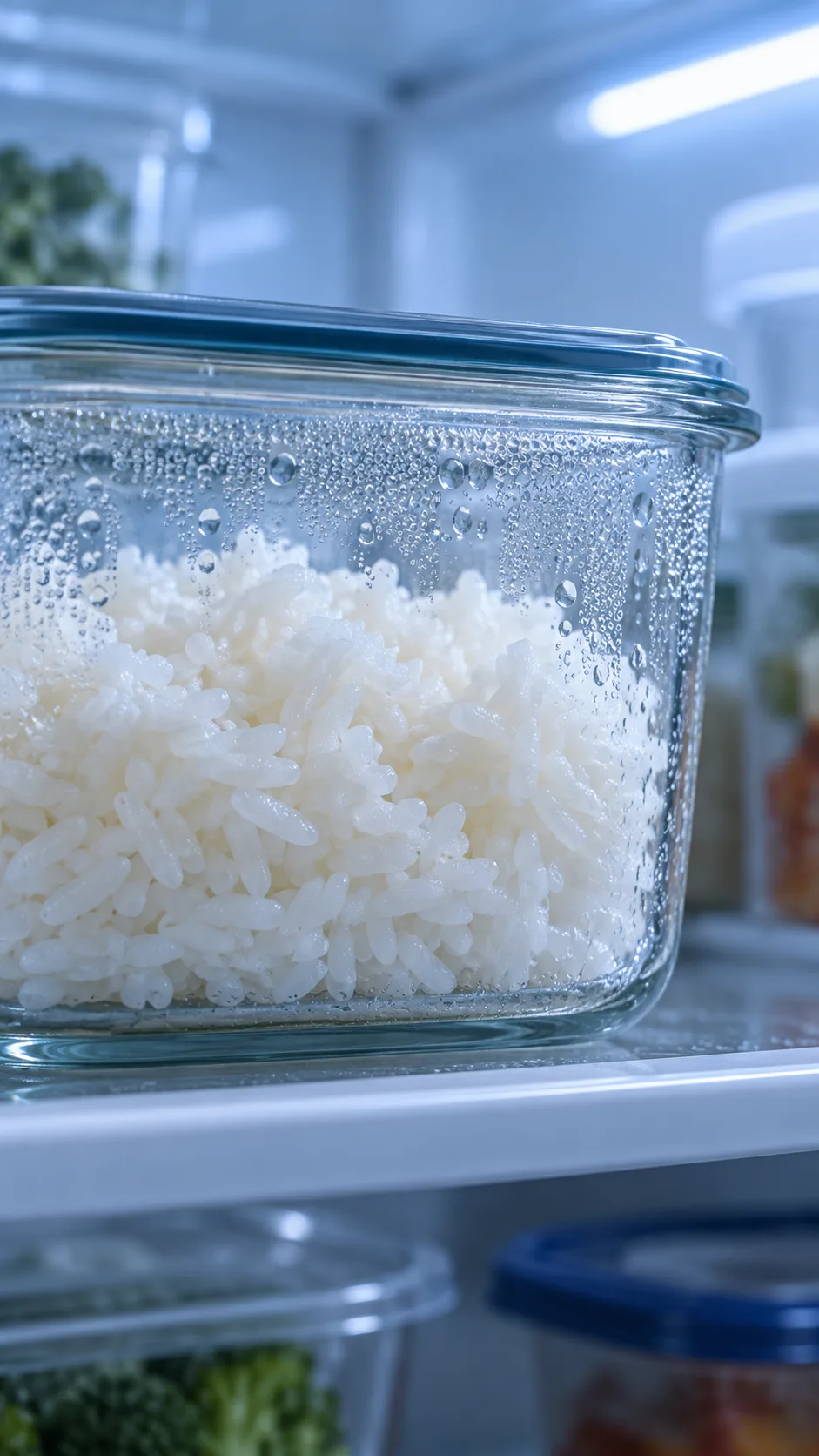
When you cook rice and then cool it in the fridge, the starch molecules reorganise themselves through a process called retrogradation. Some of the digestible starch converts into resistant starch, a type your small intestine can’t break down.
What happens instead? It travels to your colon and feeds your gut bacteria. Your body absorbs fewer calories from the same bowl of rice, and your gut microbes produce short-chain fatty acids like butyrate along the way.
The numbers you should know
A widely cited 2015 study presented at the American Chemical Society found that cooking rice with a small amount of coconut oil and refrigerating it for 12 hours increased resistant starch by up to 10 times and cut calories by roughly 50% under the best lab conditions.
Now let’s be honest about that number. That was a lab, with one specific rice variety. Real-world results land closer to a 10 to 15% calorie reduction, which is still nothing to sneeze at.
Research published in the Asia Pacific Journal of Clinical Nutrition confirmed that cooling cooked rice meaningfully lowers its glycemic response compared with freshly cooked rice. A lower glycemic response means a gentler blood sugar spike, which means less of that 3pm energy crash.
What resistant starch does for you
- Feeds beneficial gut bacteria. It works as a prebiotic fibre.
- Improves insulin sensitivity. Several studies show measurable improvement at 15 to 30g daily.
- Increases satiety. You feel full longer, so you snack less.
- Reduces the blood sugar spike from the same portion of rice.
- Produces butyrate, a short-chain fatty acid linked to colon health.
Ever wondered why day-old fried rice somehow feels less heavy than a fresh bowl? Now you know. Your grandmother was running a metabolic experiment and didn’t even charge you for it.
How to do the rice hack, step by step
Forget the supplements. Here’s the real protocol, and it costs you nothing extra.
- Cook your rice normally. White, brown, basmati, jasmine: they all work. Basmati starts with a lower glycemic index, so it’s my personal pick.
- Optional: add 1 teaspoon of coconut oil per cup of uncooked rice while it boils. That’s the step from the ACS research.
- Cool it to room temperature, then refrigerate for at least 12 hours. Overnight is easiest.
- Reheat and eat. This is the bit most people miss: reheating does NOT destroy the resistant starch. The retrograded structure survives moderate reheating.
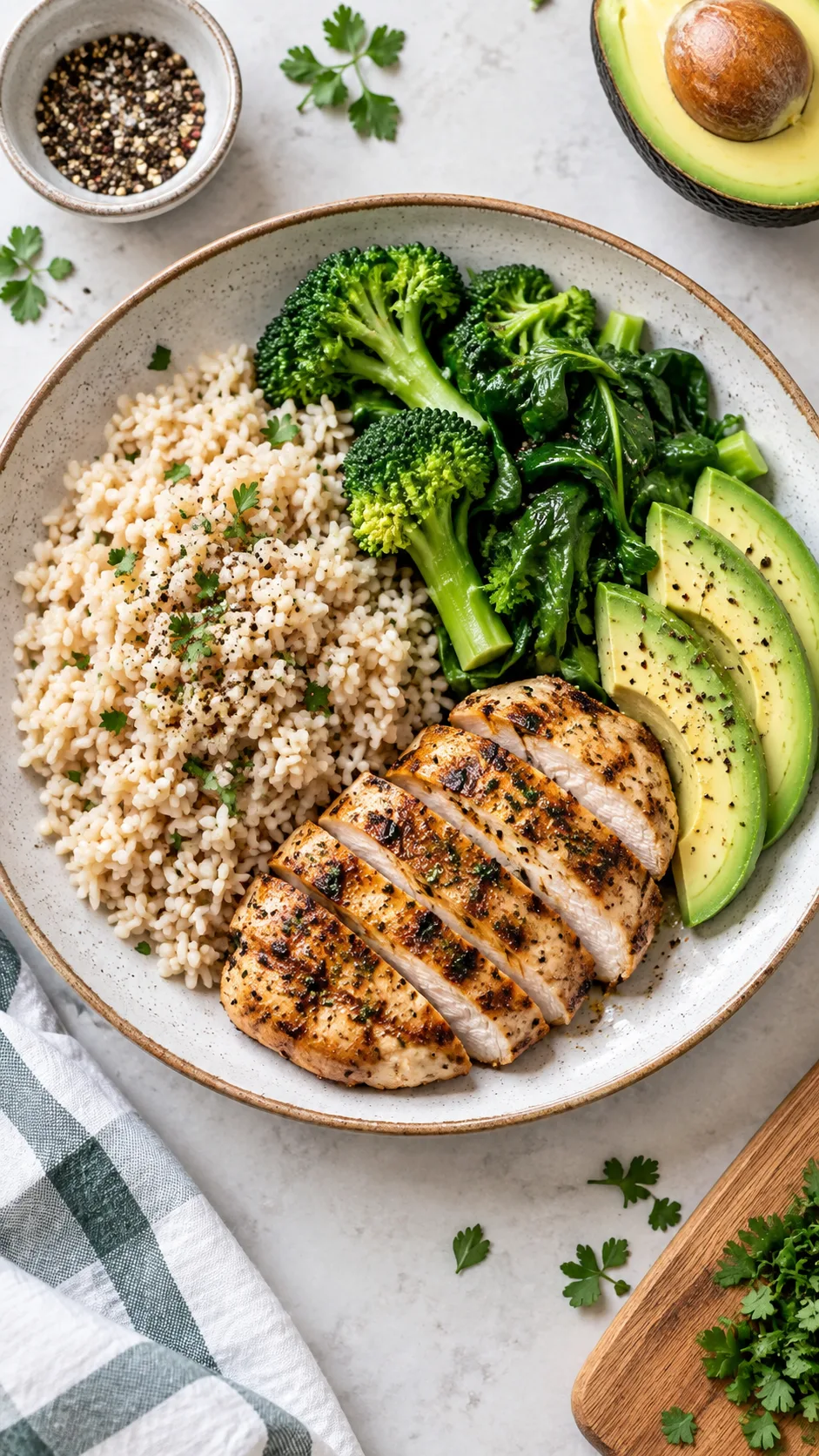
- Pair it with protein and fat. Rice alone spikes blood sugar. Rice with chicken, fish, eggs, or beans behaves completely differently.
Important food safety note: cooked rice can grow Bacillus cereus if you leave it sitting at room temperature. The NHS food safety guidance says cool rice within one hour, refrigerate it, and eat it within 24 hours. Don’t get cute with this one. Food poisoning is not a weight loss strategy.
The mistakes that kill your results
I’ve watched people try this and get nowhere. Every single time, it comes down to one of these.
Mistake 1: treating rice as a free food
Cooling rice cuts calories by maybe 10 to 15%. It doesn’t turn rice into lettuce. If you eat a mountain of cooled rice, you’re still eating a mountain of carbs. Portion control still applies.
Mistake 2: skipping the protein
Rice by itself leaves you hungry in 90 minutes. Add 25 to 30g of protein and the whole meal changes: slower digestion, steadier energy, real fullness. That’s why a solid weight loss meal plan always balances the plate instead of obsessing over one ingredient.
Mistake 3: expecting rice to fix a broken diet
If you’re drinking 600 calories of sugary drinks every day, cooling your rice won’t save you. The hack is a small tweak on top of solid fundamentals, not a substitute for them.
Mistake 4: not cooling it long enough
Twenty minutes in the fridge does nothing. You need 12 hours or more for meaningful retrogradation. Some research suggests repeated cooling and reheating cycles push resistant starch even higher.
Mistake 5: buying the supplement
Obvious, I know. But it needs saying twice, because the ads are relentless.
Rice hack vs other popular approaches
How does this stack up against everything else out there? It’s a supporting actor, not the lead.
- vs intermittent fasting. Fasting controls WHEN you eat and usually cuts total intake harder. Plenty of people combine both. If you’re curious, the intermittent fasting schedule breakdown explains how to structure it without white-knuckling through your morning.
- vs low-carb. Low-carb removes rice entirely. The rice hack keeps it. Pick based on whether you enjoy food, IMO.
- vs GLP-1 medication. Different universe entirely. Medication works on appetite signalling and produces far bigger results.
- vs whole food swaps. Swapping refined carbs for vegetables and legumes beats any cooling trick. Boring, but true.
For readers eating West African staples, this matters a lot. Rice sits at the centre of jollof, fried rice, and coconut rice. You don’t need to abandon the culture. You just need smarter execution. The guide to Nigerian foods for weight loss covers how to keep traditional meals while trimming the calorie load.
Other foods that build resistant starch
Rice gets the headlines, but it isn’t alone. The same cook-and-cool principle works across a whole range of starchy foods.
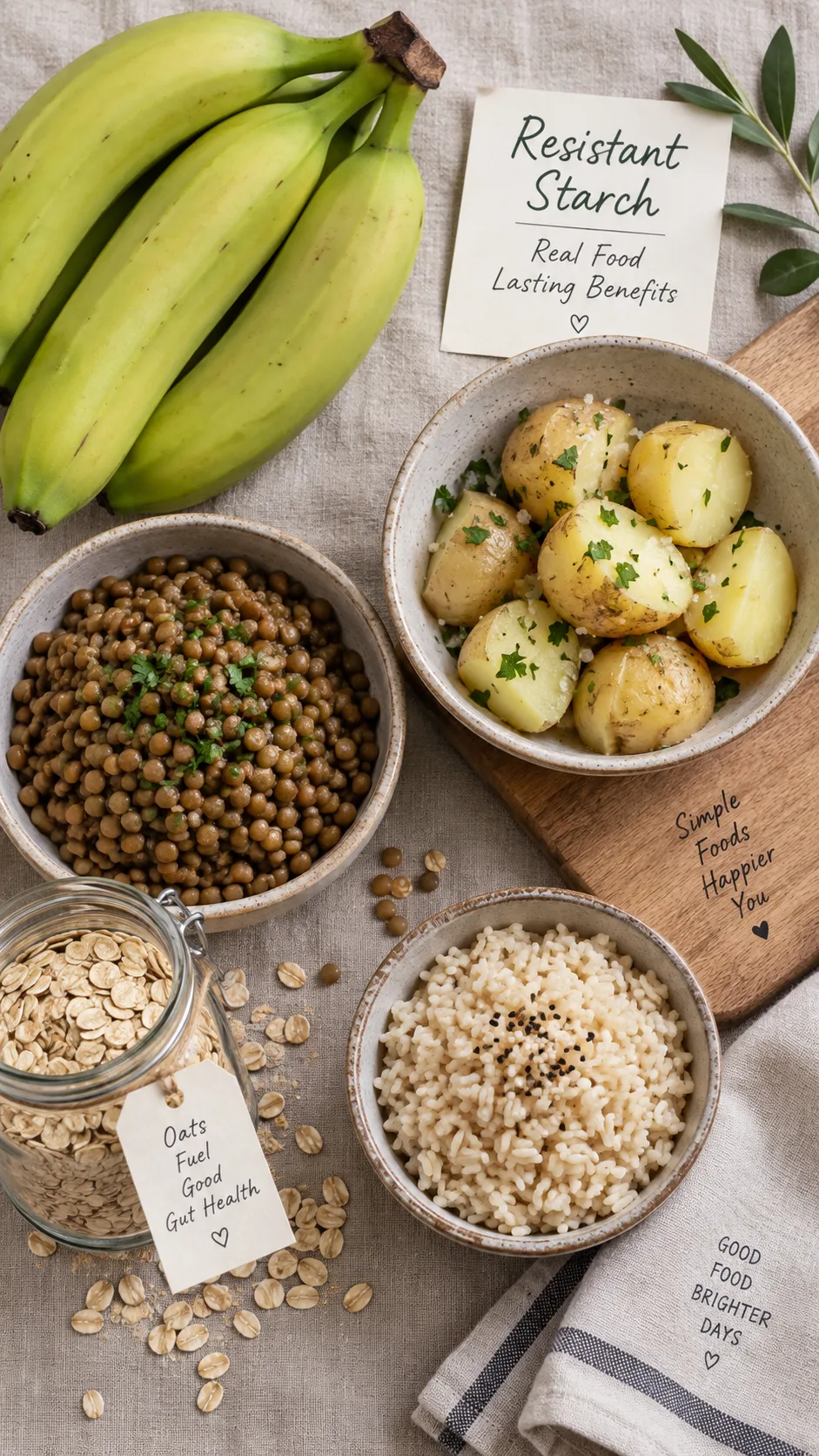
- Potatoes. Cooked and cooled potatoes develop substantial resistant starch. Potato salad, suddenly redeemed.
- Green bananas and plantains. Naturally high in resistant starch before they ripen.
- Pasta. Cook, cool, reheat. Same mechanism, same benefit.
- Legumes. Beans and lentils contain resistant starch even without the cooling step.
- Oats. Overnight oats are convenient, and cooling bumps up their resistant starch too.
- Cooked and cooled sweet potatoes. Bonus fibre and micronutrients.
Most adults eat around 5 grams of resistant starch daily. Research suggests the benefits kick in around 15 to 20 grams. That’s a real gap, and a few simple swaps will close it.
What the evidence supports
Let me be straight with you, because trust matters more than hype.
Strong evidence: cooling cooked rice increases resistant starch and lowers glycemic response. Researchers have replicated this many times over.
Moderate evidence: a higher resistant starch intake improves insulin sensitivity and supports gut health. A meta-analysis in the European Journal of Clinical Nutrition found measurable metabolic improvements with resistant starch supplementation.
Weak evidence: that the rice hack on its own drives meaningful weight loss. It helps at the margins. It’s not the main event.
Zero evidence: any “5-second rice hack” supplement. Not one of them has published a controlled trial. Not one.
If you want to layer something on top that data supports, look at the evidence-based side of weight loss supplements instead of whatever an autoplay ad shoved at you.
My honest take after testing this
I’ve run the cooled-rice routine for about eight months now, mostly because I batch-cook on Sundays anyway. Did I lose weight from it specifically? Probably not much. But something else happened.
My post-lunch energy crashes basically disappeared. That 2:30pm fog where I’d stare at my screen and consider a nap under the desk? Gone. That alone made it worth keeping.
The other unexpected win: meal prep became automatic. Because the rice HAS to be cooked in advance, I stopped making chaotic 7pm decisions about dinner. The habit did more for my diet than the starch chemistry did.
Funny how that works, right? The “hack” wasn’t the hack. The structure was.
The bottom line
Everything worth remembering, in one place:
- The viral “rice hack” supplements are scams. Ignore them completely.
- The original Duke Rice Diet was real medicine, but it was extreme, medically supervised, and nothing like the TikTok version.
- Cooking and cooling rice genuinely increases resistant starch and lowers glycemic impact. Real science, free to do.
- Expect 10 to 15% fewer absorbed calories, not 50%. Manage your expectations.
- Cool for 12 hours or more, reheat freely, refrigerate within one hour for safety.
- Pair rice with protein and vegetables. This matters more than the cooling trick.
The real secret? There isn’t one. There’s a small, free, slightly nerdy kitchen adjustment that makes an already-good diet marginally better.
Cook your rice tonight. Stick it in the fridge. Eat it tomorrow with some grilled chicken and greens. That’s the whole hack, and nobody needs your credit card.
And the next time someone whispers about a miracle rice secret in a 90-second video? You already know more than they do.