

You cut your calories to near zero, ground through forty-five minutes on the stairmaster every morning, and watched your glutes disappear. Most mainstream diet advice produces that exact result because standard fat loss routines strip away muscle right alongside body fat.
Starvation will never build an hourglass frame. To build a small waist alongside shapely hips, quads, and glutes, you must feed your body specific nutrients at the right times. Muscle requires fuel.
I learned this lesson after surviving on iced coffee and side salads for six months, only to realize I had shrunk into a flat rectangle. Once I changed my kitchen habits and fueled my training, my physique shifted dramatically. This guide outlines the exact meal plan you need to build curves without suffering through constant hunger pangs.
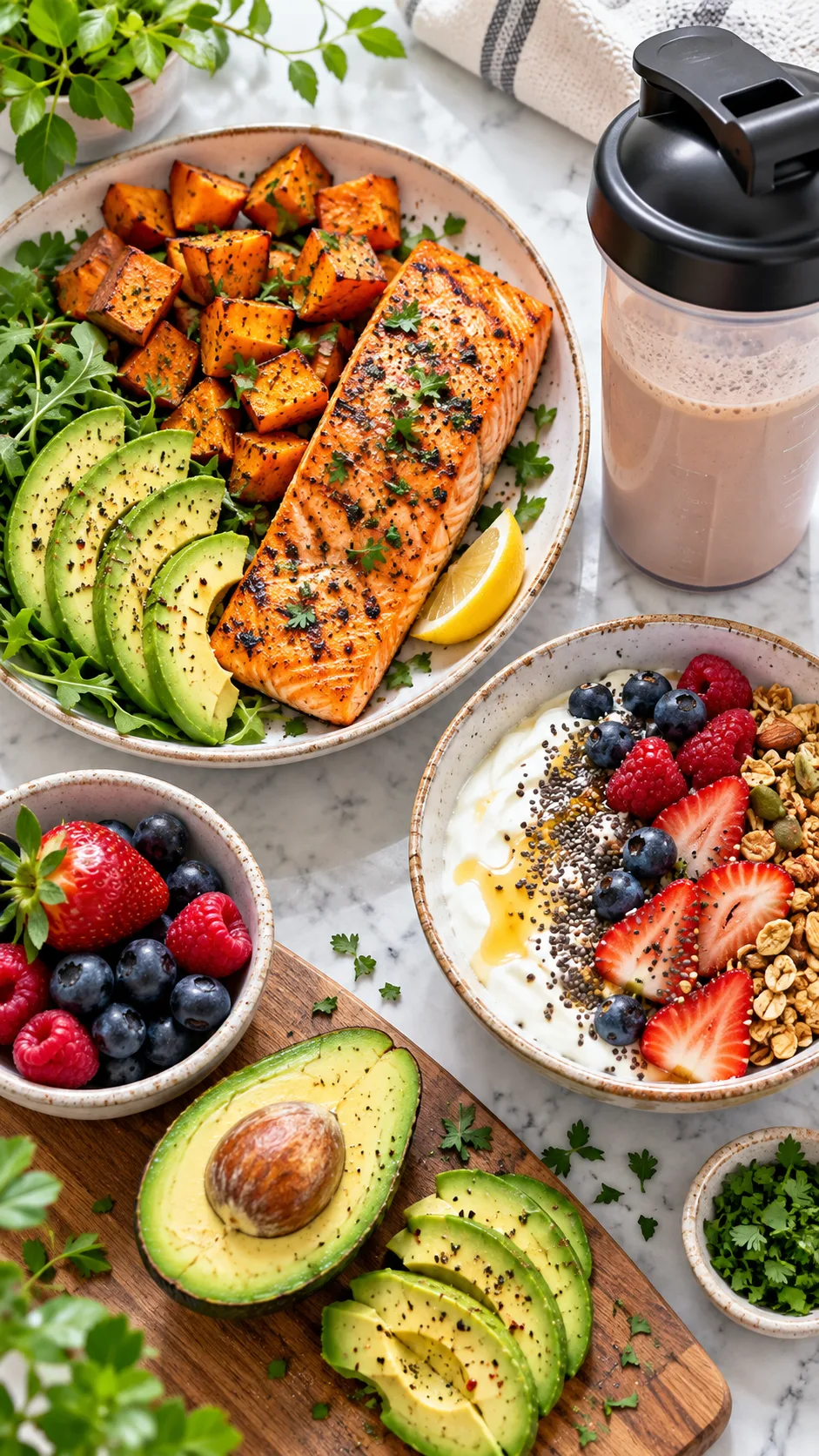
What slim thick means from a nutrition standpoint
The “slim thick” look requires two simultaneous biological shifts: fat loss around your midsection and muscle growth in your lower body. Fitness coaches call this process body recomposition.
Most lifters assume they must pick one goal at a time. They think they must either bulk up like an off-season bodybuilder or starve down like a runway model. That binary thinking derails progress before it starts.
When you slash calories too far, your body panics. It breaks down glute and leg tissue for amino acids while storing stubborn belly fat under elevated cortisol levels. You finish looking soft, depleted, and flat.
To build curves, treat food as construction material rather than an enemy. Your nutrition must accomplish clear daily jobs:
- Trigger muscle protein synthesis so your glutes and quads grow after hard lifting sessions.
- Supply glycogen so you can lift heavy weights with full power.
- Create a slight energy deficit that prompts your waistline to drop fat without slowing your metabolism.
If you want a structure focused on whole foods without complex prep, check out our Clean Eating Meal Plan That Fits a Real, Busy Life for everyday habits.
The slim thick calorie target: maintenance vs. micro-surplus
How many calories do you need to build curves? Drop the old 1,200-calorie starvation targets right now. You cannot build muscle out of thin air.
First, calculate your Total Daily Energy Expenditure (TDEE). Your TDEE combines your basal metabolic rate with daily movement, training, and the digestion of food. Use an online calculator or multiply your body weight in pounds by 14 to 16, based on your activity level.
Once you find that baseline, pick your path based on your starting point:
- The Lean Recomp (if you already have low body fat): Eat a micro-surplus of 100 to 200 calories above maintenance. This small bump provides energy to build your glutes, hamstrings, and upper back without storing excess belly fat.
- The Curvy Cut (if you carry excess body fat around your waist): Eat at a modest deficit of 200 to 300 calories below maintenance. Pair this deficit with high protein and hard strength training. Your body pulls energy from stored fat while repairing trained muscle fibers.
Both paths share a common foundation: neither demands extreme hunger. A small calorie shift protects your thyroid function, curtails late-night cravings, and preserves your energy for demanding lower-body sessions.
The macro blueprint for glute growth and a tight waist
Calories dictate total body weight, but macronutrients determine your shape. Two people can share the exact same height and scale weight, yet look completely different based on their macro breakdown. Here is how you split your plate to build curves.
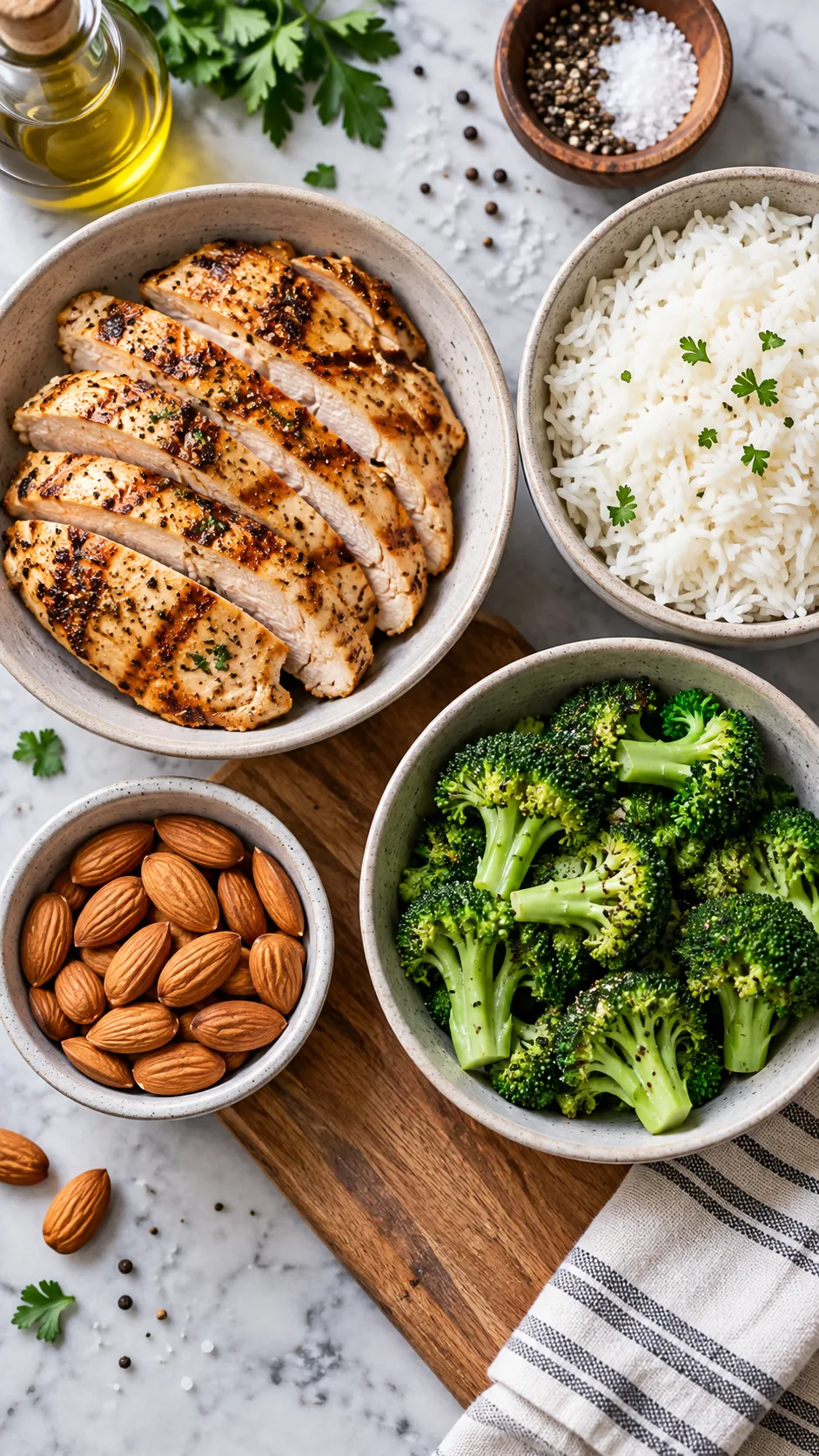
Protein: glute architecture (0.8 to 1.0 grams per pound)
Muscle tissue requires constant fuel. When you lift heavy weights without enough amino acids in your bloodstream, your body breaks down muscle instead of repairing it. Protein also carries the highest thermic effect of any macronutrient, so your body uses roughly 20 to 30 percent of those calories just to digest the food.
Target 0.8 to 1.0 grams of protein per pound of body weight (roughly 1.8 to 2.2 grams per kilogram). Research from the International Society of Sports Nutrition (ISSN) shows that this intake supports muscle growth while limiting fat gain during strength routines.
For ideas on hitting these targets without drinking chalky protein shakes, check out The 7-Day High Protein Meal Plan That Keeps You Full.
Carbohydrates: curve-building energy (40 to 45% of daily calories)
Low-carb diets flatten curves. Carbohydrates store glycogen and water inside muscle cells, giving glutes and quads a full, shapely appearance. When you cut carbs through keto or severe restrictions, your muscles flatten quickly.
Demanding leg lifts, including heavy hip thrusts, Bulgarian split squats, and Romanian deadlifts, rely on the glycolytic energy system. Carbohydrates fuel the training intensity that forces muscle growth. Keep complex carb sources such as oats, sweet potatoes, brown rice, and quinoa in your daily meals.
Fats: hormone support and recovery (20 to 25% of daily calories)
Never let dietary fat drop below 20 percent of total daily calories. Fat intake maintains your endocrine system by supplying raw material for estrogen, progesterone, and growth hormone. When you cut fat too low, your hormones drop and cortisol rises, prompting your body to hold fat across your lower belly.
Choose monounsaturated fats and omega-3 sources like avocados, extra virgin olive oil, wild salmon, chia seeds, and walnuts. These fats lower inflammation and cushion your joints during heavy squatting sessions.
Nutrient timing: fuel training and protect muscle
Meal timing shapes how your body uses fuel during body recomposition. Scheduling your meals directs amino acids and glucose into working muscle cells rather than fat tissue.
The pre-workout window (60 to 90 minutes before training)
Eat a meal rich in complex carbs and moderate in lean protein. Keep dietary fat low here so your stomach digests the food quickly. This meal fills your bloodstream with usable glucose so you can complete heavy sets without fading.
Example: Oatmeal mixed with whey protein, topped with a sliced banana and honey.
The post-workout window (within two hours after training)
Lifting weights creates tiny tears in your muscle fibers. During recovery, muscle cells activate GLUT4 transporters, pulling carbohydrates and amino acids straight into tissue repair instead of fat storage.
Example: Grilled chicken breast with jasmine rice, roasted zucchini, and a pinch of sea salt to replace electrolytes.
The 7-day slim thick meal plan
This weekly outline provides roughly 1,800 to 2,000 calories and 135 to 150 grams of protein daily. If your personal maintenance target sits higher or lower, adjust carbohydrate portions like rice, potatoes, and oats while keeping your protein intake consistent.
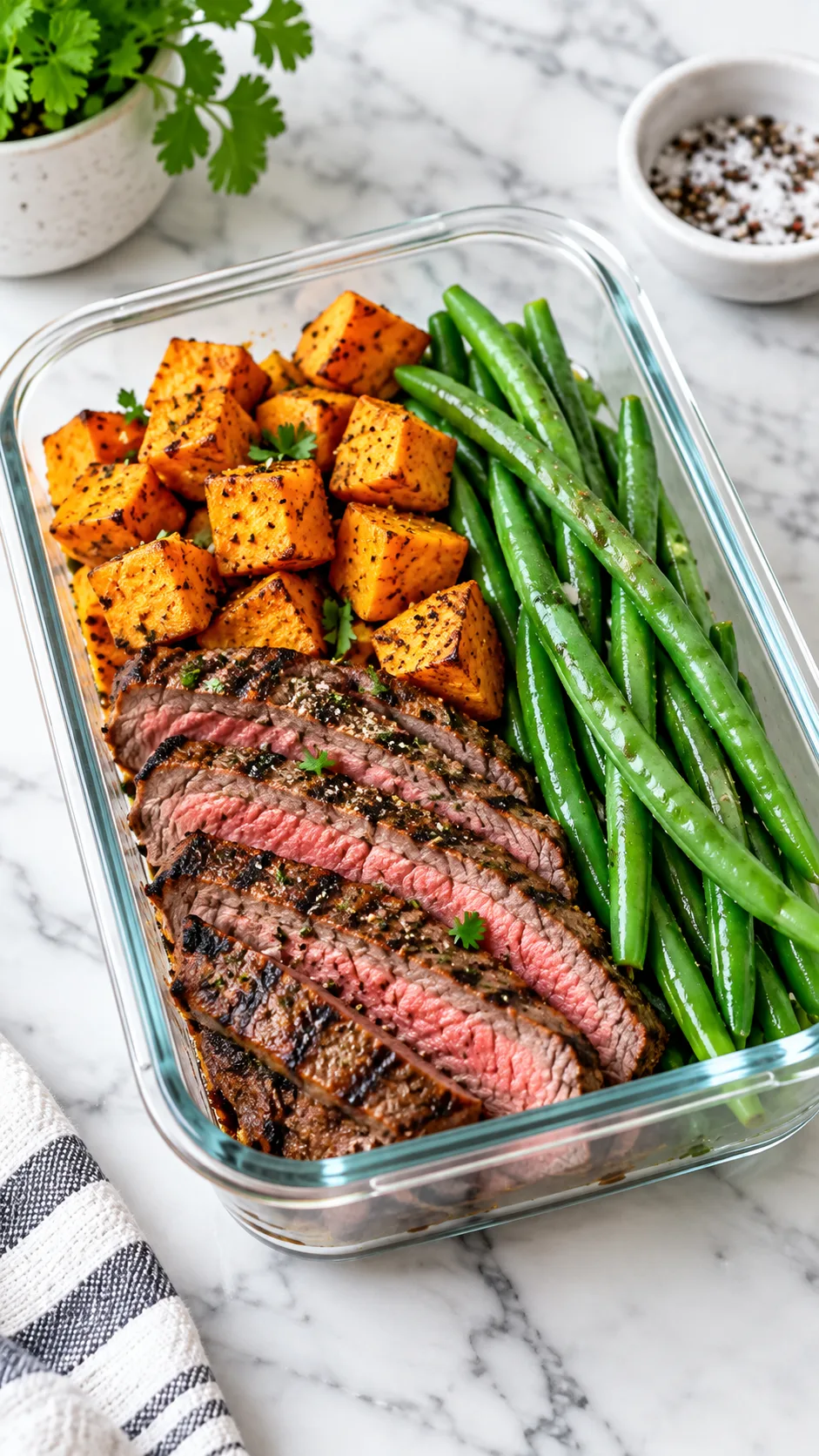
Day 1: Leg day fuel
- Breakfast: 3 whole eggs scrambled with 1/2 cup baby spinach, 1 slice of toasted sourdough bread, and 1/4 sliced avocado. (Cal: ~420, P: 24g, C: 28g, F: 22g)
- Mid-morning snack: 1 cup of 2% Greek yogurt mixed with 1 scoop of collagen peptides, topped with 1/2 cup of fresh blueberries and 1 teaspoon of chia seeds. (Cal: ~260, P: 28g, C: 22g, F: 5g)
- Lunch: 5 oz grilled chicken breast, 1 cup of cooked jasmine rice, and 1 cup of roasted asparagus with 1 teaspoon of olive oil. (Cal: ~480, P: 42g, C: 48g, F: 9g)
- Pre-workout snack: 1 rice cake topped with 1 tablespoon of almond butter and 1/2 sliced banana. (Cal: ~180, P: 4g, C: 24g, F: 8g)
- Dinner: 6 oz wild salmon fillet, 1 medium baked sweet potato, and a large mixed greens salad with lemon juice dressing. (Cal: ~510, P: 38g, C: 36g, F: 18g)
Day 2: Glute workout focus
- Breakfast: Protein oatmeal: 1/2 cup rolled oats cooked in water, stirred with 1 scoop of whey isolate, 1 tablespoon of ground flaxseed, and 1/2 cup of sliced strawberries. (Cal: ~380, P: 32g, C: 46g, F: 7g)
- Mid-morning snack: 2 hard-boiled eggs and 1 medium orange. (Cal: ~210, P: 13g, C: 16g, F: 10g)
- Lunch: Turkey quinoa bowl: 5 oz lean ground turkey (93/7) sautéed with taco spices, 3/4 cup cooked quinoa, 1/4 cup black beans, salsa, and 2 tablespoons of guacamole. (Cal: ~490, P: 38g, C: 42g, F: 16g)
- Post-workout shake: 1 scoop whey protein blended with 1 cup unsweetened almond milk, 1 cup frozen berries, and a handful of spinach. (Cal: ~210, P: 25g, C: 22g, F: 3g)
- Dinner: 5 oz grilled sirloin steak, 1 cup roasted baby red potatoes, and steamed broccoli florets. (Cal: ~490, P: 40g, C: 34g, F: 16g)
Day 3: Active recovery day
- Breakfast: 3 egg whites and 1 whole egg scrambled with diced bell peppers, mushrooms, and 2 tablespoons of feta cheese, served with 1 slice of sprouted grain toast. (Cal: ~340, P: 28g, C: 18g, F: 14g)
- Mid-morning snack: 1 cup low-fat cottage cheese with 1/2 cup pineapple chunks. (Cal: ~220, P: 26g, C: 20g, F: 3g)
- Lunch: Mediterranean salad: 5 oz grilled chicken strips over romaine lettuce, cucumbers, cherry tomatoes, kalamata olives, 1/2 cup cooked chickpeas, and red wine vinaigrette. (Cal: ~450, P: 42g, C: 30g, F: 15g)
- Afternoon snack: 1 small apple sliced with 1 oz raw almonds. (Cal: ~220, P: 6g, C: 25g, F: 14g)
- Dinner: 6 oz baked cod or halibut, 1 cup cooked brown rice, and sautéed zucchini with garlic. (Cal: ~420, P: 38g, C: 45g, F: 6g)
Day 4: Upper body and core session
- Breakfast: Green smoothie: 1 scoop vanilla plant protein, 1 frozen banana, 1 tablespoon almond butter, 1 cup baby spinach, and 1 cup unsweetened soy milk. (Cal: ~390, P: 30g, C: 40g, F: 12g)
- Mid-morning snack: 2 rice cakes topped with 2 tablespoons of tuna salad made with light avocado-oil mayonnaise. (Cal: ~190, P: 16g, C: 15g, F: 6g)
- Lunch: 5 oz shredded chicken breast in a high-fiber whole wheat wrap with crisp romaine, diced tomato, and 1 tablespoon yogurt ranch dressing. (Cal: ~410, P: 40g, C: 32g, F: 11g)
- Pre-workout fuel: 1/2 cup overnight oats made with almond milk, cinnamon, and 1/2 sliced green apple. (Cal: ~200, P: 6g, C: 36g, F: 3g)
- Dinner: 5 oz extra-lean ground beef patties (96/4), 1 cup roasted butternut squash, and steamed green beans. (Cal: ~440, P: 39g, C: 30g, F: 14g)
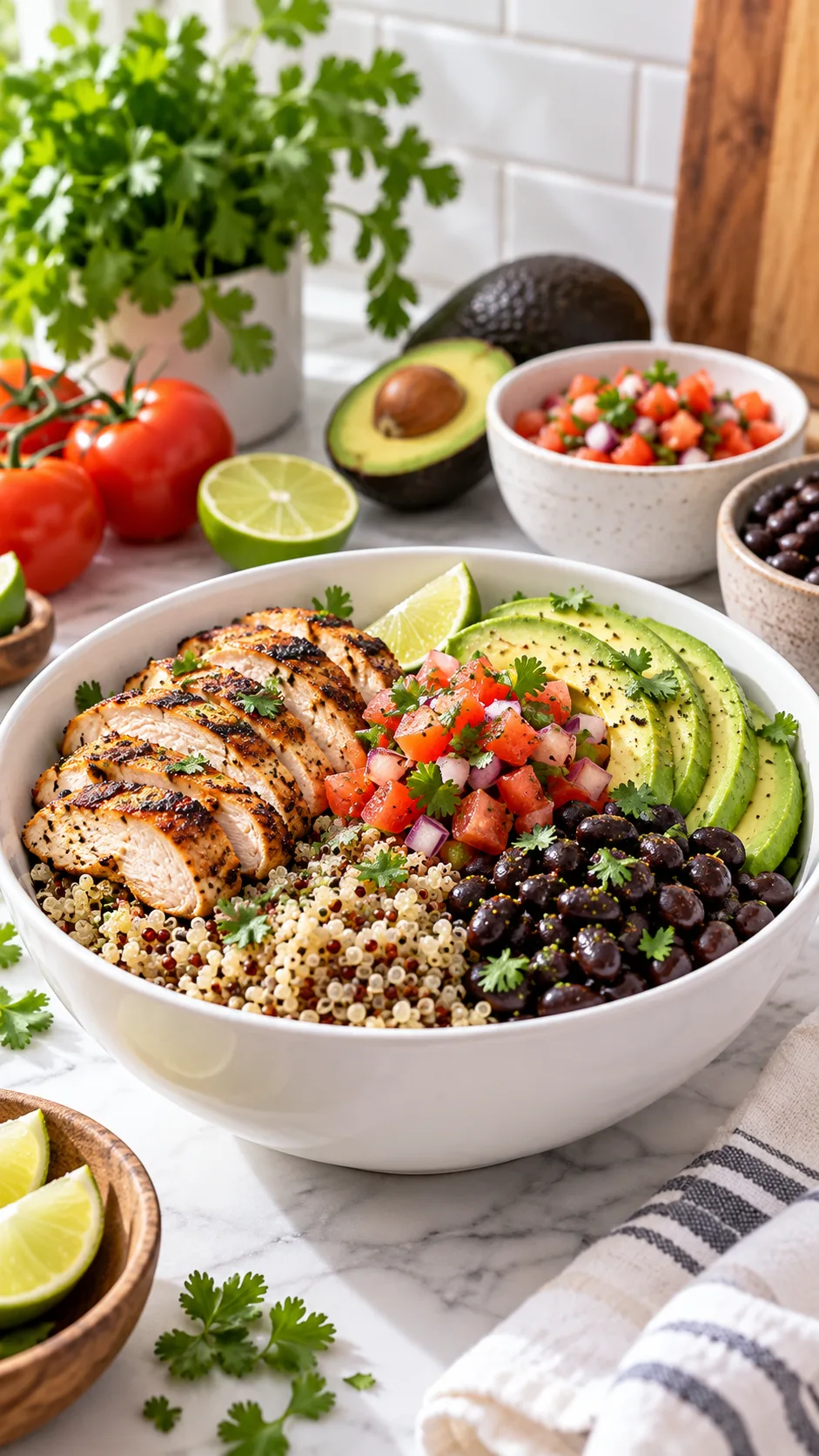
Day 5: High-volume leg day
- Breakfast: Protein pancakes: blend 1/2 cup oats, 1 scoop protein powder, 1 egg, and 1/4 cup almond milk. Cook on a skillet and top with 1/4 cup warm blueberries. (Cal: ~410, P: 36g, C: 44g, F: 8g)
- Mid-morning snack: 1 cup 2% plain Greek yogurt with 1 teaspoon raw honey and cinnamon. (Cal: ~170, P: 20g, C: 14g, F: 4g)
- Lunch: 5 oz grilled salmon patty over 1 cup cooked basmati rice with steamed snap peas. (Cal: ~490, P: 36g, C: 46g, F: 14g)
- Pre-workout snack: 1 banana with 1 hard-boiled egg. (Cal: ~180, P: 7g, C: 27g, F: 5g)
- Dinner: 6 oz skinless grilled chicken thighs, 1 medium baked potato with skin, and roasted Brussels sprouts. (Cal: ~520, P: 44g, C: 40g, F: 15g)
Day 6: Conditioning and glute pump
- Breakfast: 2 whole eggs and 2 egg whites scrambled with lean turkey bacon, 1 slice of whole-grain toast, and 1/4 avocado. (Cal: ~380, P: 29g, C: 20g, F: 19g)
- Mid-morning snack: Protein iced coffee: 1 shot espresso shaken over ice with 1 ready-to-drink protein shake. (Cal: ~160, P: 30g, C: 3g, F: 2g)
- Lunch: 5 oz roasted chicken breast, 1 cup roasted sweet potato wedges (tossed with 1 tsp olive oil), and steamed broccoli. (Cal: ~460, P: 40g, C: 44g, F: 9g)
- Afternoon snack: 1 sliced bell pepper with 1/4 cup hummus. (Cal: ~140, P: 4g, C: 16g, F: 7g)
- Dinner: 6 oz grilled shrimp skewers over 1 cup cooked farro with cherry tomatoes, basil, and fresh lemon juice. (Cal: ~440, P: 38g, C: 48g, F: 5g)
Day 7: Rest and meal prep day
- Breakfast: Sweet potato hash: 1 cup roasted sweet potato cubes topped with 2 sunny-side-up eggs and 2 slices of chopped Canadian bacon. (Cal: ~410, P: 26g, C: 38g, F: 16g)
- Mid-morning snack: 1 cup low-fat cottage cheese with everything bagel seasoning and sliced cucumber. (Cal: ~180, P: 25g, C: 8g, F: 3g)
- Lunch: Mason jar salad: 5 oz grilled chicken breast, mixed greens, 1/2 cup cooked quinoa, diced apples, 2 tablespoons chopped walnuts, and light balsamic vinaigrette. (Cal: ~470, P: 41g, C: 32g, F: 16g)
- Afternoon snack: 1 square dark chocolate (85%) with 10 raw almonds. (Cal: ~160, P: 4g, C: 9g, F: 13g)
- Dinner: Ground turkey chili: 6 oz lean ground turkey (93/7) simmered with kidney beans, diced tomatoes, onion, and chili spices. (Cal: ~460, P: 42g, C: 36g, F: 11g)
If you prefer minimal cooking during busy work weeks, read our Lazy Girl Meal Plan That Makes Healthy Eating Embarrassingly Easy to simplify your routine.
The curve-building grocery list
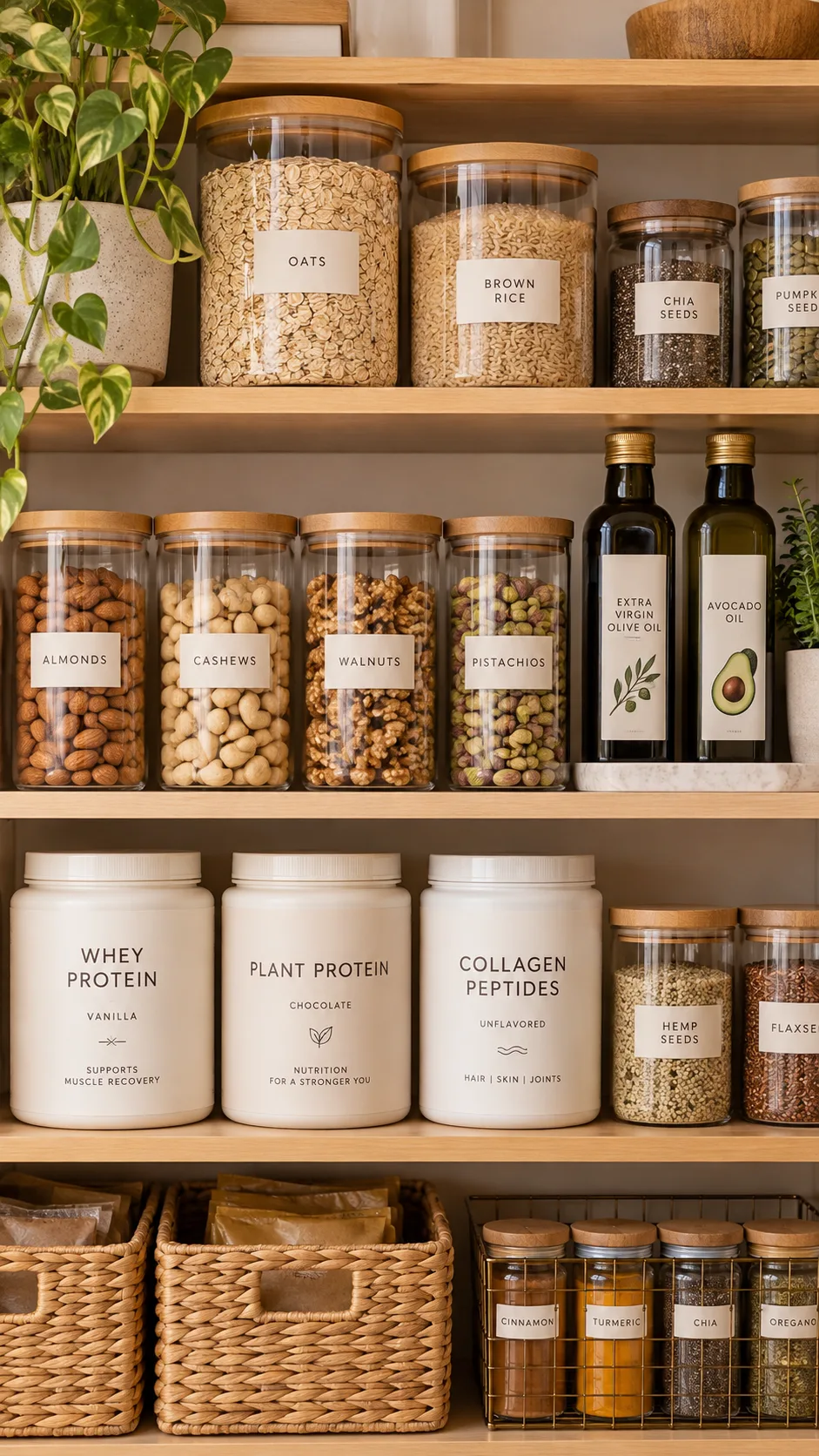
Stock your kitchen with simple whole foods. Having these staples ready keeps your daily choices straightforward.
- Protein staples: Boneless chicken breasts, chicken thighs, lean ground turkey (93/7), extra-lean ground beef (96/4), flank steak, wild salmon, white fish, shrimp, eggs, egg whites, low-fat Greek yogurt, and low-fat cottage cheese.
- Carbohydrate sources: Rolled oats, jasmine rice, basmati rice, sweet potatoes, baby red potatoes, quinoa, sourdough bread, whole grain wraps, and rice cakes.
- Dietary fats: Extra virgin olive oil, avocados, raw almonds, walnuts, natural peanut butter, almond butter, and chia seeds.
- Fiber and produce: Baby spinach, wild arugula, asparagus, broccoli, zucchini, bell peppers, berries, bananas, and lemons.
Four mistakes that flatten your curves
Avoid these common mistakes when working toward body recomposition.
1. Cutting carbs because you fear water weight
Many people mistake temporary water retention for body fat. When you cut carbs out, you shed several pounds of water within two days. The scale drops, but your glute muscles deflate right along with it. Keep complex carbohydrates in your diet so you have fuel to lift progressively heavier weights. Carbs support muscle growth, and they only spill into fat storage when you eat in a large caloric surplus.
2. Doing excessive cardio instead of lifting
Hours of daily steady-state cardio can raise cortisol levels and prompt your body to break down muscle tissue for energy. Trade long running workouts for heavy lifting days that target your glutes, legs, and back, while hitting 8,000 to 10,000 daily walking steps for easy activity. Research indexed on PubMed shows that resistance training drives far better body recomposition outcomes than cardio alone.
3. Skipping post-workout nutrition
Waiting hours to eat after a hard training session limits your results. Lifting leaves your muscle fibers broken down and hungry for amino acids. Provide your bloodstream with protein and easy-to-digest carbohydrates within two hours after your session so your body can rebuild that tissue.
4. Neglecting sleep and hydration
Dehydration prompts your body to hold water under the skin, blurring muscle definition around your midsection. Drink 2.5 to 3 liters of water daily. In addition, your pituitary gland secretes growth hormone during deep sleep cycles. Sleeping only five hours a night halts muscle repair, no matter how cleanly you eat.
Training synergy: lift heavy to direct calories into muscle
Food provides raw building materials, but resistance training tells your body where to put them. If you eat balanced meals without lifting weights, your body stores excess energy as body fat. You must challenge your muscles to force adaptation.
Focus on these primary movement patterns three to four times per week:
- Hip extension: Barbell hip thrusts, Kas glute bridges, and cable pull-throughs.
- Squats and lunges: Bulgarian split squats, walking lunges, and hack squats.
- Hip hinges: Romanian deadlifts and single-leg dumbbell deadlifts.
- Upper body lifts: Lat pulldowns, seated cable rows, and dumbbell lateral raises. Building your lats and shoulders creates the visual contrast of a smaller waist.
Apply progressive overload consistently. Add weight to the bar, complete more quality repetitions, or control your lifting tempo. As your training numbers improve, your body funnels protein and carbs directly into muscle recovery, keeping your waist firm and building curve in your hips.
Feed your curves with confidence
Leave the starve-and-sweat cycle behind. Building a strong, curved physique does not require extreme fasting or tasteless cabbage soup. It takes patience, consistent strength training, and whole foods that fuel your lifts.
When you provide enough protein, planned carbohydrates, and healthy fats, your body supports both muscle growth and steady fat loss. Use this meal plan, commit to progressive lifting, and build your curves without starving.