

Plain chicken and limp lettuce have had enough screen time. Korean meal prep recipes bring spicy sauces, crisp vegetables, satisfying grains, and real comfort to weekday lunches.
You can fill your fridge with Korean-inspired meals without cooking seven separate dinners. A few well-chosen components carry the week, while gochujang, sesame oil, garlic, and kimchi make each bowl taste like you had a plan.
Want a healthy lunch you will want to eat at 12:37 p.m.? Start here.
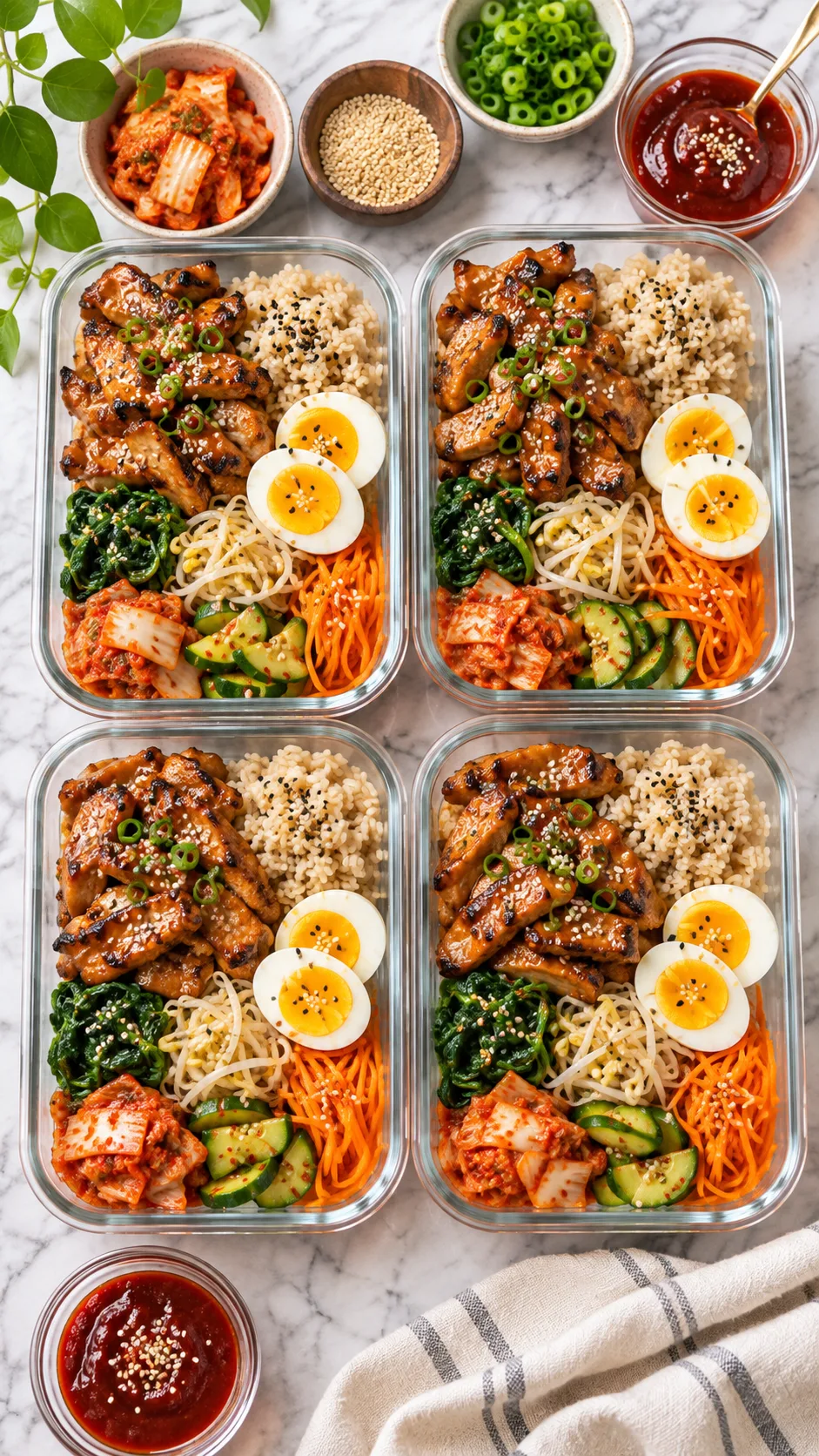
Why Korean meal prep works so well for healthy eating
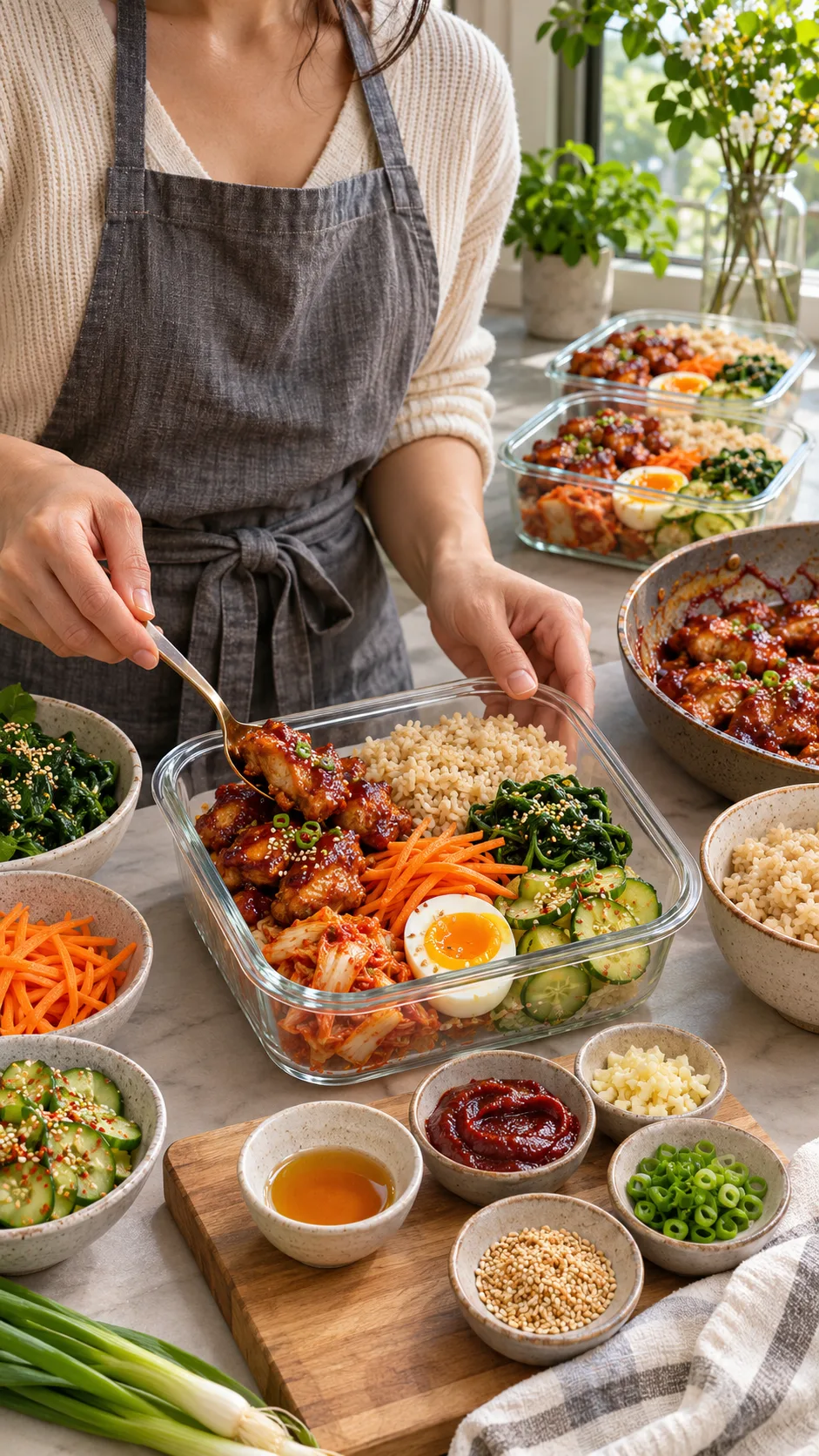
Korean food brings contrast to every bite. You get savory protein, crisp vegetables, spicy sauce, tangy fermented foods, and comforting rice or noodles in one container. That beats another bland desk lunch.
Korean healthy meal prep also makes portions easier to manage. Start with protein, add a large serving of vegetables, then choose an amount of rice, sweet potato, or noodles that suits your appetite. The meal feels generous rather than restrictive, which helps when afternoon snack cravings show up.
Korean cooking leans on pantry staples that carry a lot of flavor. A spoonful of gochujang wakes up a tray of roasted vegetables. Garlic, ginger, soy sauce, rice vinegar, and toasted sesame oil turn ordinary groceries into lunches that taste far more involved than they are.
The meal prep friendly Korean formula
Use this formula for Korean lunch meal prep instead of reinventing every container. Repeat the same ingredients in different combinations to keep grocery costs down without eating the same bowl all week.
- Protein: chicken thighs, lean ground turkey, tofu, eggs, salmon, shrimp, or lean beef
- Vegetables: spinach, cucumbers, carrots, cabbage, zucchini, mushrooms, broccoli, or bean sprouts
- Carb base: brown rice, white rice, quinoa, cauliflower rice, sweet potato, or soba noodles
- Flavor builders: gochujang, doenjang, gochugaru, kimchi, garlic, ginger, scallions, sesame oil, and soy sauce
- Crunchy finish: sesame seeds, roasted seaweed, chopped peanuts, or crispy chickpeas
Store sauces separately until lunch, especially when you pack cucumbers, greens, or rice bowls. Your vegetables stay crisp, and nobody needs soggy cucumbers in their afternoon.
Korean meal prep essentials worth keeping on hand
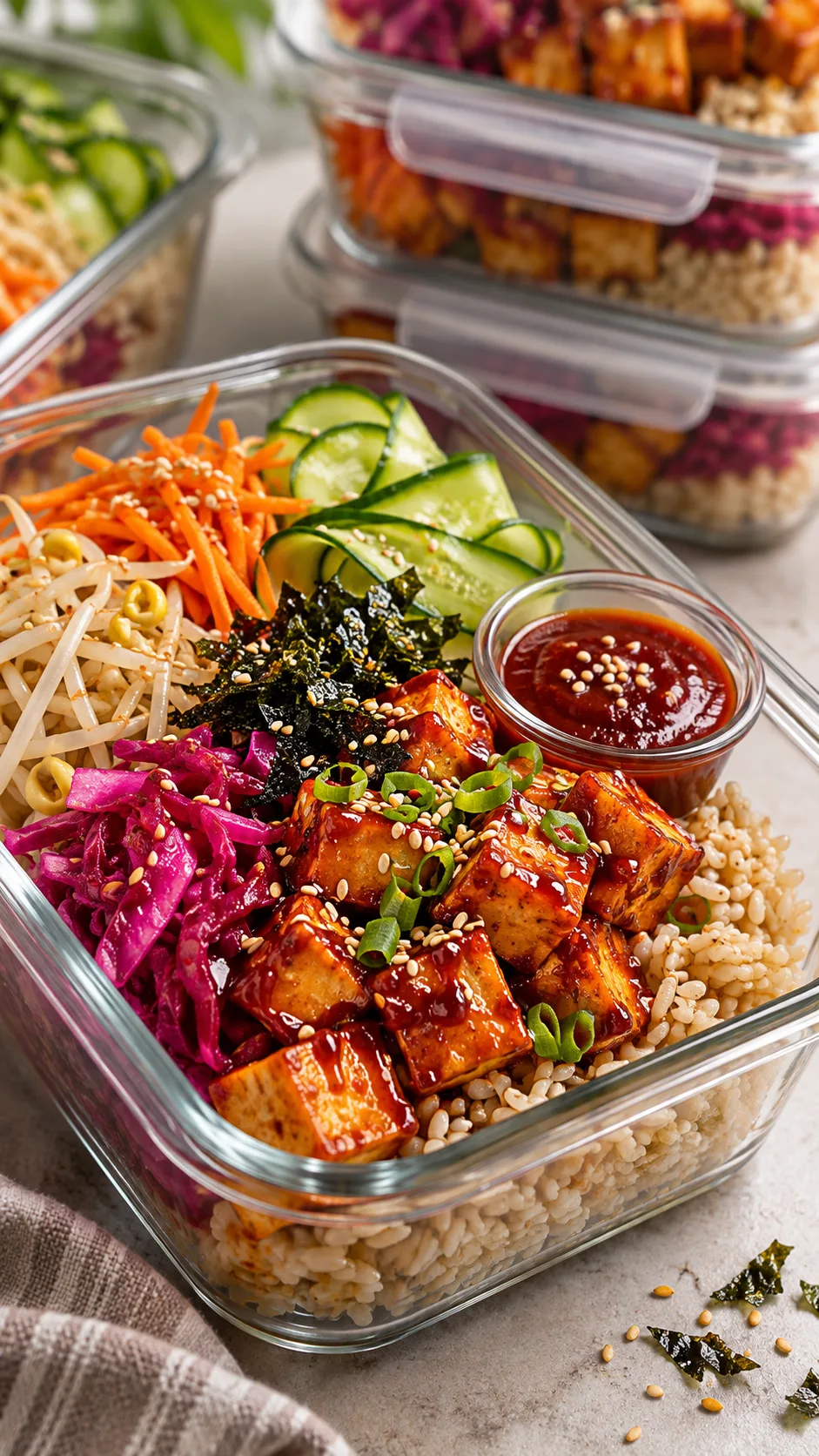
You do not need a specialty market haul that calls for a luggage cart. Build a small Korean pantry and add new ingredients when you find recipes you enjoy. Most large supermarkets carry the basics, while Korean markets give you more choices.
Start with these core ingredients
- Gochujang: a fermented red chile paste with sweet, savory, and spicy flavor
- Gochugaru: Korean red pepper flakes with warm, fruity heat
- Low-sodium soy sauce: a quick base for marinades and dressings
- Rice vinegar: a mild acid for sauces and quick pickles
- Toasted sesame oil: use a small amount for a deep, nutty finish
- Kimchi: a punchy fermented side that adds flavor without more cooking
- Roasted seaweed: an easy salty, crisp topping for bowls
Check labels if you watch your sodium intake or manage food allergies. Gochujang and kimchi can contain a lot of sodium, and some brands use wheat, fish sauce, or shellfish. You choose the amount, so you can enjoy the flavor without making lunch taste like a salt lick.
The FDA’s food safety guidance recommends that you refrigerate perishable food within two hours of cooking. Let meal prep cool in shallow containers, then move it into the refrigerator promptly.
Five Korean meal prep recipes for a week of better lunches
These recipes share ingredients by design. Roast a large batch of vegetables, cook one pot of rice, mix two sauces, and turn them into several Korean-inspired meals. That approach saves money, time, and a little Sunday evening patience.
1. Gochujang chicken rice bowls
These gochujang chicken bowls bring sweet heat, tender chicken, and plenty of vegetables into your lunch rotation. Use boneless, skinless chicken thighs for more flavor, or choose chicken breast for a leaner option. I prefer thighs because they stay juicy after reheating, and dry meal prep chicken helps nobody.
For four servings, toss 1½ pounds of chicken with 2 tablespoons gochujang, 1 tablespoon low-sodium soy sauce, 1 tablespoon rice vinegar, 2 teaspoons honey, 3 minced garlic cloves, and 1 teaspoon grated ginger. Roast the chicken at 425°F until it reaches 165°F, then let it rest briefly before you slice it.
Fill each container with brown rice, roasted broccoli, shredded carrots, chicken, and sesame seeds. Pack kimchi in a small separate compartment. The USDA safe temperature chart says poultry needs an internal temperature of 165°F.
2. High-protein Korean beef and cabbage bowls
This quick bowl uses lean ground beef or ground turkey with cabbage, carrots, and a savory-sweet garlic sauce. It brings bulgogi-style flavor without a long marinade. One skillet handles the whole job, which means fewer dishes and fewer excuses to skip meal prep.
Brown 1½ pounds of lean ground beef with garlic and ginger. Add shredded cabbage and carrots, then stir in soy sauce, rice vinegar, a little gochujang, and sesame oil. Cook until the cabbage softens while still holding some bite.
Spoon the mixture over rice or cauliflower rice and finish it with scallions and sesame seeds. Add a jammy egg or edamame if you want more protein. If chicken better suits your goals, use ideas from our ground chicken meal prep guide with the same Korean-style sauce.
3. Bibimbap-inspired veggie prep bowls
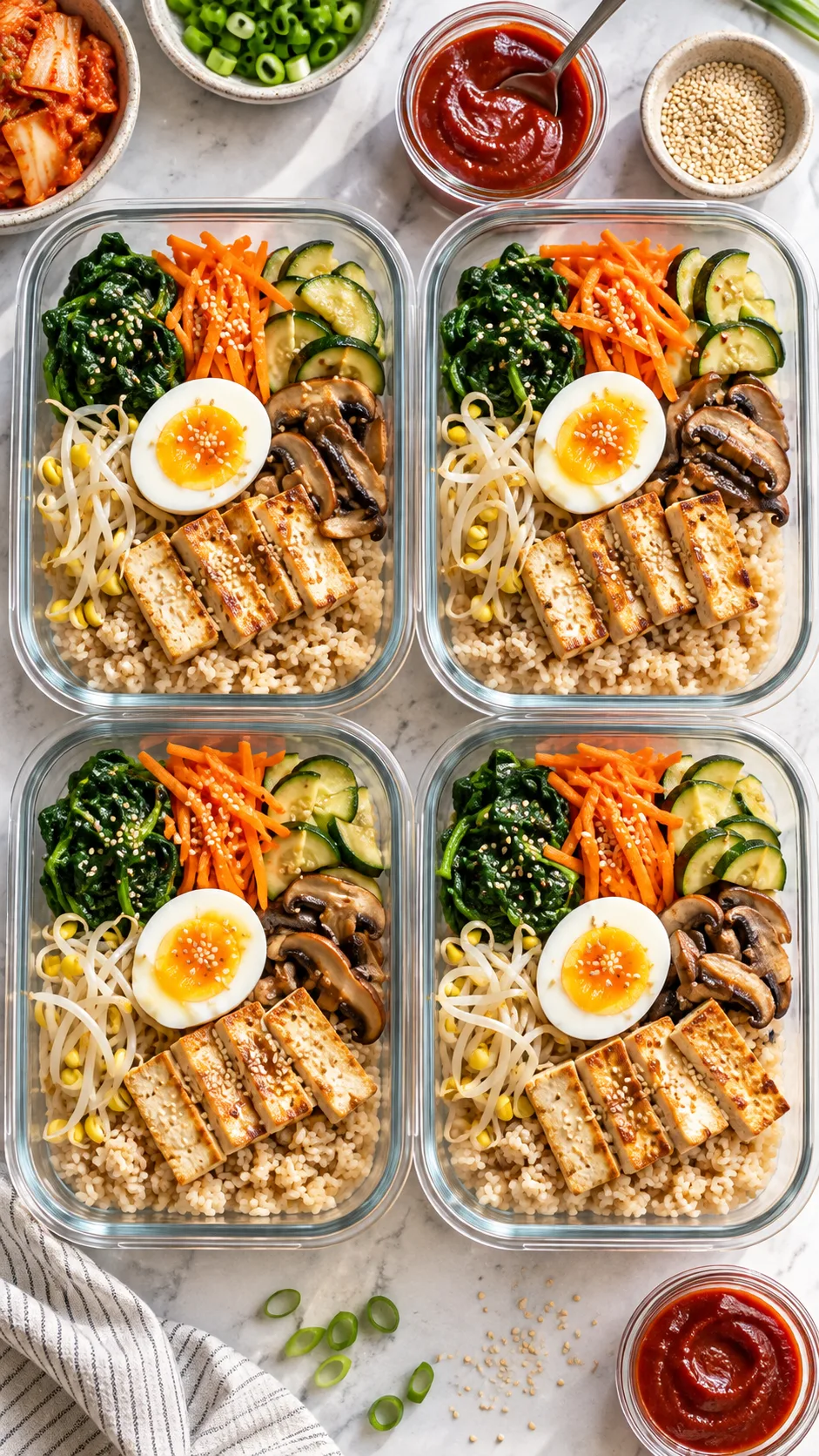
Bibimbap works beautifully for meal prep because every part earns its place. Rice, vegetables, protein, sauce, and an egg come together in one satisfying bowl. You also get an excuse to eat five vegetables before dinner, which feels almost suspiciously responsible.
Cook spinach with garlic, quickly sauté zucchini and mushrooms, roast carrots, and season bean sprouts with sesame oil and scallions. Add cooked rice and your choice of protein. Tofu, chicken, salmon, and lean beef all work well.
Pack gochujang sauce separately: mix 2 tablespoons gochujang, 1 tablespoon rice vinegar, 2 teaspoons sesame oil, 1 teaspoon honey, and a splash of water. Fry an egg just before you eat, or pack hard-boiled eggs for an easier weekday option.
4. Spicy Korean turkey lettuce wrap filling
Need a lighter lunch that still feels substantial? Make this spicy Korean turkey filling and pack it with butter lettuce, rice, and crunchy cucumber salad. Eat it in wraps, turn it into bowls, or stir it into leftover vegetables.
Cook ground turkey with diced onion, garlic, ginger, gochujang, soy sauce, and rice vinegar. Add finely chopped mushrooms to stretch the meat and give it more texture. The mushrooms absorb the spicy sauce like tiny flavor sponges.
Keep the lettuce dry and separate until lunch. Pack cooked rice for a heartier meal, or add roasted sweet potato cubes for a sweeter match. For filling meals with fewer calories, see our low calorie meal prep ideas that actually keep you full.
5. Kimchi fried rice with eggs and edamame
Kimchi fried rice gives leftover rice a new purpose. Cold cooked rice fries better than fresh rice because the grains stay separate. A little planning gets you restaurant-style texture without buying a wok the size of a satellite dish.
Sauté chopped kimchi with scallions, garlic, and a teaspoon of sesame oil. Add cold rice, frozen edamame, a small spoonful of gochujang, and a splash of soy sauce. Stir until everything heats through, then divide the rice among containers.
Top each portion with a hard-boiled egg, or fry an egg after reheating. Choose vegetarian kimchi if you avoid fish sauce. Many kimchi brands contain seafood ingredients, so check the label before you buy.
A simple Sunday Korean meal prep plan
You can prep a full week of Korean-inspired meals in about 90 minutes when you batch tasks in the right order. Start the foods that take the longest, then chop vegetables while everything cooks. Good timing does most of the work.
- Start the grains: Cook brown rice, white rice, quinoa, or a mix of rice and cauliflower rice.
- Marinate the protein: Mix gochujang chicken or bulgogi-style ground meat while the grains cook.
- Roast vegetables: Fill two sheet pans with broccoli, carrots, mushrooms, zucchini, cabbage, or sweet potatoes.
- Cook protein: Roast chicken, brown meat, or crisp tofu in a skillet.
- Make two sauces: Prepare gochujang sauce and a sesame-soy dressing.
- Prep fresh sides: Slice cucumbers, portion kimchi, and wash lettuce or greens.
- Build containers: Add grains, protein, and cooked vegetables, then store sauces separately.
Make four lunches for the refrigerator and freeze extra portions for later in the week. The FoodSafety.gov cold storage chart lists practical storage timelines for cooked leftovers. In general, eat cooked meals from the refrigerator within three to four days for the best safety and quality.
Label containers with the date when you prep more than one recipe. Your future self will appreciate the effort. Your future self also deserves to know whether that container holds Korean chicken or an archaeological find from last Thursday.
How to keep Korean meal prep fresh instead of repetitive
Meal prep gets boring when every container tastes the same by Wednesday. You can avoid that without cooking more food. Change the sauce, texture, or way you serve the meal.
Use one protein in several ways
Cook gochujang chicken once, then eat it in a rice bowl on Monday, lettuce wraps on Tuesday, a grain salad on Wednesday, and a quick noodle bowl on Thursday. The chicken stays the same, but each meal feels different. This approach works especially well when you buy protein in bulk.
Rotate your textures
Add crunchy cucumbers, toasted sesame seeds, seaweed snacks, pickled radishes, or shredded cabbage just before eating. Texture can turn a good bowl into a great one. A crunchy topping makes leftovers feel less like leftovers.
Make quick cucumber salad
Slice cucumbers thinly and toss them with rice vinegar, a pinch of sugar, salt, gochugaru, and sesame seeds. Let them sit for 15 minutes before packing. They bring cool crunch alongside spicy chicken or rich beef.
Keep this salad in a separate container because cucumbers release water over time. Eat it within two or three days while it still has its crunch. Make another batch midweek if you want. It takes less time than deciding on a takeout order.
Make your Korean meal prep fit your nutrition goals
Korean meal prep can support fat loss, muscle gain, maintenance, vegetarian eating, or a more reliable lunch routine. Your portions matter more than any “perfect” recipe. Build meals around your appetite, training, medical needs, and preferences.
For higher protein meals
Put a generous portion of protein in each container, then add eggs, edamame, tofu, Greek yogurt-based sauce, or lean meat. Pair Korean bowls with options from our high-protein lunch meal prep guide when you want more weekday ideas.
The Harvard Healthy Eating Plate gives you a useful visual guide: fill half your plate with vegetables and fruits, add quality protein, and choose whole grains when they fit your needs. You do not need rigid rules, but you need enough food to stay full and focused.
For lower-calorie bowls
Use cauliflower rice or combine half rice with half shredded cabbage. Choose lean protein, add plenty of non-starchy vegetables, and measure sesame oil and sauces rather than pouring freely. Sesame oil has a strong flavor, so one teaspoon goes a long way.
For vegetarian Korean meal prep
Build bowls around baked gochujang tofu, tempeh, edamame, eggs, and lentils. Choose vegetarian kimchi and check your gochujang label for ingredients that conflict with your diet. Mushrooms, tofu, and crisp roasted chickpeas give meatless bowls the hearty bite many people want.
Common Korean meal prep mistakes to skip
Even a great recipe can lose its appeal when you prep it poorly. A few small changes protect flavor, texture, and food safety through the week.
- Do not drown bowls in sauce: Pack sauce separately and add it just before eating.
- Do not overcook vegetables: Roast or sauté them until tender-crisp so reheating does not make them limp.
- Do not forget acidity: Rice vinegar, kimchi, pickled radish, and cucumber salad balance rich, spicy flavors.
- Do not skip cooling: Move cooked food into shallow containers and refrigerate it promptly.
- Do not prep seven identical lunches: Make two proteins or change the toppings and bases.
- Do not fear frozen vegetables: Frozen broccoli, spinach, and edamame save time and still offer solid nutrition.
Heat rice bowls until they are piping hot, then add cold toppings after heating. Follow USDA guidance when a food needs a temperature check, and heat leftovers thoroughly. A microwave may lack glamour, but it can still make an excellent Korean lunch.
Bring more joy to your weekday meals
Korean meal prep recipes can make healthy eating feel generous, flavorful, and fun. Cook a few flexible components, keep bold sauces nearby, and use crunchy or tangy toppings to keep each container interesting.
Try gochujang chicken bowls, kimchi fried rice, or a bibimbap-inspired vegetable bowl this week. You do not need a flawless meal plan. You need a fridge that offers something better than crackers over the sink.
Make your next lunch colorful, spicy, satisfying, and worth anticipating. Your weekday self will thank you, probably with extra kimchi.