

You know that moment at 3pm when your sad little “diet lunch” wore off two hours ago and the vending machine starts whispering your name? I’ve been there, standing in an office kitchen, chewing dry rice cakes and pretending I felt satisfied.
Here’s the thing nobody tells you: low calorie and “starving by mid-afternoon” are not the same thing. You can eat 400-calorie meals that genuinely fill you up. You just have to build them differently.
I’ve meal prepped for close to eight years now, through a 30-pound fat loss phase, through two jobs with brutal hours, and through one memorable week where I ate the same chicken and broccoli bowl five days straight and nearly lost my mind. I learned what works, and more importantly, what makes you quit by Wednesday.
So let’s talk about low calorie meal prep ideas that hold you until dinner. Nothing resembling a sad desk salad, and no twelve identical containers either. I promise.
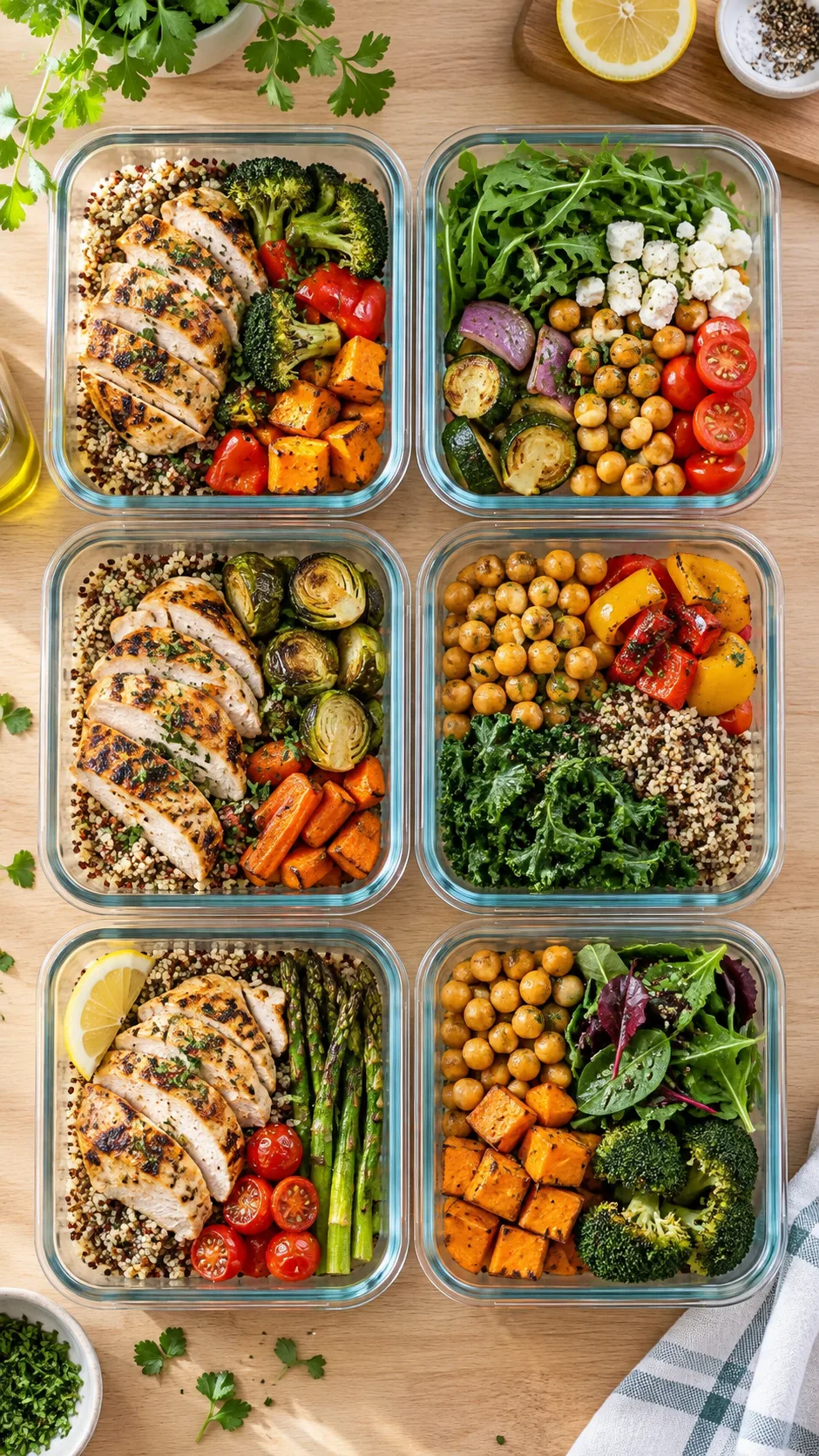
Why most low calorie meal prep fails (and it isn’t willpower)
Let me guess your usual approach. You cut calories by shrinking portions. Half a chicken breast, a spoonful of rice, some steamed veg that tastes like regret. Then you white-knuckle it until dinner.
That strategy fails because your stomach responds to volume and composition, not calorie math. Your brain doesn’t read nutrition labels. It reads stretch receptors, blood sugar, and hormones like ghrelin and leptin.
Ever wondered why 300 calories of grilled shrimp and vegetables feels like a meal but 300 calories of granola feels like an appetizer? That’s the whole game right there.
The three levers that control fullness
Research on satiety keeps pointing to the same three factors. Pull all three and low calorie eating stops feeling like punishment:
- Protein. It’s the most satiating macronutrient by a wide margin. A well-cited review in the American Journal of Clinical Nutrition found that higher protein intake increases fullness and cuts calorie intake later in the day. Aim for 30 to 40g per meal.
- Fiber. It slows digestion, feeds your gut bacteria, and physically takes up space. Harvard’s Nutrition Source recommends 25 to 35g daily. Most people hit about 15g. Oof.
- Water-heavy volume. Foods with high water content (vegetables, soups, fruit) give you mass without many calories. That’s the entire idea behind volume eating.
Miss one and you’ll feel it. Miss two and you’ll be elbow-deep in a bag of chips by Thursday. IMO this is where 90% of calorie-cutting plans fall apart.
The 400-calorie bowl formula (my go-to template)
I stopped following recipes years ago and started following a formula instead. It’s faster, it’s cheaper, and you never eat the same thing twice unless you want to.
Here’s the build:
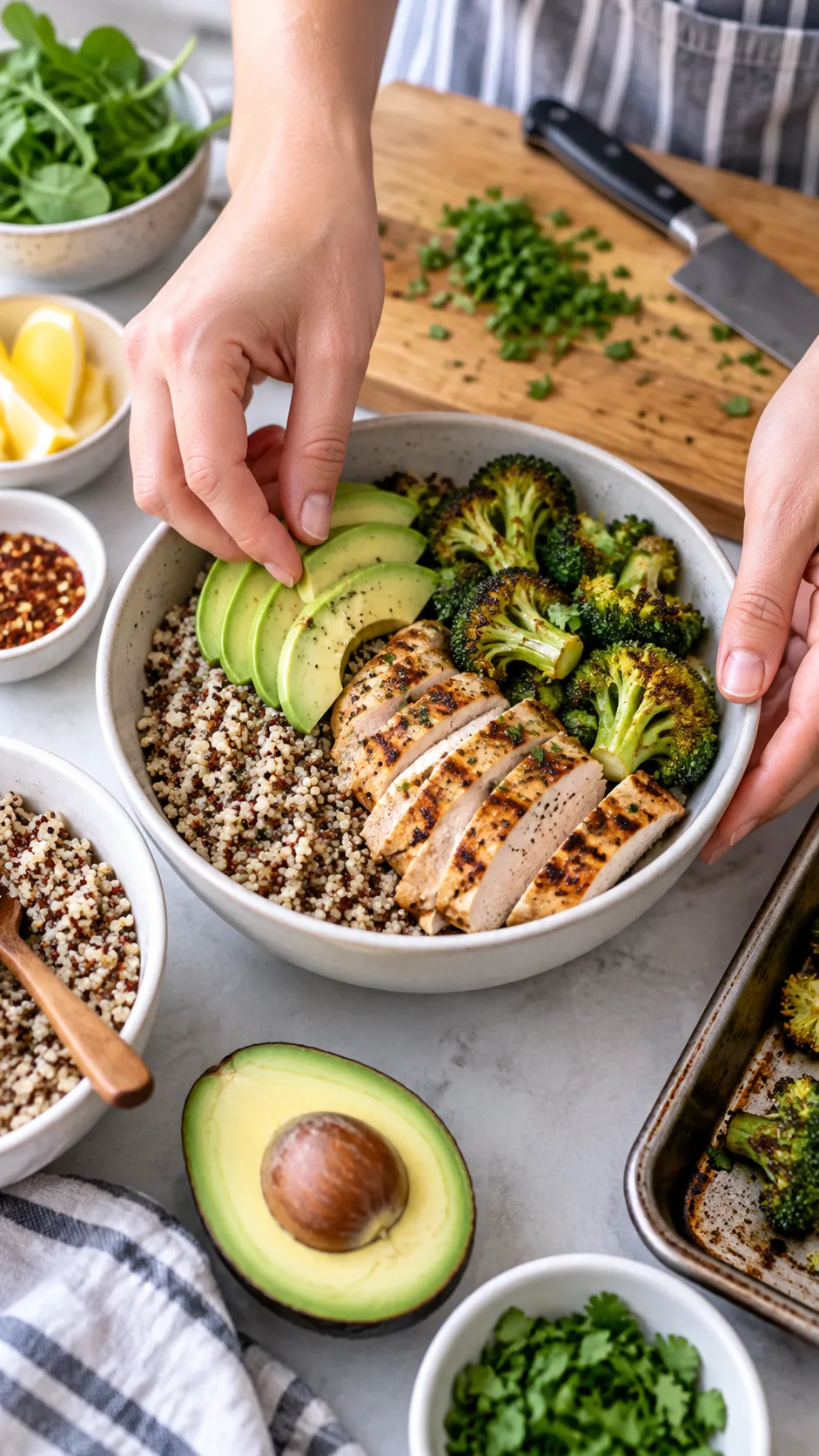
- Base (100 to 150 cal): half a cup of cooked quinoa, farro, brown rice, or my favorite cheat, cauliflower rice mixed 50/50 with regular rice
- Protein (150 to 200 cal): 4 to 5oz chicken breast, turkey, white fish, shrimp, extra-firm tofu, or lean ground beef (93/7)
- Volume veg (40 to 60 cal): two fistfuls of roasted broccoli, zucchini, peppers, cabbage, or green beans
- Fat (50 to 80 cal): a third of an avocado, 1 tsp olive oil, or a tablespoon of tahini
- Sauce (0 to 40 cal): the part everyone skips before wondering why they hate their food
That lands you around 380 to 450 calories with 35g+ protein and 8 to 10g fiber. You’ll feel genuinely full for four hours. I’ve tested this on myself more times than I can count.
The sauce rule I refuse to break
Bland food kills more diets than hunger does. I’d bet money on it.
Keep three low calorie sauces in your fridge at all times. My rotation: a yogurt-garlic-lemon sauce (Greek yogurt, minced garlic, lemon, salt, about 25 cal per serving), a chili-lime dressing, and a peanut drizzle made with powdered peanut butter.
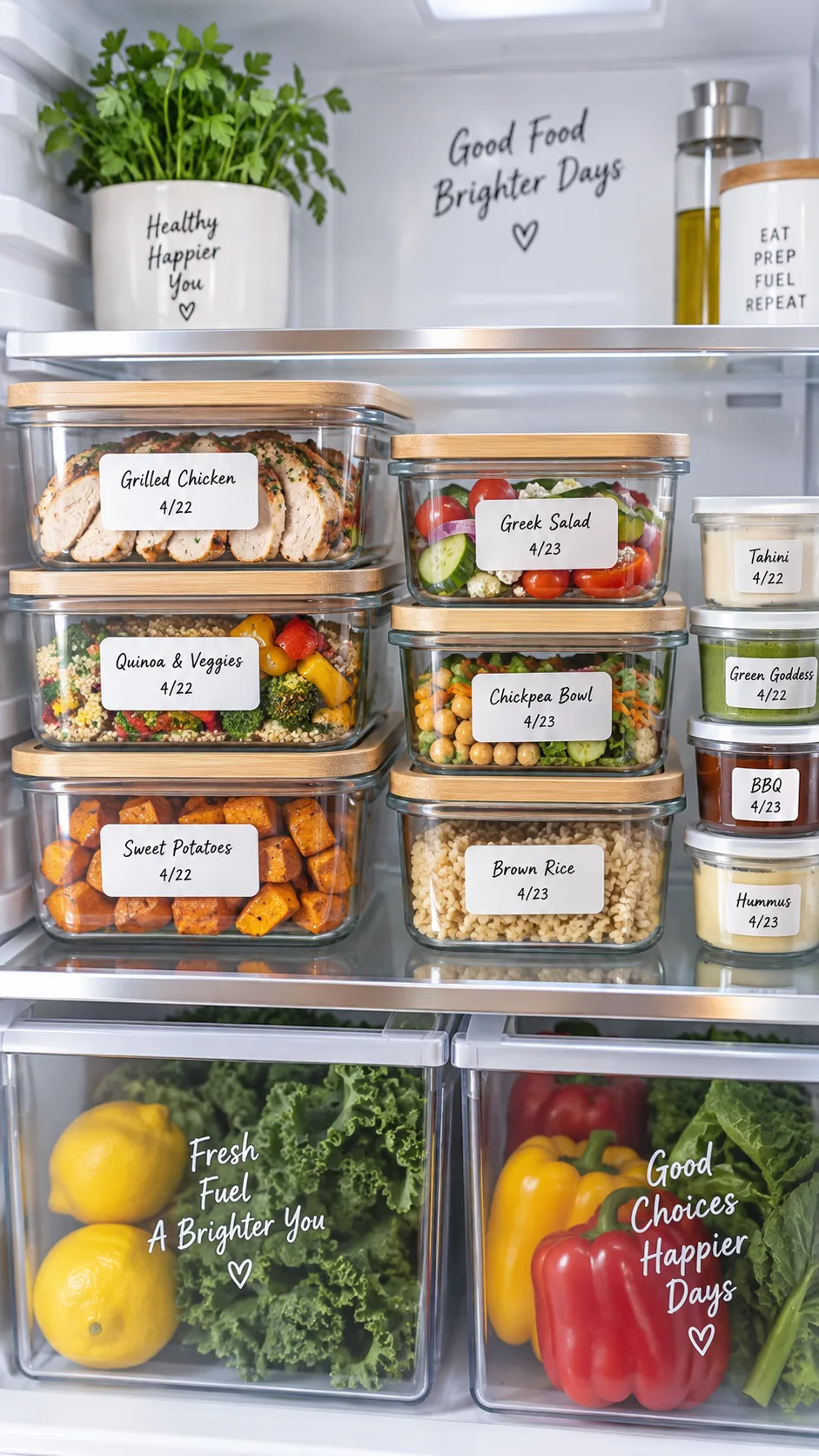
Store your sauces separately in tiny containers. Sauce sitting on rice for four days creates something that looks like a science experiment.
10 low calorie meal prep ideas that fill you up
These all sit between 300 and 480 calories per serving. I’ve made every single one, and my partner has eaten every single one without complaint, which is the real test.
1. Chili lime chicken and cauliflower rice bowls (~390 cal)
Marinate trimmed chicken thighs in lime, chili powder, cumin, and garlic. Roast at 425°F for 22 minutes. Serve over 50/50 cauliflower rice and jasmine rice with black beans and pico. 38g protein, 11g fiber. The beans do the heavy lifting here.
2. Turkey taco stuffed peppers (~340 cal)
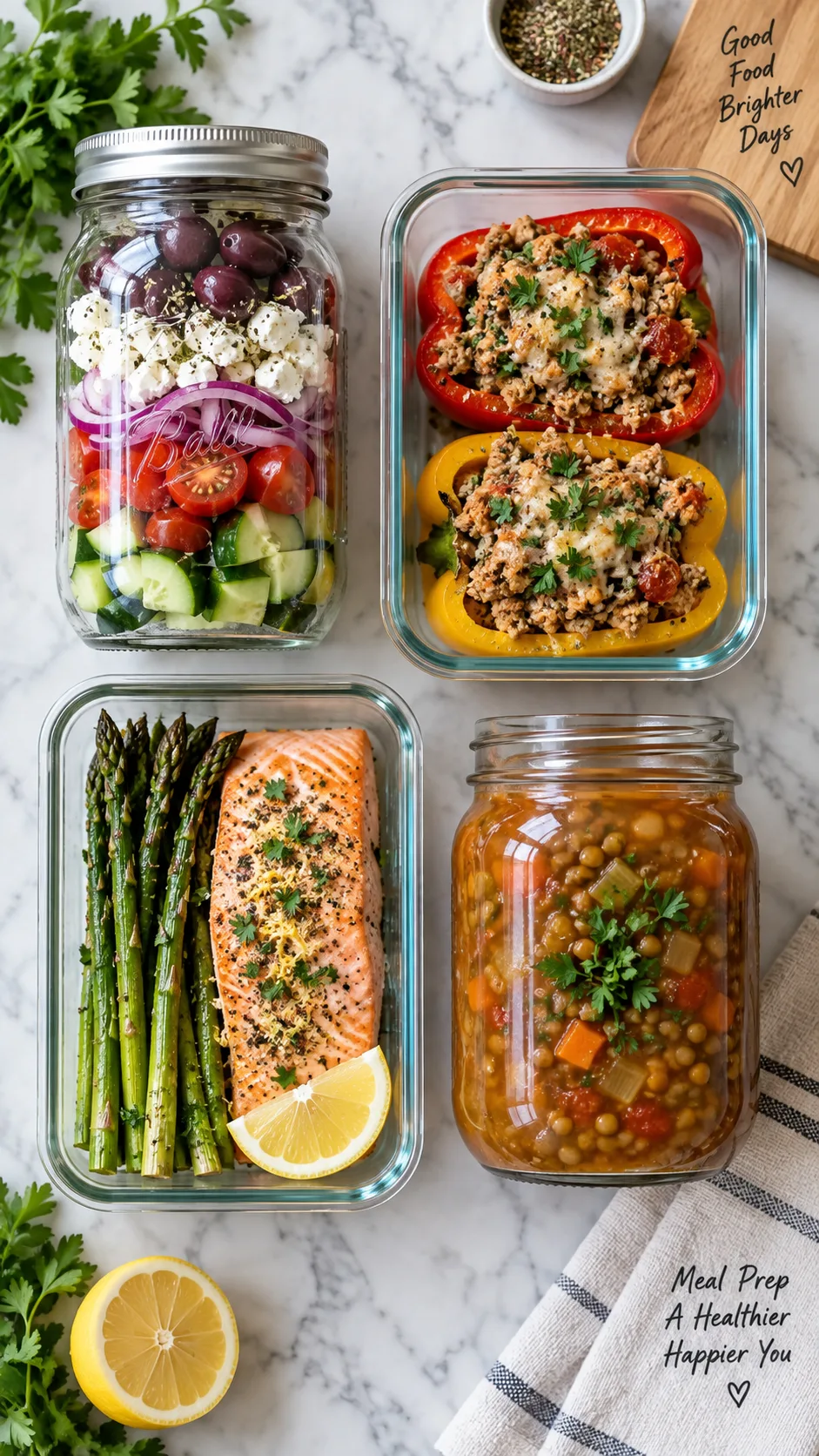
Ground turkey, taco seasoning, fire-roasted tomatoes, and corn, stuffed into bell pepper halves and baked. They freeze brilliantly. Two halves per serving fills a container and a stomach.
3. Egg white and veg breakfast cups (~180 cal for two)
Egg whites, spinach, mushrooms, and a little feta, baked in a muffin tin. Pair them with a piece of fruit and you’ve got breakfast for under 300. If you want more breakfast options that don’t taste like cardboard, my healthy breakfast meal prep guide has a full week’s worth.
4. Shrimp and zucchini noodle scampi (~310 cal)
Shrimp cooks in four minutes. Four. Toss it with zoodles, garlic, white wine, a teaspoon of butter, and lemon zest. Prep the shrimp and the sauce, then add the zoodles fresh (they get watery, so learn from my mistakes).
5. Greek chicken and chickpea salad jars (~420 cal)
Layer the dressing at the bottom, then chickpeas, cucumber, tomato, red onion, chicken, and greens on top. Shake it at lunch. It stays crisp for four days. This one changed my work lunches forever.
6. Lentil and vegetable soup (~250 cal per big bowl)
Soup is the ultimate volume-eating hack. Water content plus fiber plus heat slows you down. Use brown lentils, carrots, celery, tomato, spinach, and a parmesan rind if you’re feeling fancy.
7. Sheet pan salmon with asparagus and baby potatoes (~450 cal)
One pan, 20 minutes, omega-3s, and it reheats better than people claim. Salmon also ranks incredibly high on satiety scales. The fat keeps you steady for hours.
8. Korean-style beef and cabbage bowls (~410 cal)
Lean ground beef with soy, sesame, ginger, and garlic, piled over shredded cabbage and a scoop of rice. Cabbage costs about a dollar and gives you serious crunch. For more variations, the ground beef meal prep recipes roundup has budget options that stretch a pound of beef across four meals.
9. Cottage cheese bowls (savory or sweet) (~230 cal)
Cottage cheese quietly gives you 25g of protein per cup for around 180 calories. Savory version: cucumber, tomato, everything bagel seasoning, black pepper. Sweet: berries and cinnamon. You cook nothing.
10. Tofu and broccoli stir-fry with garlic ginger sauce (~370 cal)
Press the tofu. I mean it. Fifteen minutes under a heavy pan changes the texture completely. Coat it in cornstarch, air fry at 400°F for 15 minutes, then toss it in sauce. Plant-based eaters can grab more ideas from these vegetarian meal prep recipes.
Volume eating: the trick that makes low calorie feel generous
Volume eating means picking foods that give you a LOT of physical food per calorie. Sounds gimmicky, I know. It’s really just physics plus biology.
Compare these:
- 100 calories of almonds: about 14 nuts. Gone in 30 seconds.
- 100 calories of zucchini: roughly five whole zucchini. You physically cannot finish that.
- 100 calories of strawberries: about three full cups.
- 100 calories of air-popped popcorn: over three cups.
Nothing is wrong with almonds. They’re great food. But when you’re eating in a deficit, every calorie needs to earn its place. Swap half your rice for cauliflower rice. Double the vegetables. Add a broth-based soup before dinner.
A classic study from Penn State found that people who ate a low-calorie soup before lunch took in roughly 20% fewer total calories at that meal. Twenty percent. From soup. That’s basically free.
Cheap volume foods I always keep stocked
- Cabbage. It lasts weeks, costs nothing, and adds crunch to everything.
- Frozen cauliflower rice. The single best calorie-cutting swap I know of.
- Egg whites in a carton. They bulk up scrambles for almost no calories.
- Canned beans. Fiber, protein, and about 60 cents a can.
- Frozen berries. Dessert that doesn’t derail anything.
- Greek yogurt (0% or 2%). Sauce base, snack, breakfast, all of it.
How to prep a full week in 90 minutes
I refuse to spend my entire Sunday in the kitchen. Here’s the sequence I use, built around overlapping cook times instead of doing tasks one by one.
- Minutes 0 to 5: Oven to 425°F. Big pot of water on for grains. Get organized before you chop anything.
- Minutes 5 to 20: Chop all the vegetables at once. All of them. Every single one. Switching between chopping and cooking wastes more time than anything else.
- Minutes 20 to 25: Two sheet pans into the oven, one protein and one vegetables. Grains into the pot.
- Minutes 25 to 40: Cook the stovetop protein (ground beef, tofu, shrimp) while the oven runs.
- Minutes 40 to 50: Mix your sauces and dressings. Portion them into small containers.
- Minutes 50 to 70: Let everything cool. Wipe down counters, wash dishes, drink coffee, judge your life choices.
- Minutes 70 to 90: Assemble and portion. Label with dates. Done.
New to this whole thing? The beginner’s meal prep blueprint walks through the setup step by step, including which containers survive the microwave.
Food safety: the part everyone ignores until it’s too late
I once ate day-six chicken. I will not describe what followed. Let’s just say I now own a label maker and I use it religiously.
The USDA’s cold storage guidelines say you should eat cooked meat, poultry, and seafood leftovers within 3 to 4 days in the fridge. Not five. Not “it smells fine.”
- Cool food before you seal it. Trapped steam creates condensation, and condensation breeds bacteria.
- Prep in two waves. Sunday covers Monday through Wednesday, Wednesday covers Thursday and Friday.
- Freeze days 4 and 5. Cooked grains, soups, and stews freeze beautifully.
- Reheat to 165°F. Hot in the middle, not lukewarm around the edges.
Want to lean harder on the freezer? The freezer meal prep system covers what freezes well and what turns into a sad, icy mess.
Mistakes I made so you don’t have to
Prepping seven identical meals
By Wednesday you’ll hate your food. By Thursday you’ll order takeout. Prep components, not complete meals. Cook chicken, rice, and three vegetables, then mix and match with different sauces. Same prep time, four times the variety.
Cutting fat to zero
I tried this. My skin got dry, I felt permanently unsatisfied, and I lost zero extra weight. Fat slows gastric emptying, which means it literally keeps food in your stomach longer. Keep 15 to 20g of fat per meal.
Ignoring snacks entirely
Going seven hours between meals on 1,400 calories is a recipe for demolishing a sleeve of crackers. Plan two 150-calorie snacks. Greek yogurt, an apple with a tablespoon of peanut butter, turkey roll-ups. The healthy meal prep snacks guide has a solid list if you’re stuck.
Weighing nothing
Eyeballing portions works fine until it doesn’t. I “eyeballed” my olive oil for months, then measured what I’d been pouring: three tablespoons. That’s 360 calories of invisible oil every day. Use a $12 food scale for two weeks, then go back to trusting your eyes.
Building your own low calorie week
Start smaller than you think. Three lunches. That’s it for week one.
Most people try to prep 21 meals on their first Sunday, burn out spectacularly, and never touch a food container again. Sound familiar?
Here’s a realistic progression:
- Week 1: Prep 3 lunches. One protein, one grain, two veg.
- Week 2: Add breakfast. Overnight oats or egg cups, both of which take 10 minutes.
- Week 3: Add snacks. Portion them into grab bags.
- Week 4: Add two dinners. Leave the rest flexible for real life.
Notice that nobody said prep every meal. Flexibility keeps you consistent, and consistency beats perfection every time. If you want a structured calorie target to work with, the 1200 calorie deficit meal plan lays out a version people genuinely stick to.
The bottom line
Low calorie meal prep works when you stop shrinking portions and start restructuring meals. That’s the whole shift.
Remember the three levers: protein (30 to 40g per meal), fiber (aim for 25 to 35g daily), and water-heavy volume foods. Hit all three and 400 calories feels like a real meal instead of a hostage negotiation with your own appetite.
Add flavor aggressively. Prep components instead of finished meals. Respect the 3 to 4 day fridge rule. Start with three lunches, not twenty-one meals.
And give yourself permission to eat a meal that isn’t prepped. You’re not chasing a perfect week. You’re chasing a week you’d happily repeat. Pick two recipes from this list, buy the ingredients tomorrow, and prep them Sunday. That’s the entire assignment.