

I spent three years sleeping on a wedge pillow with a bottle of antacids on my nightstand like it was a glass of water. Every night went the same way: lie down, count to sixty, feel the burn crawl up my throat. Sound familiar?
Then I changed how I ate. No miracle supplement, just a boring, structured, deeply unglamorous GERD diet plan. Six weeks later the wedge pillow went into the closet. Below is exactly what I did, what mattered, and what turned out to be complete nonsense.
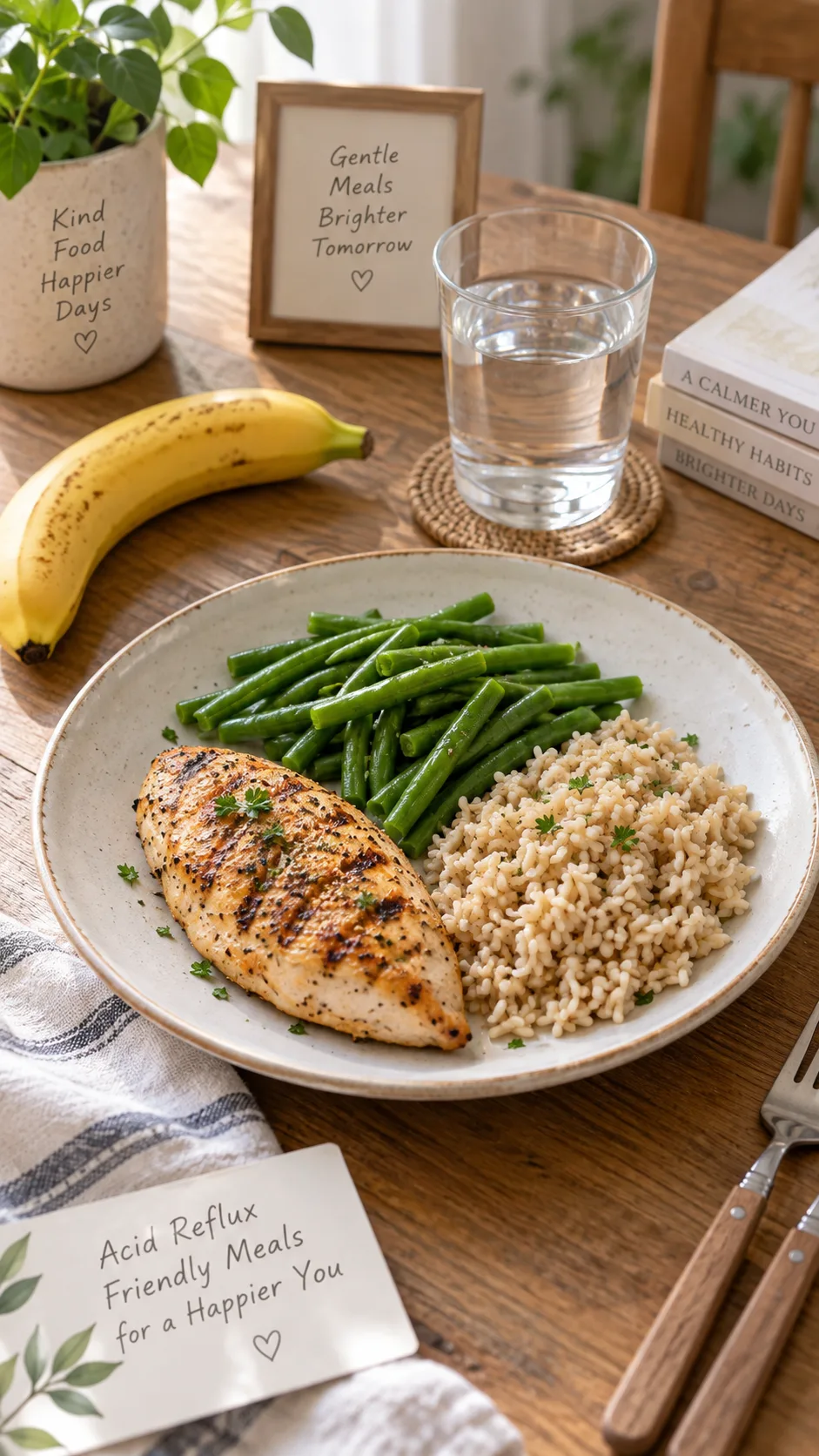
First, what acid reflux really is (the 60 second version)
Your stomach and your esophagus meet at a muscular ring called the lower esophageal sphincter (LES). That ring should stay shut like a bouncer at an exclusive club. When it relaxes at the wrong moment, stomach acid climbs north, and your esophagus, which has zero acid-proof lining, screams about it.
Doctors call the chronic version GERD (gastroesophageal reflux disease). The National Institute of Diabetes and Digestive and Kidney Diseases estimates GERD affects roughly 20% of adults in the United States. So if you feel alone at 2 a.m. chewing chalky tablets, you have plenty of company.
This is the idea that changed everything for me: food does more than make acid. Some foods physically relax that LES bouncer, and others slow your stomach down so it stays full longer. Fix those two things and you fix most of the problem.
A quick, honest disclaimer
I’m not your doctor. I’m a person who fixed their own reflux and read an embarrassing number of gastroenterology papers along the way. Persistent heartburn deserves a real medical workup. Reflux can mask ulcers, a hiatal hernia, H. pylori infection, or worse. Go get scoped if your symptoms are severe, bloody, or come with trouble swallowing. Seriously.
The mistake I made for two years straight
I hunted for the ONE villain food. Coffee? Cut it. Tomatoes? Gone. Chocolate? Painfully removed. Nothing worked, and my diet slowly shrank to plain rice and existential dread.
Ever wonder why the “avoid trigger foods” advice fails so many people? Because the pattern of eating matters more than the individual food. I was eating one massive meal at 9 p.m., lying down at 10 p.m., and blaming the tomato.
Once I fixed timing, portion size, and fat load, I got coffee back. Not a lot. But I got it back. That felt like winning the lottery.
The four pillars of a GERD diet plan that works
Forget the hundred-item “do not eat” lists. Everything I did fits into four pillars, ranked by how much difference each one made for me.
Pillar 1: Shrink the meal, multiply the meals
A stuffed stomach pushes upward on the LES. Physics, not opinion. I switched from three big meals to four or five smaller meals of roughly 300 to 450 calories each.
- Stop eating at “satisfied,” not “full.” Aim for about 75% capacity.
- Put the fork down between bites. Sounds twee. Works anyway.
- Drink liquids between meals rather than during them. Chugging water with food inflates stomach volume fast.
This one change cut my nighttime episodes roughly in half within ten days. If you only do one thing from this article, do this one.
Pillar 2: The three hour rule (non-negotiable)
No food within three hours of lying down. None. Not a “small snack.” Not “just a yogurt.” Gravity is free medicine, and you throw it away when you eat at 10 p.m. and hit the pillow at 10:30.
Johns Hopkins and most GI specialists recommend the same window, and Johns Hopkins Medicine also suggests raising the head of your bed by 6 to 8 inches. I used two cheap bed risers under the headboard legs. Best $18 I’ve spent on my health.

Pillar 3: Drop the fat load per meal
Fat slows gastric emptying, so your food sits in your stomach longer, which gives acid more time to escape. High-fat meals also relax the LES directly. That greasy takeaway does more than sit heavy. It props the gate open.
I didn’t go fat-free (that’s miserable and unnecessary). During the healing phase I capped fat at roughly 10 to 15 grams per meal and built every plate around lean protein.
- Swap: fried chicken → grilled or baked chicken breast
- Swap: full-fat cream sauces → broth-based or yogurt-based sauces
- Swap: bacon and sausage → turkey breast, egg whites, lean fish
- Swap: a fistful of almonds → a smaller portion, eaten earlier in the day
If lean protein already anchors your meals, a structured high protein meal plan fits nicely with reflux management. Protein keeps you full without the heavy fat load that sets off symptoms.
Pillar 4: Find YOUR triggers, not the internet’s
The common triggers have real evidence behind them, but individual response varies wildly. My friend drinks orange juice with zero issues. I look at a lemon and regret it.
The usual suspects:
- Citrus and tomato products: high acidity, direct irritation
- Chocolate: contains methylxanthines that relax the LES
- Peppermint: relaxes smooth muscle, including your bouncer
- Alcohol: relaxes the LES and increases acid production. Double offender.
- Carbonated drinks: gas expands, pressure rises, acid escapes
- Coffee: mixed evidence, but very real for many people
- Spicy food: capsaicin can slow emptying and irritate an inflamed esophagus
- Raw onion and garlic: notoriously rough on refluxers
Don’t drop all eight forever. That’s a recipe for nutritional misery. Instead, cut them all for two weeks, then bring one back every three days and track your symptoms. Boring? Yes. Effective? Extremely.
Foods that helped me (the green list)
Nobody talks enough about what to ADD. Restriction alone leaves you hungry and resentful, and resentful people quit diets.
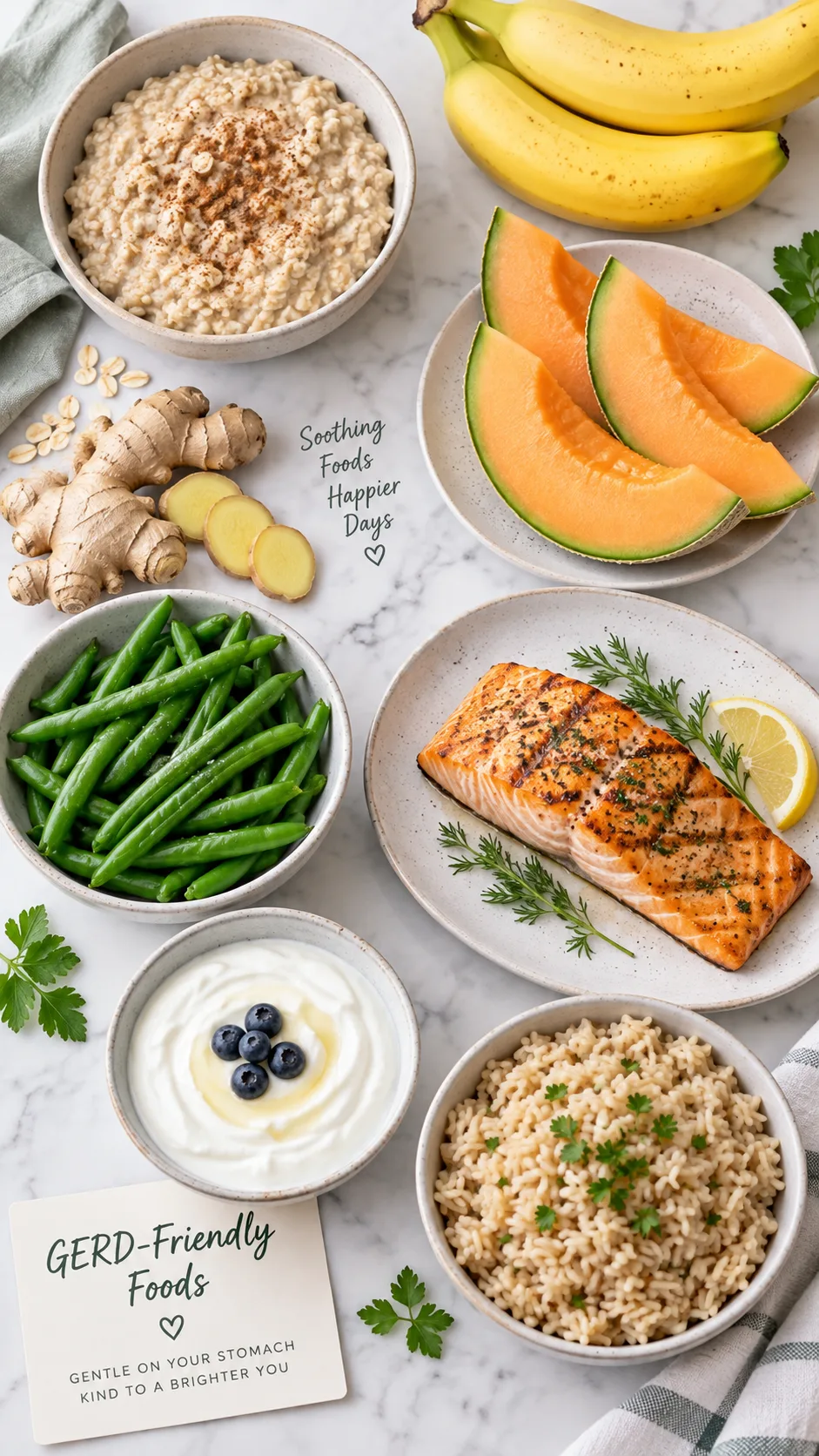
- Oatmeal: soaks up acid, high in soluble fiber, genuinely soothing
- Bananas and melons: low acid, gentle, easy snacks
- Ginger: anti-inflammatory and a classic anti-nausea aid. I used fresh slices in hot water
- Lean poultry and white fish: protein without the fat penalty
- Green vegetables: broccoli, green beans, asparagus, cucumber, zucchini
- Brown rice, quinoa, sweet potato: sturdy, low-acid carbs
- Low-fat Greek yogurt: cooling, protein-rich, and most people tolerate it well
- Fennel and celery: low acid, high water content
Research summarized by Harvard Health Publishing also links fiber-rich, plant-heavy eating patterns to fewer reflux symptoms. That overlaps almost completely with an anti-inflammatory eating approach: same vegetables, same lean proteins, same “go easy on the fried stuff” philosophy.
My exact 7 day GERD diet plan
This is what I ate during my healing phase. Adjust portions to your body. I’m a 5’10” adult who wasn’t trying to lose weight. Watch the meal timing. It matters as much as the food.
Days 1 through 7 template
- 7:30 a.m., breakfast: Oatmeal with sliced banana, a spoon of honey, a sprinkle of ground flax
- 10:30 a.m., snack: Low-fat Greek yogurt or a small handful of melon
- 1:00 p.m., lunch: Grilled chicken breast, brown rice, steamed green beans, a drizzle of olive oil
- 4:00 p.m., snack: Rice cakes with a thin layer of almond butter, or a pear
- 6:30 p.m., dinner: Baked white fish or turkey, roasted sweet potato, sautéed zucchini
- After 7:30 p.m., kitchen closed. Herbal tea only (ginger or chamomile, never peppermint)
Rotating meal ideas so you don’t lose your mind
- Breakfast rotation: egg-white omelette with spinach, overnight oats with melon, whole-grain toast with mashed banana
- Lunch rotation: turkey and cucumber wrap, quinoa bowl with grilled chicken and roasted carrots, lentil soup (low spice, low tomato)
- Dinner rotation: baked cod with couscous, chicken and broccoli stir-fry with ginger and low-sodium soy, roasted turkey meatballs with mashed sweet potato
- Snack rotation: banana, rice cakes, air-popped popcorn, low-fat cottage cheese, baked apple slices
Notice what’s missing? Tomato sauce, citrus, fried anything, chocolate, and late-night snacks. I missed the chocolate most. I won’t lie about that.
What about coffee? (the question everyone asks first)
Yes, I gave it up. For six weeks. Then I brought it back, carefully.
What worked when I reintroduced it:
- Never on an empty stomach. Food first, always.
- One cup, before 11 a.m.
- Cold brew or a dark roast. Both run lower in acidity than a light-roast drip
- Skip the heavy cream. Fat load, remember?
FYI, roughly 60% of the people I’ve talked to about this got coffee back using the same approach. The other 40% had to accept the sad truth.
The lifestyle changes that multiplied my results
Diet did about 70% of the work. These four habits handled the rest.
1. Losing weight around the middle
Abdominal fat raises pressure inside your belly, which pushes stomach contents upward. The Mayo Clinic lists obesity as a leading GERD risk factor. I dropped about 14 pounds and my symptoms eased noticeably, more than any single food swap managed.
If weight plays a part in your case, a moderate, sustainable approach beats crash dieting. Something like a 1500 calorie meal plan gives you a gentle deficit without leaving you ravenous at midnight, which happens to be exactly when reflux likes to strike.
2. Sleeping on my left side
Anatomy quirk: your stomach sits to the left, and sleeping on your left keeps the junction above the acid line. Right-side sleeping does the opposite. I trained myself with a body pillow in about a week.
3. Loosening the belt (literally)
Tight waistbands, shapewear, and heavy weight belts all squeeze your abdomen. I swapped my skinny jeans for something with actual mercy after meals. Fashion loss, comfort gain.
4. Chewing sugar-free gum after meals
Chewing boosts saliva, saliva neutralizes acid, and swallowing clears the esophagus. Twenty minutes of gum after lunch turned into a real habit. Avoid mint flavors. Use fruit or cinnamon instead.

My realistic timeline (set your expectations here)
- Days 1 to 3: Almost nothing changes. You feel cheated. Keep going.
- Days 4 to 10: Nighttime symptoms drop first. You sleep through the night once and get weirdly emotional about it.
- Weeks 2 to 4: The daytime burning fades. That constant throat-clearing eases up.
- Weeks 4 to 8: Your esophagus heals. Small slip-ups stop causing full meltdowns.
- Month 3 and beyond: You bring foods back one at a time and build a version of this you can live with.
Healing tissue takes time. Your esophagus won’t repair itself in 48 hours just because you ate oatmeal. Patience isn’t optional here.
Mistakes I see people make constantly
- Quitting acid-reducing medication cold turkey. PPIs cause rebound acid hypersecretion. Taper with your doctor’s guidance, never overnight.
- Drinking a liter of water with dinner. Volume is volume.
- Cutting everything at once and living on chicken and rice. You’ll quit by Thursday.
- Ignoring stress. Stress heightens esophageal pain sensitivity. Walks, sleep, and breathing exercises genuinely help.
- Lying on the couch right after dinner. A reclined couch counts as lying down. Sorry.
- Skipping the food diary. You cannot identify your triggers from memory. Nobody can.
When diet isn’t enough
I’ll be straight with you: diet alone doesn’t fix everyone. Structural problems like a hiatal hernia, a genuinely weak LES, or delayed gastric emptying need medical treatment.
See a doctor promptly if you have:
- Trouble or pain when swallowing
- Unexplained weight loss
- Vomiting blood or passing black stools
- Chest pain (always rule out cardiac causes FIRST)
- Symptoms lasting beyond 8 weeks despite dietary changes
Untreated GERD over the long run raises the risk of Barrett’s esophagus. I’m not trying to scare you. I’m telling you why chronic heartburn deserves treatment as a medical problem rather than an inconvenience.
The bottom line
My reflux didn’t disappear because I found a magic food. It disappeared because I ate smaller meals, stopped eating three hours before bed, cut the fat load per meal, and worked out my own personal triggers instead of following the internet’s generic list.
Add a slightly raised bed, left-side sleeping, some weight loss, and post-meal gum, and you have the whole protocol. No supplements. No detox tea. No $300 program.
Start tonight with one thing: close your kitchen three hours before bed. That’s it. Then add a food diary tomorrow. Small moves, stacked consistently, beat a dramatic overhaul you abandon by the weekend.
Your esophagus has put up with a lot. Give it eight quiet weeks and see what it does for you. I’d bet money you’ll be shopping for a normal pillow soon.