
Your backbend does not need more grit. It needs better preparation.
Many people crank into their lower backs, hold their breath, then wonder why wheel pose feels awful. A flexible back asks several areas to work together: your hips open, your shoulders move, your core supports you, and your spine extends with control.
This guide covers nine back flexibility stretches, along with simple cues that can help you build deeper, safer backbends. Stop forcing the shape and start building it.
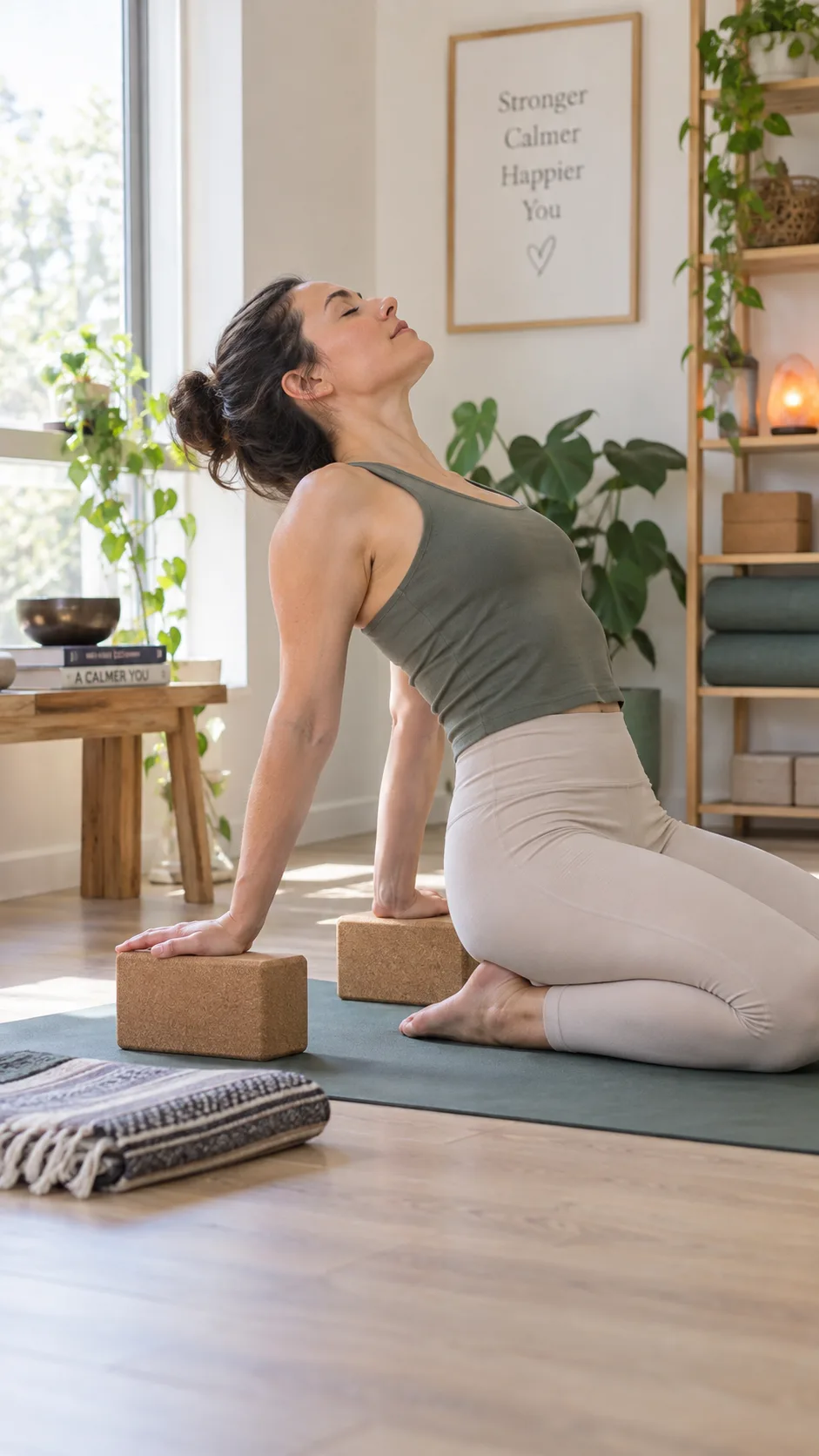
What creates a flexible back?
Back flexibility involves much more than your spine. Your thoracic spine, shoulders, hip flexors, glutes, hamstrings, ribs, and breathing habits all affect your backbend.
Your lower back already has plenty of movement. Your upper back and shoulders often contribute less, so your lumbar spine takes over. That habit creates compression instead of a strong, open bend.
I learned this the frustrating way after trying to stretch harder for weeks. When I spent time on my hip flexors and shoulders, my backbends improved faster and felt far less crunchy.
Think about length before depth
Before you bend backward, create length through your spine. Lift through your chest, gently brace your stomach, and distribute the curve across your whole back.
Ask yourself: can you breathe slowly here? If you cannot breathe, you cannot control the position. Your body reads breath holding as danger and responds by tightening.
The American College of Sports Medicine’s activity guidance supports regular mobility and flexibility work alongside strength training. Regular practice matters more than one hard stretching session every few weeks.
Warm up before you stretch for backbends
Cold muscles rarely enjoy deep extension. Spend five to eight minutes warming up before these back exercises, especially if you sit at a desk, drive often, or wake up feeling stiff.
- Walk briskly, march, or cycle for two minutes.
- Circle your shoulders forward and backward for 30 seconds each.
- Move through 8 to 10 slow cat-cow repetitions.
- Perform 10 bodyweight squats through a comfortable range of motion.
- Take five slow breaths into your side ribs and upper back.
Comfortable squats can also help your hips move better during backbend practice. Read our guide on how to squat properly without wrecking your knees if your hips feel stiff or your lower back takes over each movement.
9 stretches for a flexible back and deeper backbends
Move slowly through this sequence. Hold each stretch for 20 to 45 seconds, complete one to three rounds, and stop before you feel pain.
-
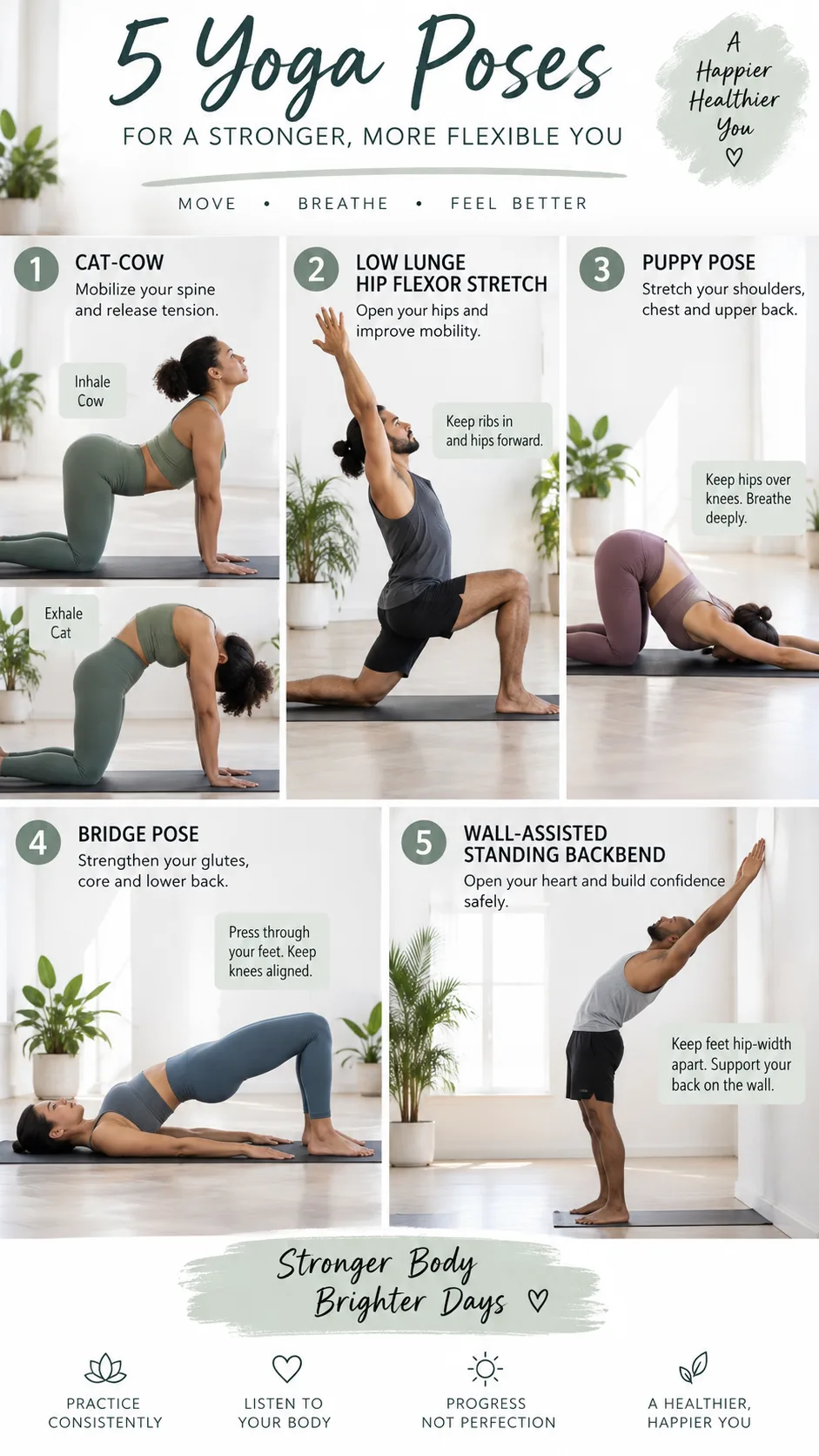
1. Cat-cow for spinal control
Start on your hands and knees, with your wrists below your shoulders and knees below your hips. Inhale as you lift your chest and tailbone. Exhale as you round your spine and press the floor away.
Choose control over maximum range. Cat-cow invites each part of your spine to move, which makes it a useful stretch for beginners.
-
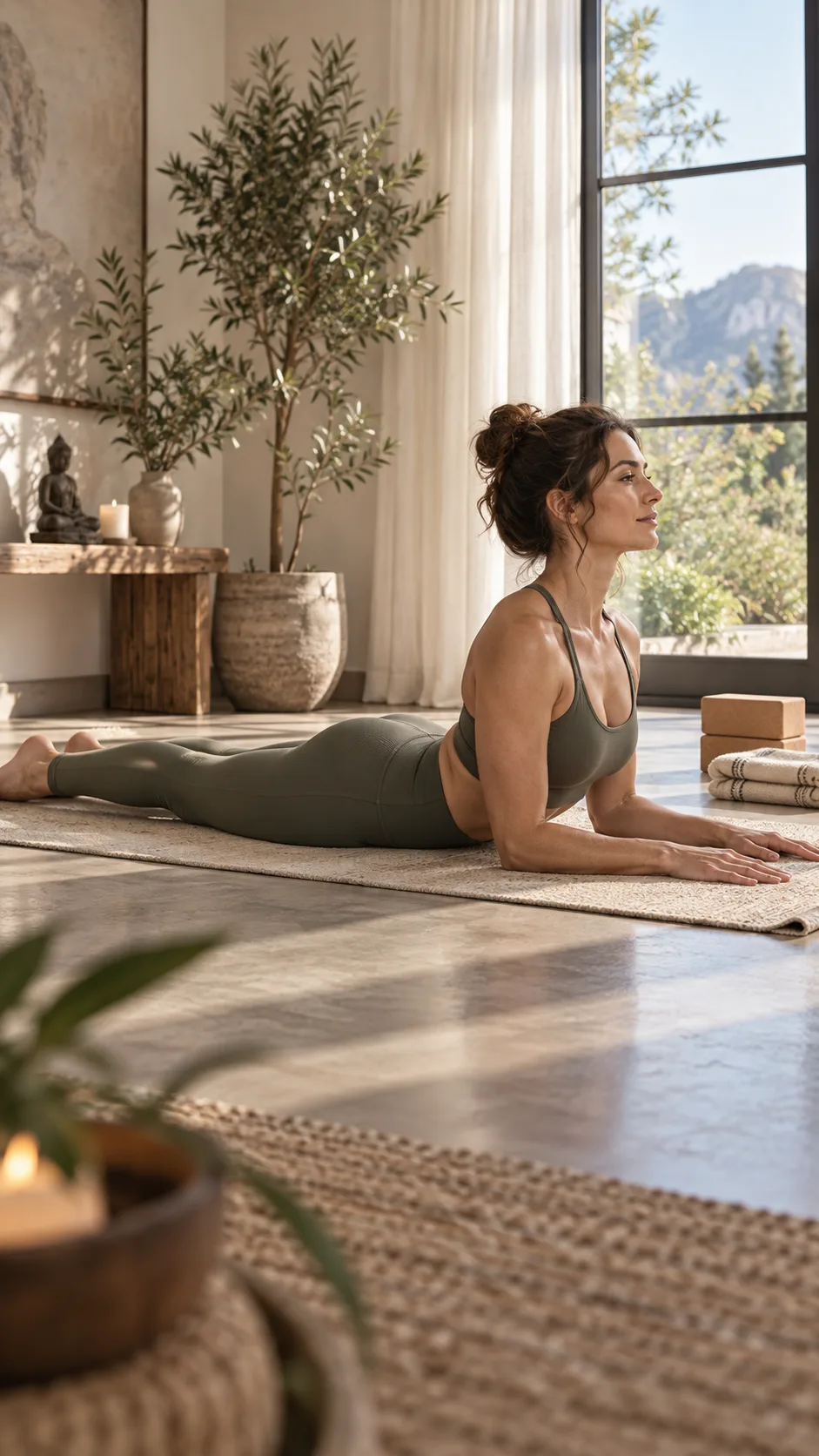
2. Sphinx pose for gentle lower back extension
Lie on your stomach and place your elbows below your shoulders. Press your forearms into the floor, gently lift your chest, and let your legs rest behind you.
Draw your ribs in slightly instead of dropping your belly toward the floor. You should feel a mild stretch across your abdomen and a gentle opening through your back.
-
3. Low lunge hip flexor stretch
Step one foot forward into a kneeling lunge and rest your back knee on a cushion or folded mat. Tuck your tailbone slightly, squeeze the glute on your back leg, and glide your hips forward.
Tight hip flexors can tip your pelvis forward and make your lower back work too hard. This stretch gives your backbend more room without asking your lumbar spine to do everything.
-
4. Half kneeling quad stretch
Stay in your low lunge, bend your back knee, and hold that foot with the hand on the same side if you can reach it comfortably. Loop a yoga strap around your foot if your hand cannot reach.
Keep your knees close and squeeze your back glute. Do not pull your foot toward your head. Aim for length through the front of your thigh.
-
5. Puppy pose for shoulders and upper back
Start on hands and knees, then walk your hands forward while keeping your hips above your knees. Lower your chest toward the floor and rest your forehead down if it feels comfortable.
Puppy pose takes your shoulders into flexion, which helps with bridge pose and wheel pose. As you reach forward, keep your ribs from flaring too far.
-
6. Thread the needle for thoracic rotation
From hands and knees, slide your right arm under your left arm with your palm facing up. Rest your right shoulder and temple lightly on the mat, then breathe into the back of your ribs.
Your thoracic spine needs rotation along with extension. This stretch can ease stiffness through your upper back and make overhead arm positions feel more available.
-
7. Supported fish pose for chest opening
Place a yoga block, firm cushion, or rolled blanket beneath your upper back. Lie back over the support, extend your arms overhead or out to the sides, and allow your chest to open.
Place the support below your shoulder blades, not directly under your lower back. This position lets you explore thoracic extension without asking your lumbar spine to carry the whole pose.
-
8. Bridge pose for strength and mobility
Lie on your back with bent knees and feet hip width apart. Press through your feet, squeeze your glutes, and lift your hips while reaching your knees forward.
Bridge pose builds the strength that helps you control deeper backbends. Hold for five slow breaths, lower with control, and repeat two or three times.
-
9. Wall assisted backbend for confidence
Stand with your back to a wall and place your feet about one foot away. Reach your arms overhead, lift your chest, and gently lean back until your hands meet the wall.
Walk your hands down only as far as you can control. The wall can reduce fear and lets you practise spinal extension without throwing yourself into a deep bend. This drill often gives nervous beginners a noticeable confidence boost.
Watch a guided back flexibility routine
A good video can help you find the rhythm of each movement, especially cat-cow, puppy pose, and bridge pose. Follow your own range of motion rather than copying someone else’s deepest shape. Your spine does not care about internet clout.
How often should you stretch your back?
Practise this back flexibility routine three to five days each week. Short, frequent sessions help your nervous system accept new ranges of motion much better than one punishing 90 minute session each month.
Start with 10 to 15 minutes. After two or three weeks, add a second round to your favorite stretches or extend each hold by 10 seconds.
Combine mobility work with strength work. Strong glutes, abs, and upper back muscles help you control a deep backbend and support your joints. Our guide on how to activate your glutes can help if your hamstrings or lower back take over during bridge pose.
Backbend mistakes that slow your progress
You push through sharp pain
Stretching discomfort can feel intense, but sharp, pinching, burning, numb, or radiating pain tells you to stop. Change the position, reduce your range, or skip it that day.
The NHS exercise advice encourages people to stay within comfortable limits and seek professional help for concerning symptoms. You do not need to suffer to train well.
You forget your core and glutes
Relaxed does not mean floppy. Gently engage your lower abs and glutes during active backbends to guide your pelvis and distribute the effort through your body.
Imagine zipping up snug jeans instead of bracing for a punch. That small amount of tension can turn a pinchy backbend into a steadier one.
You chase wheel pose too early
Wheel pose looks impressive, but it asks for shoulder mobility, wrist tolerance, hip extension, and confidence. Build your bridge pose first, then use wall drills before attempting a full wheel.
Use a simple rule: Earn depth through control. Your future backbend will feel better for it.
When you should ask a professional
Talk with a qualified physiotherapist, doctor, or sports medicine professional before intense backbend practice if you have osteoporosis, a recent injury, persistent back pain, nerve symptoms, or a history of spinal surgery.
Pregnancy, hypermobility, and inflammatory joint conditions also call for personal guidance. A skilled clinician can help you choose movements that fit your body instead of giving you broad restrictions.
The National Institute of Arthritis and Musculoskeletal and Skin Diseases offers practical information about back pain and warning signs. Seek help promptly if pain follows an injury, affects bladder or bowel control, or comes with weakness or numbness.
Build your flexible back one breath at a time
A flexible back does not come from forcing yourself into the deepest pose on day one. It grows through regular hip flexor stretches, shoulder mobility work, controlled spinal extension, and strength you can use.
Start with these nine stretches three times this week. Breathe slowly, leave your ego out of the room, and notice the small changes.
Your best backbend should feel strong, open, and completely yours.