

How many times have you abandoned a diet because you could not stomach another dry chicken breast resting on a bed of raw spinach? Mainstream diets usually demand miserable restriction. They tell you to cut carbs, slash portion sizes, and ditch flavor. You end up irritable, exhausted, and hungry enough to raid your kitchen cabinets at midnight.
Traditional Korean home cooking, known as Hansik, takes the opposite approach. You sit down to a table covered in distinct bowls: rich stews, fermented vegetables, steamed proteins, and warm grains. You eat until full, yet you shed weight. This is no gimmick. Millions of people across Korea stay lean while eating massive spreads of flavorful food every single day.
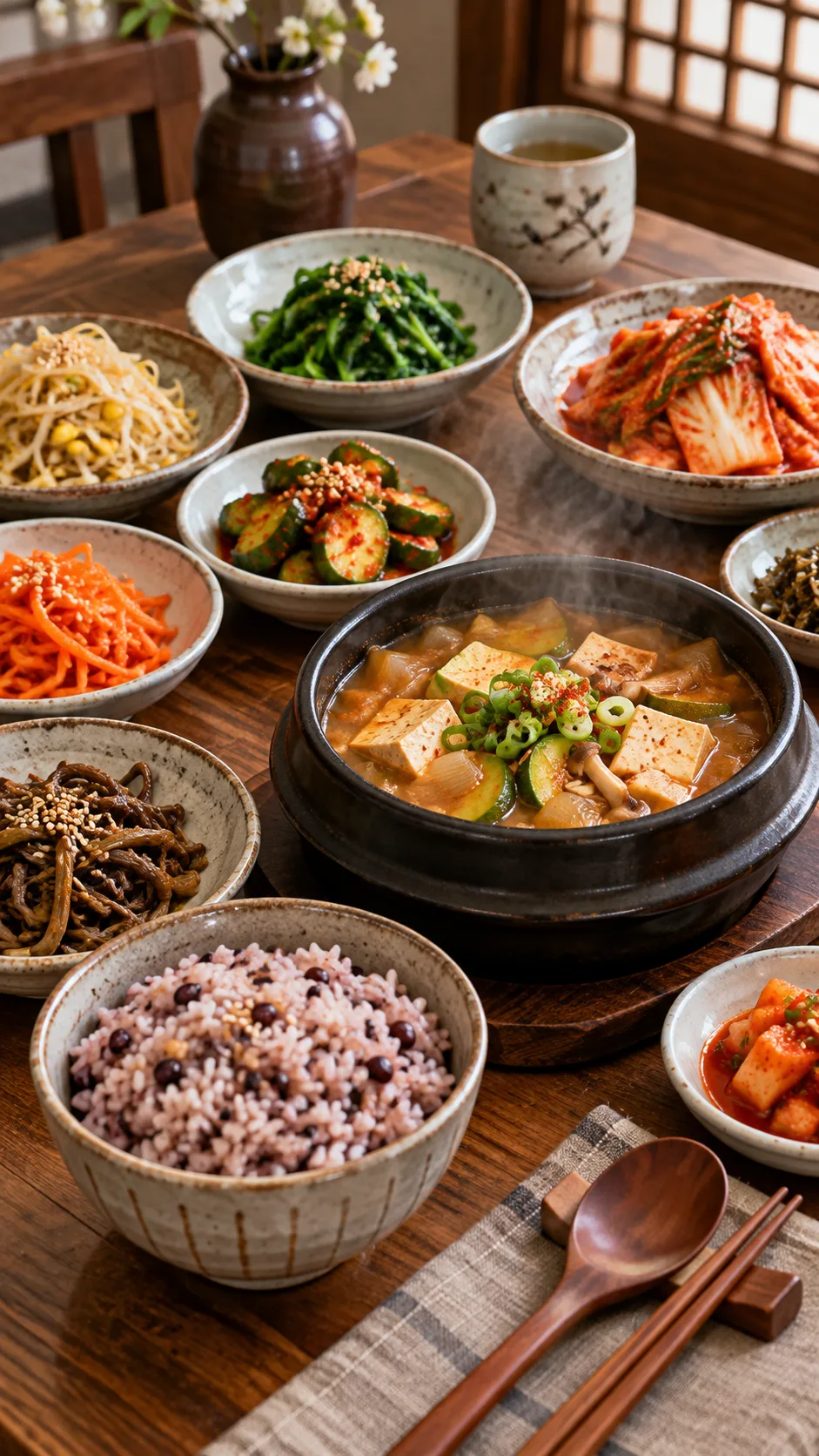
You can drop weight without feeling starved once you learn the basic habits behind Korean home cooking. Here is the complete meal plan, the science behind it, and the everyday recipes you need to start seeing changes this week.
Why Traditional Korean Eating Burns Fat Fast
Standard diet culture obsesses over calorie counts while ignoring volume, micronutrients, and fullness. Korean food culture solves this problem by flipping common diet habits on their head. Instead of eating one large portion of calorie-dense meat with heavy starches, you build a table of high-volume, nutrient-rich foods.
1. High Volume, Shockingly Low Caloric Density
Most people know the feeling of finishing a meal and still wanting more food. That happens when meals lack water and dietary fiber. Korean cooks use water-rich vegetables like radishes, cabbage, bean sprouts, zucchini, and spinach. They blanch, season, or simmer these vegetables into satisfying side dishes instead of serving them raw.
These vegetables hold huge amounts of water and prebiotic fiber, which fill your stomach quickly. This stretches the stomach walls and tells your brain that you ate a massive meal. In reality, you consumed fewer calories than you would find in half a bakery bagel. If you already like high-volume eating, you will spot similarities between this setup and our simple 1500 calorie meal plan.
2. The Fermentation Advantage and Gut Health
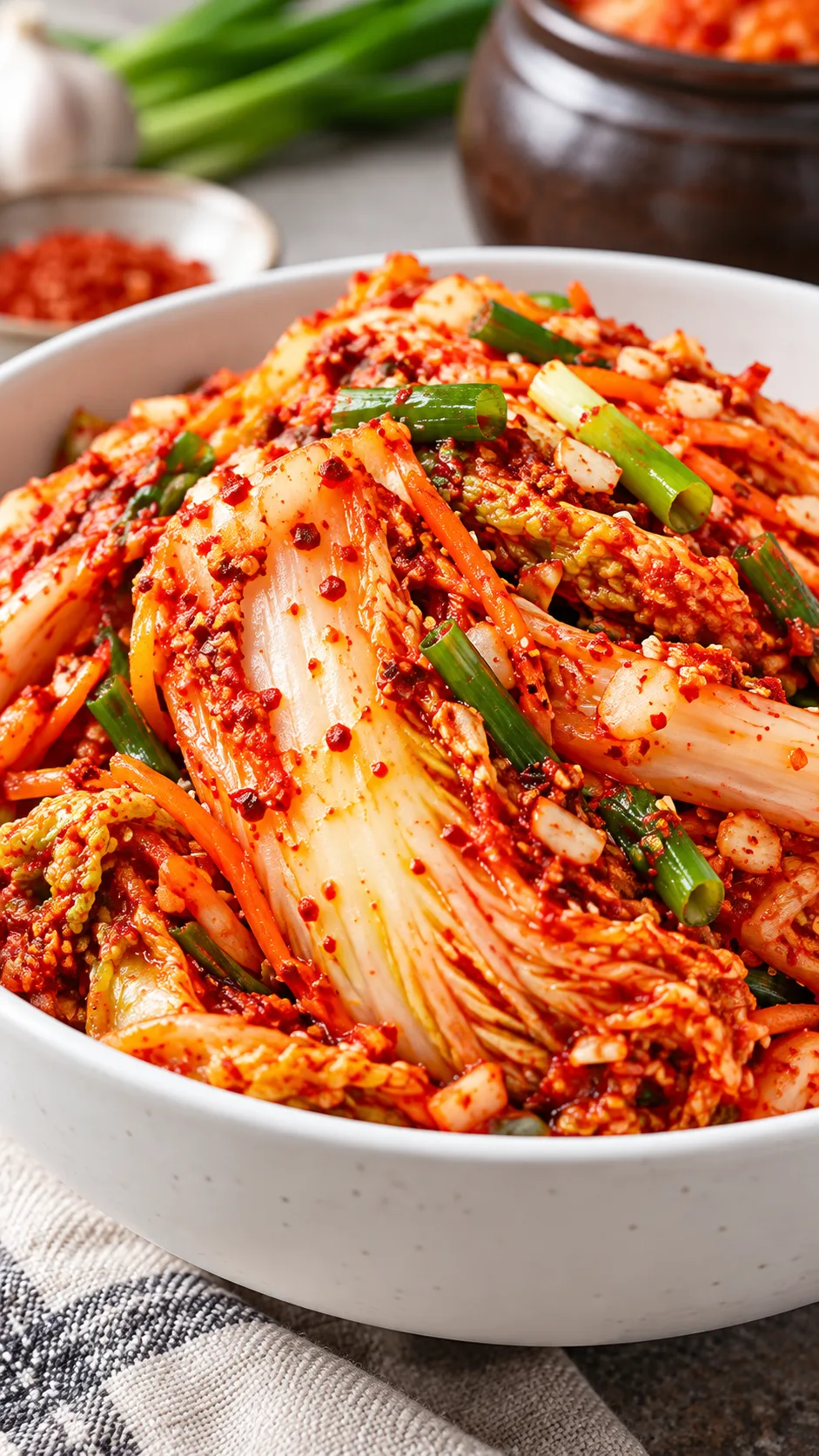
Kimchi sits at the center of every authentic Korean meal. This tangy fermented cabbage offers far more than a sharp kick of flavor. The fermentation process breeds colonies of beneficial probiotic bacteria, primarily Lactobacillus strains.
A clinical trial in the Annals of Nutrition and Metabolism showed that fermented kimchi lowered body weight, body mass index, and body fat percentage in overweight individuals. These friendly bacteria improve your gut microbiome, lower systemic inflammation, sharpen insulin response, and cut cravings for refined sugars. Your digestive tract runs smoothly when you feed it live fermented cultures every day.
3. Gentle Cooking Methods Over Heavy Frying
Walk into any fast-food restaurant, and you smell gallons of cooking oil bubbling in deep fryers. Traditional Korean home cooking uses heat and oil in a completely different way. Home cooks boil, steam, simmer, blanch, and quick-saute their ingredients.
Take Gyeran-jjim (Korean steamed eggs) as an example. Instead of frying three eggs in butter, a Korean cook whisks those eggs with savory kelp broth and steams them into a light, airy dish. You get the exact same protein with half the calories, twice the volume, and better hydration. Cooking methods make or break your fat loss efforts.
The 4 Golden Rules of the Korean Diet
Master these four simple rules before you cook your first batch of banchan. Stick to them, and you will lose weight without tracking every gram of food in an app.
- Build around vegetables first: Fill at least 60% of your plate with plant foods. Do not treat vegetables as a side garnish. Make them the foundation of the meal.
- Include soup or stew (*Guk* or *Jjigae*) with lunch and dinner: Broth-based soups slow down your eating speed, fill your stomach with warm liquid, and cut total calorie intake during the meal.
- Choose whole or mixed grains over refined carbs: Koreans rarely eat plain white rice when they want to stay healthy. Instead, they mix short-grain rice with brown rice, black rice, barley, and beans (*Japgokbap*). This combination steadies your blood sugar and supplies long-lasting energy.
- Season with fermented foods instead of sugar: Rely on fermented staples like doenjang (soybean paste), gochujang (chili paste), ganjang (traditional soy sauce), garlic, and sesame oil. They bring bold flavors without butter, heavy cream, or excess sugar.
If you want more meal combinations that keep your prep time short, check out these Korean diet meals that keep fat loss effortless.
Essential Ingredients to Stock in Your Pantry
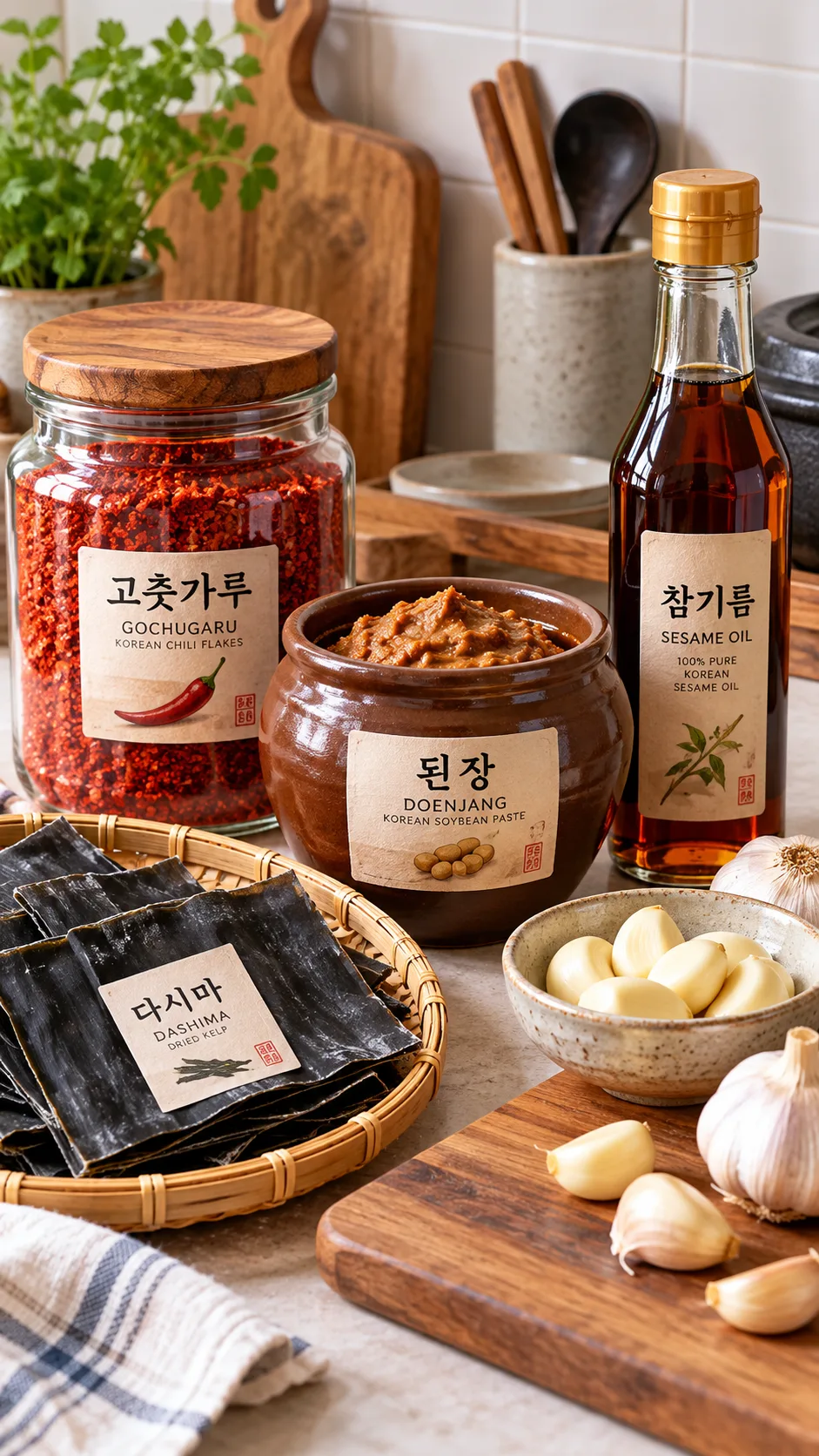
You need the right pantry staples to make these meals work. Fortunately, any Asian grocery store or well-stocked supermarket carries these ingredients at reasonable prices. Add these items to your cart:
- Gochugaru (Korean Chili Flakes): Sun-dried chili pepper flakes that add heat, fruity notes, and gentle smoke without extra salt.
- Doenjang (Fermented Soybean Paste): Earthy, savory, and rich in umami. Think of it as a deeper, rustic cousin to Japanese miso.
- Gochujang (Fermented Chili Paste): A sweet, savory, and spicy paste that builds depth in stews, marinades, and dressings. Choose brands that avoid added corn syrup.
- Toasted Sesame Oil: A quick drizzle right before serving adds a rich, nutty scent. Use small amounts, since a few drops provide plenty of flavor.
- Fresh Kimchi: Buy raw, unpasteurized kimchi with bubbling brine from the refrigerated section. Active bubbling means you get live probiotic cultures.
- Dried Anchovies or Dasima (Kelp): Simmer these in water to build the rich broth base behind almost every traditional soup.
- Tofu (Firm and Soft): A lean plant protein that soaks up savory broths like a sponge.
The Complete 7-Day Korean Weight Loss Meal Plan
This plan delivers roughly 1,400 to 1,600 calories each day, depending on your portions. It supplies clean protein, complex carbs, and gut-friendly fiber. Adjust your grain portions to match your daily activity level.
Day 1: Kickstarting the Metabolism
- Breakfast: Korean Steamed Eggs (Gyeran-jjim) with scallions and sesame seeds, plus a small bowl of napa cabbage kimchi.
- Lunch: Classic Tofu Bibimbap. Fill a bowl with blanched spinach, bean sprouts, sauteed zucchini, pan-seared firm tofu, a fried egg, half a cup of warm brown rice, and a spoonful of gochujang sauce. Mix everything together before eating.
- Dinner: Doenjang Jjigae (Fermented Soybean Stew) filled with zucchini, mushrooms, onions, and soft tofu. Serve it with half a cup of multigrain rice and seasoned cucumber banchan.
- Snack: A sliced Korean pear or crisp apple with hot roasted barley tea (Bori-cha).
Day 2: High Fiber and Deep Satiety
- Breakfast: Savory oatmeal simmered in kelp broth with crushed seaweed, soy sauce, a soft-boiled egg, and kimchi on the side.
- Lunch: Cold Soybean Sprout Soup (Kongnamul Guk) with a simple tuna salad made from canned tuna, chopped kimchi, perilla leaves, and a light sesame dressing over mixed grains.
- Dinner: Dakdoritang-style spicy braised chicken breast with diced potatoes, carrots, and onions in a chili-garlic broth. Add a large serving of seasoned blanched spinach (Sigeumchi Namul).
- Snack: Steamed edamame pods with coarse sea salt.
Day 3: Clean, Sea-Inspired Minerals
- Breakfast: Green smoothie made with fresh spinach, half a frozen banana, grated ginger, and unsweetened soy milk, alongside two hard-boiled eggs.
- Lunch: Seaweed Soup (Miyeok Guk) made with lean flank steak broth, half a cup of brown rice, and spicy radish salad (Musaengchae). Korean mothers drink this soup after childbirth because seaweed delivers huge amounts of natural minerals.
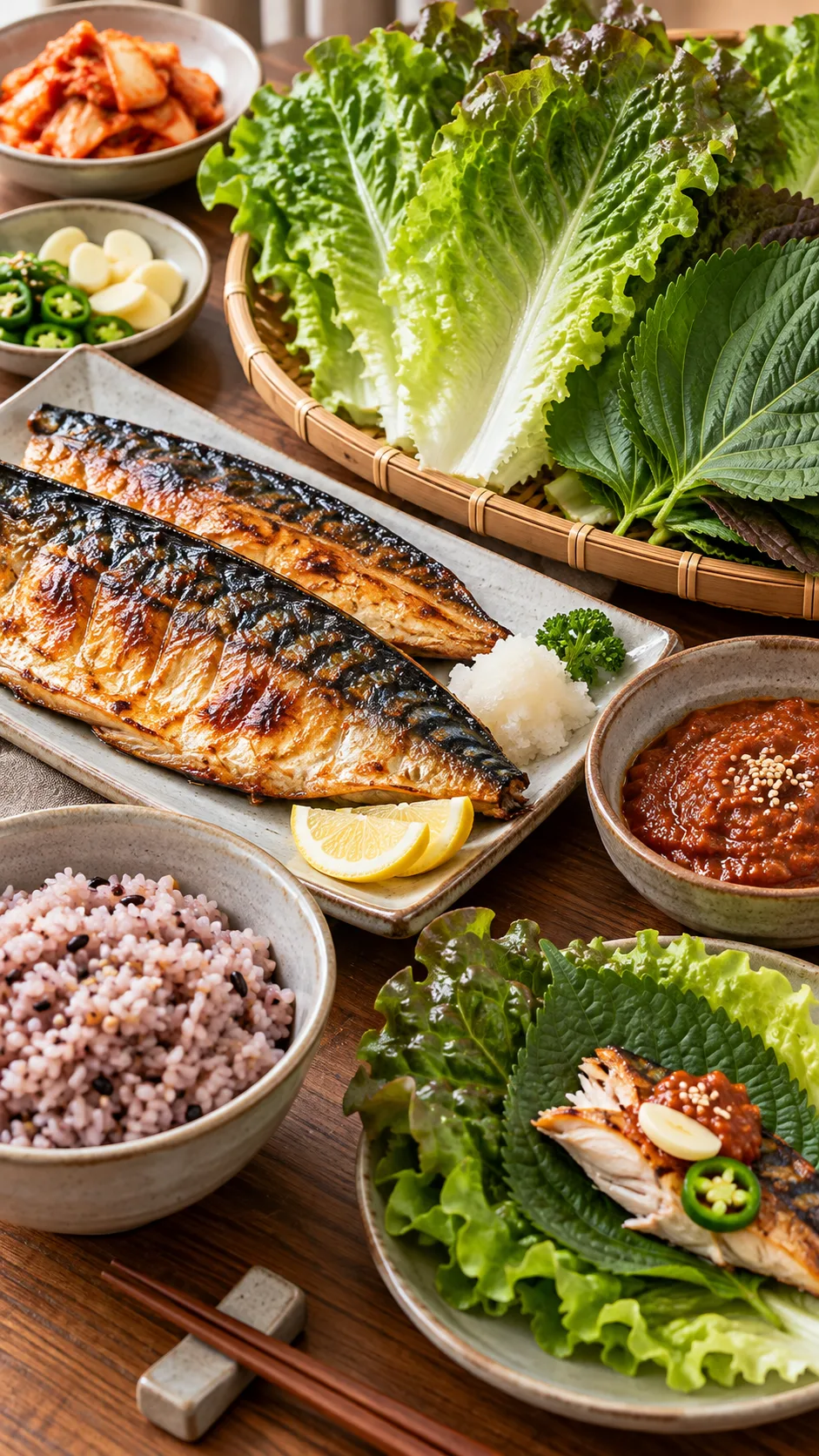
- Dinner: Grilled mackerel or salmon with sea salt and lemon juice. Wrap the fish in fresh perilla leaves and romaine lettuce (Ssam) with fermented soybean paste (Ssamjang) and kimchi.
- Snack: Roasted seaweed sheets (Gim) wrapped around fresh cucumber spears.
Day 4: Mid-Week Detox and Energy Reset
- Breakfast: Two eggs scrambled with chopped scallions, served with a cup of warm broth and kimchi.
- Lunch: Spicy Kimchi Stew (Kimchi Jjigae) made with aged kimchi, lean pork loin or firm tofu, and enoki mushrooms. Pair it with half a cup of multigrain rice.
- Dinner: Korean beef and cabbage stir-fry using 93% lean ground beef, green cabbage, garlic, soy sauce, and sesame seeds over half a cup of rice or cauliflower rice.
- Snack: Hot green tea (Nokcha) with a small handful of raw walnuts.
Day 5: Low-Calorie Comfort
- Breakfast: Warm black rice porridge topped with toasted sesame seeds, served with two soft-boiled eggs.
- Lunch: Buckwheat Soba Salad (Makguksu). Toss cold pure buckwheat noodles with sliced cabbage, cucumbers, perilla leaves, shredded chicken breast, and a light gochujang-vinegar sauce. Research from the Harvard T.H. Chan School of Public Health notes that whole grains like buckwheat regulate blood sugar effectively.
- Dinner: Soft Tofu Stew (Sundubu Jjigae) with clams, zucchini, and an egg cracked directly into the boiling broth. Serve with steamed broccoli and a splash of cho-gochujang.
- Snack: Cherry tomatoes tossed with rice vinegar and scallions.
Day 6: Weekend Flavor Explosion
- Breakfast: Street-toast veggie omelet packed with shredded cabbage, carrots, and onions, cooked without butter, on one slice of toasted whole-wheat bread.
- Lunch: Homemade Kimbap. Roll brown rice, seasoned carrots, pickled yellow radish (Danmuji), cucumber, egg strips, and lean beef or canned tuna inside roasted seaweed sheets.
- Dinner: Korean BBQ night at home. Sear strips of lean sirloin or chicken breast. Wrap each piece in crisp lettuce leaves with sliced raw garlic, grilled peppers, and a tiny dab of ssamjang. Skip sweet store-bought marinades entirely.
- Snack: Fresh watermelon slices or a crisp persimmon.
Day 7: Simple Refrigerator Clean-Out
- Breakfast: Clear egg drop soup with scallions, paired with half a baked sweet potato (Goguma) and kimchi.
- Lunch: Leftover banchan fried rice. Toss cold mixed rice into a hot pan with leftover seasoned vegetables, chopped kimchi, and diced tofu. Top the dish with a sunny-side-up egg.
- Dinner: Clear Radish and Beef Soup (Sogogi Muguk) made with lean beef and Korean radish in an aromatic broth. Serve with a small portion of rice and cucumber kimchi (Oi Sobagi).
- Snack: Hot ginger-cinnamon tea brewed without sugar.
If you want to save time during busy workdays, pair these recipes with the prep strategies from our ultimate lazy girl meal plan.
Watch: How to Meal Prep Authentic Korean Banchan
You can see how quickly these vegetable dishes come together when you prep them in batches. Watch this helpful tutorial to learn simple recipes for Korean side dishes that keep well in the fridge all week:
Banchan: The Secret Weapon That Kills Food Boredom
Most diets fail because boredom sets in. Eating plain grilled chicken and dry broccoli five nights in a row makes anyone quit.
Korean cuisine solves this problem with Banchan, the small side dishes that accompany every meal. You keep three or four containers of banchan in your fridge. Even if you cook a simple piece of fish or tofu for dinner, you surround it with crunchy textures, clean acids, and rich seasonings every night.
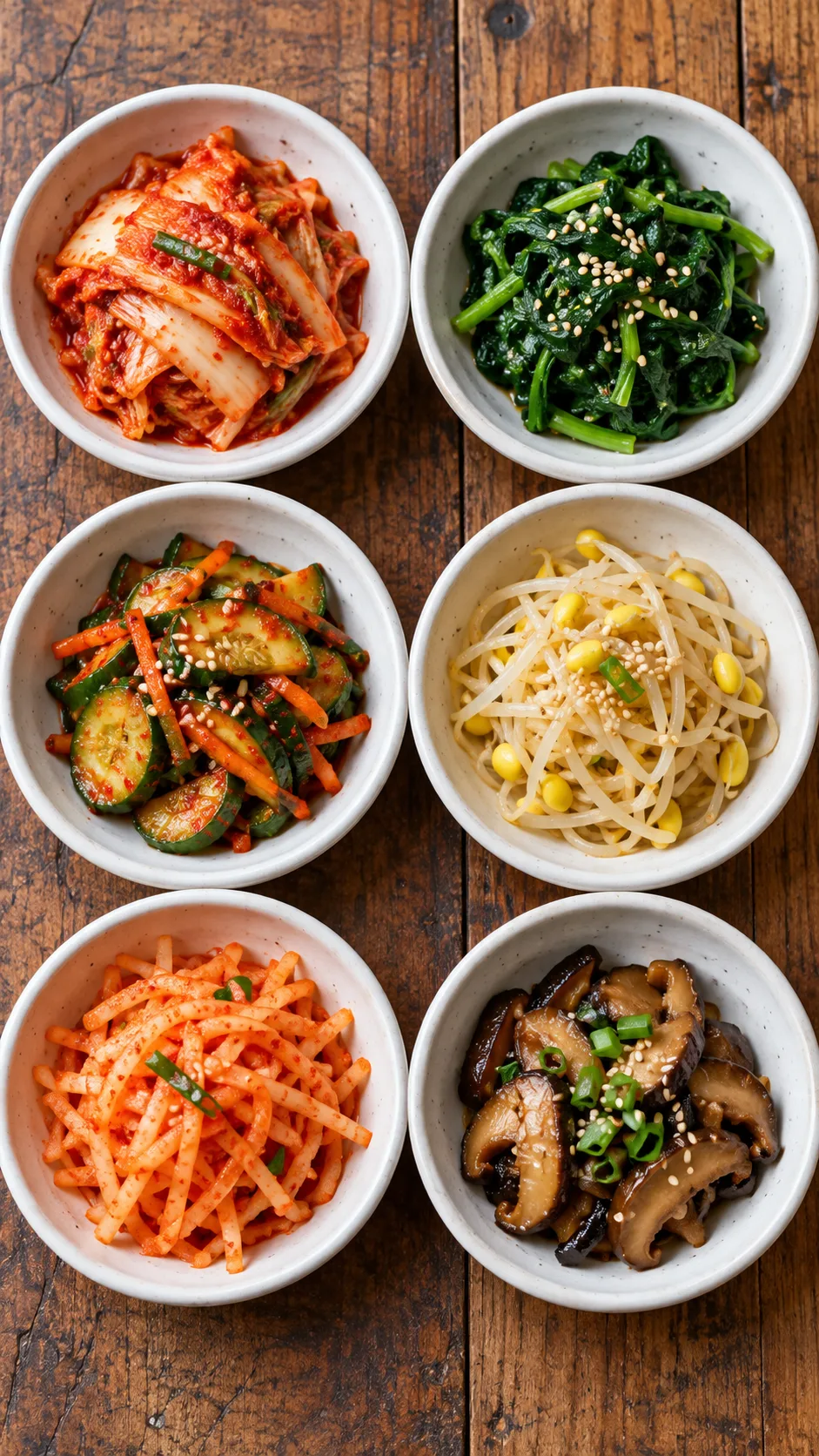
Make these three quick banchan dishes this weekend:
1. Seasoned Bean Sprouts (Sukju Namul)
Drop fresh bean sprouts into boiling water for 90 seconds. Drain them and drop them into ice water to stop the cooking. Squeeze out the extra moisture with your hands. Toss the sprouts with minced garlic, chopped scallion, a splash of soy sauce, and a few drops of toasted sesame oil. You get crisp fiber with almost no calories.
2. Spicy Cucumber Salad (Oi Muchim)
Slice Persian cucumbers into thin coins. Toss them with coarse sea salt and let them sit for 15 minutes to pull out excess water. Rinse them quickly and pat them dry with a clean kitchen towel. Toss the cucumbers with gochugaru, rice vinegar, minced garlic, and sesame seeds. The clean acidity cuts through richer meat dishes.
3. Garlic Blanched Spinach (Sigeumchi Namul)
Submerge fresh spinach in boiling salted water for 30 seconds. Move the leaves to cold water, drain them, and squeeze out all liquid until you have a dense ball. Separate the leaves into a bowl and mix them with grated garlic, soy sauce, and toasted sesame seeds. You turn an entire bag of raw greens into two nutrient-dense servings.
The Truth About Sodium in Korean Food
People often question the salt levels in Korean cooking. Kimchi, doenjang, and soy sauce all require salt for fermentation. Yet this salt will not ruin your health or stall your fat loss.
Your body handles sodium easily when you consume it alongside lots of potassium, magnesium, and fiber. Vegetables like radish, cabbage, and spinach deliver huge amounts of potassium, which balances fluids and supports normal blood pressure. The Centers for Disease Control and Prevention (CDC) notes that a diet with a high potassium-to-sodium ratio supports cardiovascular health.
Unless your doctor gave you strict medical orders to follow a low-sodium diet, the salt in fermented foods will not stop your progress. Sodium also preserves proper fluid balance and prevents the fatigue, headaches, and brain fog common on restrictive diets.
3 Big Traps That Ruin Korean Weight Loss Diets
Traditional home cooking promotes good health, but modern restaurant dishes carry real risks. Watch out for these three pitfalls when you eat out or buy packaged food:
- The Restaurant K-BBQ Trap: Korean BBQ spots usually serve fatty cuts like Samgyeopsal (pork belly). When you combine endless pork belly with sweet marinades, white rice, and sugary alcohol, you consume thousands of calories in one sitting. Choose unmarinated lean beef cuts, wrap your meat in lettuce leaves, and drink water or unsweetened tea.
- Hidden Sugars in Sauces: Commercial Korean sauces often contain corn syrup. Bulgogi marinades, fried chicken coatings, and tteokbokki sauces carry large amounts of sugar. Read ingredient lists carefully and stick to traditional pastes without corn syrup.
- Carb Overload via Street Snacks: Korean street food tastes fantastic, but snacks like fried corn dogs, dumplings, and rice cakes deliver refined carbohydrates and heavy frying oil. Save these foods for occasional treats rather than your weekly routine.
Frequently Asked Questions
Can I follow this meal plan if I eat a vegetarian or vegan diet?
Yes. Korean temple cuisine (Sachal Eumsik) uses only plant foods and offers exceptional nutrition. Replace fish broths with kelp and shiitake mushroom stocks. Use firm tofu, soft tofu, or mushrooms in place of meat. Check kimchi labels to ensure the maker used no fish sauce or shrimp paste.
Do I have to eliminate white rice completely?
No. You do not need to cut white rice completely. Mixing it with brown rice, black rice, or barley lowers the overall glycemic load and keeps you full for longer stretches. If you work a desk job, eat half a cup of cooked mixed grains per meal. If you train hard or run daily, eat a full cup.
How long until I see measurable weight loss results?
You will likely notice less bloating within your first week. High fiber intake clears out your digestive tract, while cutting processed foods drops excess water weight. You can expect to lose one to two pounds of fat each week when you follow these recipes and portions consistently.
Final Thoughts: Eat Real Food, Never Go Hungry
Losing weight never requires bland meals or constant hunger. When you follow traditional Korean cooking, you nourish your body with whole foods that satisfy your appetite and taste great.
Stop punishing yourself with boring diet meals. Grab a jar of kimchi, simmer a bowl of soybean stew, and see how simple fat loss feels when you eat food you actually enjoy.