

You built a beautiful salad on Sunday. By Wednesday it looked like something you’d scrape out of a gutter, and by 2 PM that same day you raided the office vending machine anyway. Sound familiar?
Nobody warns you about this: most meal prep salads fail for two reasons. They get soggy, and they don’t carry enough protein or fat to keep you full past noon. Fix those two problems and salads stop being punishment. They turn into the thing you look forward to.
I’ve prepped salads for the week for about six years now, and I’ve ruined enough containers of lettuce soup to know what works. Let me save you the trial and error.
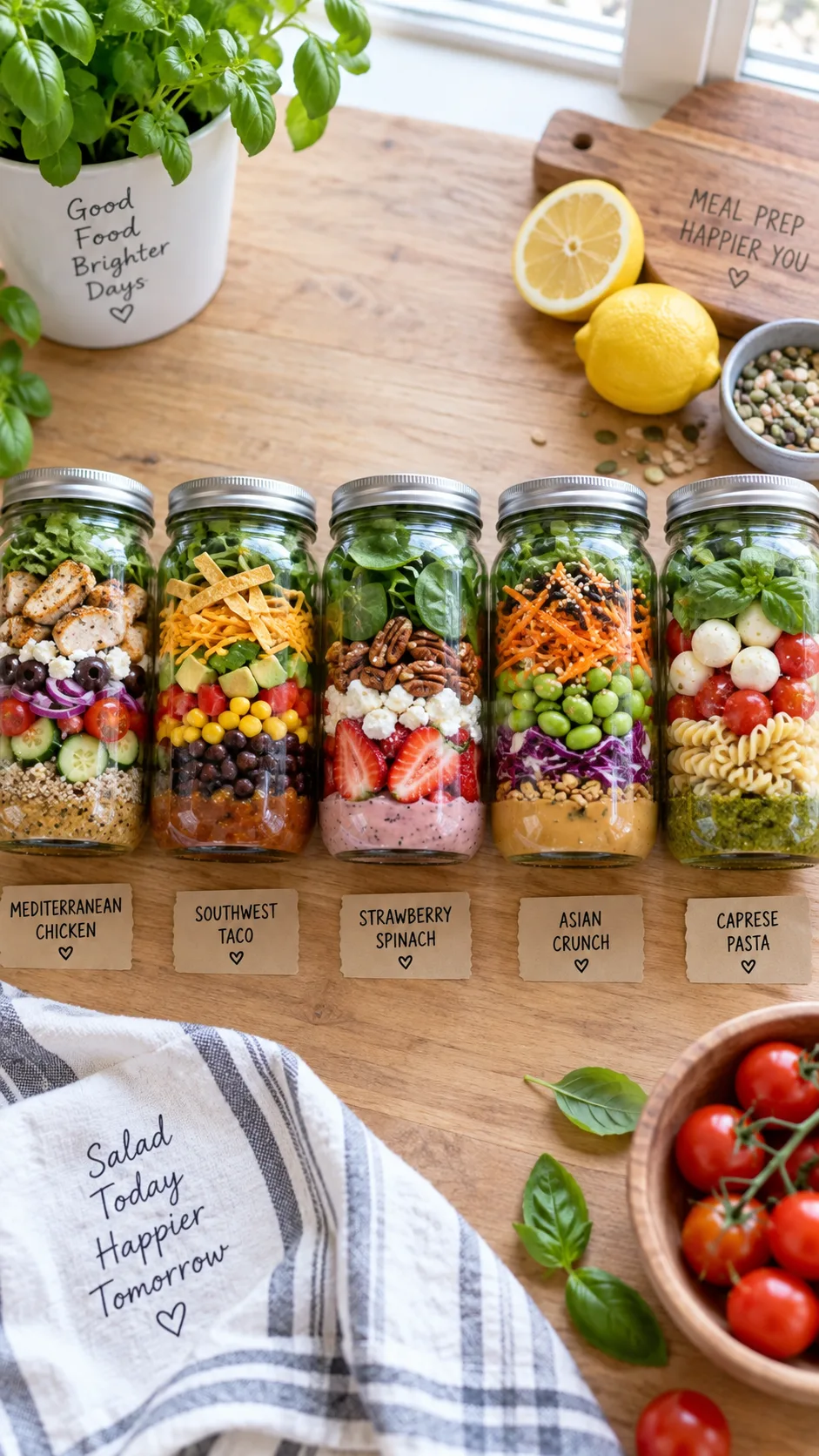
Why your salads leave you starving (and how to fix it)
A bowl of romaine, cucumber, and a drizzle of balsamic clocks in around 80 calories. Eighty. That’s a snack pretending to be lunch, and your stomach knows it.
Satiety, the fancy word for feeling full, comes down to three things: protein, fiber, and fat. Miss any one of them and you’ll hunt for cookies within ninety minutes. The Harvard T.H. Chan School of Public Health points to protein as the most filling macronutrient, and fiber slows digestion so the energy trickles out instead of crashing.
The fullness formula I use for every salad
I don’t follow recipes anymore. I follow a formula, and you should too. It takes about four minutes to build and it never gets boring.
- 30 to 40g protein. Grilled chicken, salmon, chickpeas, lentils, hard-boiled eggs, tofu, or leftover steak.
- A fist-sized portion of complex carbs. Quinoa, farro, roasted sweet potato, wild rice, or brown rice. These carry the fiber and stop the 3 PM crash.
- Healthy fat. Avocado, olive oil, tahini, feta, or a handful of nuts and seeds.
- Volume vegetables. Two cups minimum. Peppers, cucumber, shredded cabbage, cherry tomatoes, roasted broccoli.
- Something loud. Pickled onion, kimchi, olives, sun-dried tomato, or a spicy dressing. Flavour is what makes you eat the thing on day four.
Notice what’s missing? I never lead with lettuce. Lettuce is a garnish with delusions of grandeur. Sturdy greens like kale, cabbage, and radicchio do the heavy lifting.
The soggy salad problem, solved for good
Ever wondered why restaurant salads hold up but yours turn to mush? They dress to order. You can’t do that on Sunday for Friday, but you can cheat the system.
Rule 1: dressing lives separately, always
Buy small 2oz condiment cups or tiny screw-top jars. Dressing touches the salad at the exact moment you eat it, and not one second sooner. This single change fixes about 60% of meal prep salad failures.
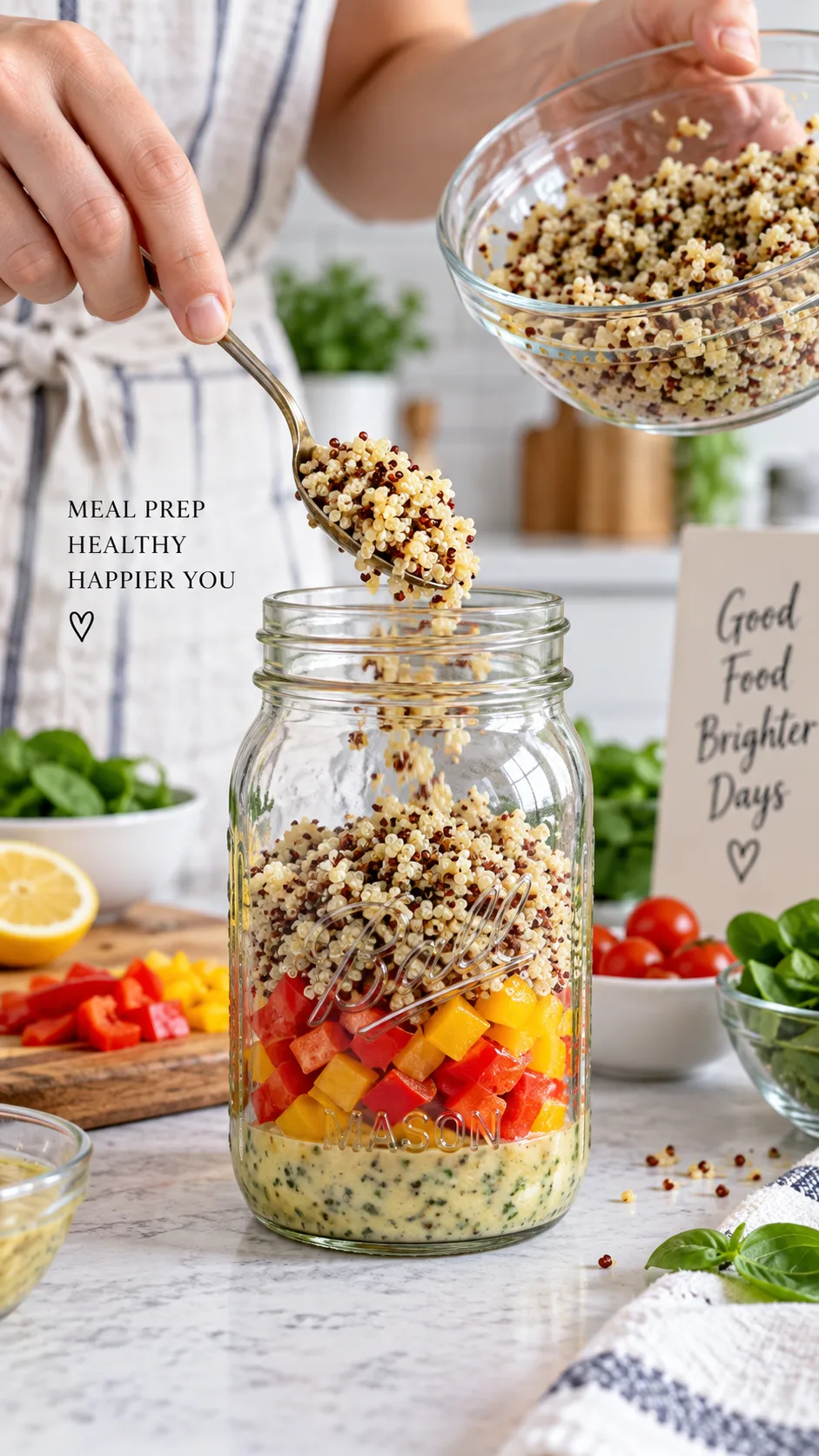
Rule 2: master the mason jar layer order
If you go the jar route, layering matters more than people think. Heaviest and wettest at the bottom, most delicate at the top.
- Layer 1 (bottom): Dressing
- Layer 2: Hard vegetables: carrots, peppers, red onion, cucumber
- Layer 3: Grains and beans: quinoa, chickpeas, farro
- Layer 4: Protein: chicken, salmon, eggs, tofu
- Layer 5: Cheese, nuts, seeds
- Layer 6 (top): Greens, packed loosely
Shake it into a bowl when you’re ready. It’s a genuinely satisfying moment.
Rule 3: dry your greens like you mean it
Water is the enemy. A salad spinner costs about £12 and will pay for itself in un-wasted spinach within a month. After spinning, I toss a folded paper towel into the container to soak up stray moisture. Nerdy? Absolutely. It also works better than anything else I’ve tried.
Rule 4: quarantine the wet stuff
Tomatoes, cucumber, avocado, and citrus segments all leak. I keep tomatoes and avocado separate and add them fresh. Slicing an avocado takes eleven seconds and you get zero brown mush. Fair trade.
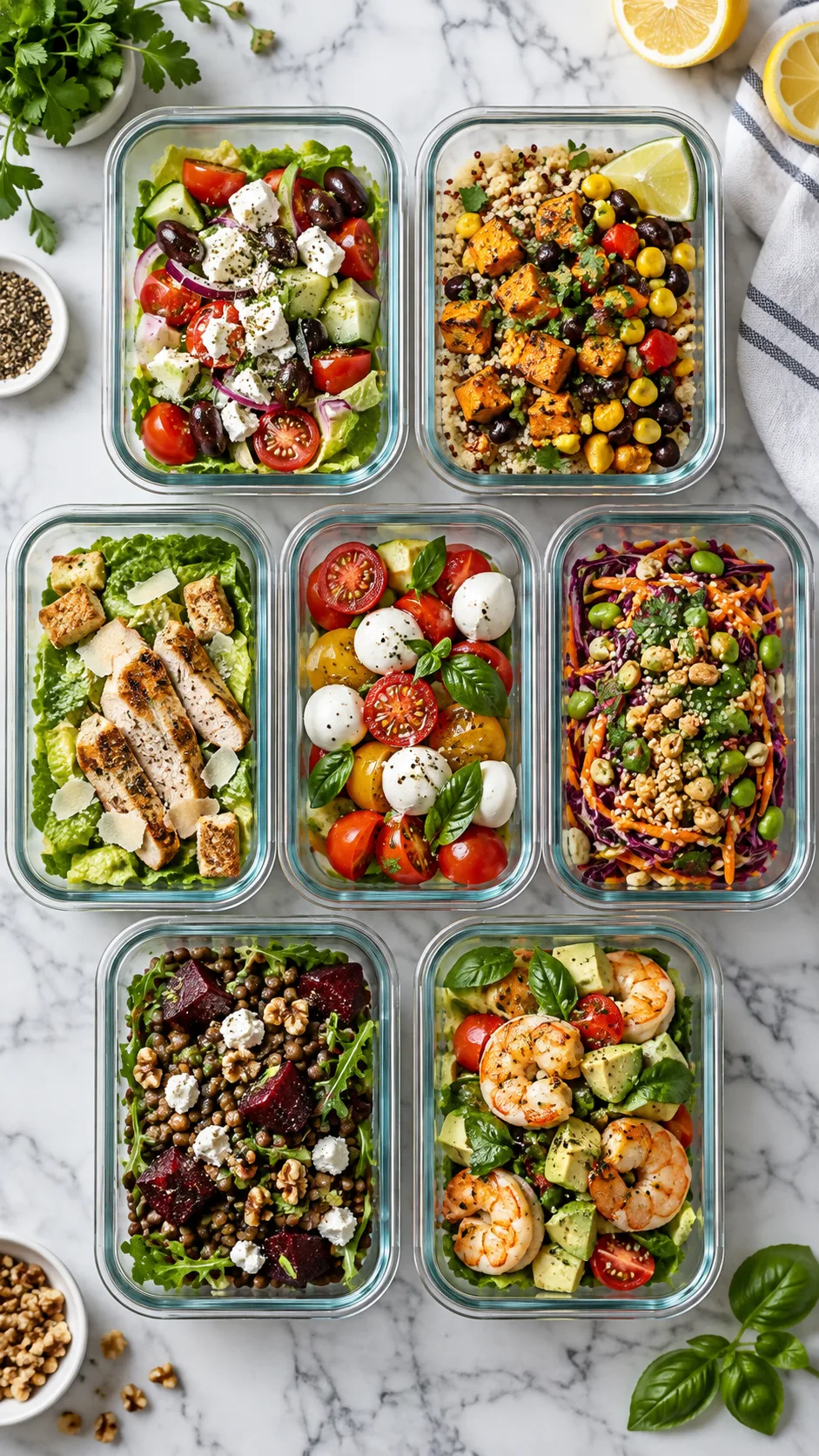
7 meal prep salad recipes that keep you full
These are the ones I rotate. Each hits at least 30g of protein and survives four to five days in the fridge. No sad salads here. For more of that philosophy, look at this guide to healthy meal prep for the week.
1. The Greek chicken power bowl
Approx. 520 calories | 42g protein | 9g fiber
- 150g grilled chicken thigh, oregano and lemon marinade
- ¾ cup cooked quinoa
- Cucumber, cherry tomatoes (stored separately), red onion
- Kalamata olives and 40g feta
- Dressing: olive oil, red wine vinegar, garlic, dried oregano
Use chicken thigh over breast here. Thigh stays juicy after reheating and refrigeration, while breast turns into cardboard by Wednesday. I refuse to eat cardboard willingly.
2. Crunchy Asian cabbage & edamame salad
Approx. 480 calories | 31g protein | 12g fiber
- 3 cups shredded red and green cabbage
- 1 cup shelled edamame
- Shredded carrot, spring onion, fresh coriander
- Toasted almonds and sesame seeds (add on the day for crunch)
- Dressing: peanut butter, rice vinegar, soy sauce, lime, ginger, chili
This one tastes better on day three. The cabbage softens slightly and soaks up the dressing instead of dying. It’s the rare salad you can pre-dress without regret.
3. Southwest black bean & sweet potato
Approx. 540 calories | 24g protein | 16g fiber
- Roasted sweet potato cubes with smoked paprika and cumin
- 1 cup black beans, rinsed
- Charred corn, red pepper, red onion
- Romaine or shredded kale base
- Dressing: lime, Greek yogurt, cumin, chipotle, coriander
Sixteen grams of fiber. That’s over half your daily target in one lunch. Add shredded chicken or a fried egg if you want to push protein higher.
4. Salmon, farro & dill bowl
Approx. 610 calories | 38g protein | 8g fiber
- Baked salmon fillet, flaked
- ¾ cup cooked farro
- Cucumber ribbons, capers, quick-pickled red onion
- Rocket (arugula)
- Dressing: Greek yogurt, dill, lemon zest, Dijon
Salmon gives you omega-3s alongside the protein. The FDA recommends two to three servings of low-mercury fish weekly, and this bowl makes that painless. Eat it within three days, though, because fish has a shorter shelf life than chicken.
5. Chickpea “tuna” salad (fully plant-based)
Approx. 450 calories | 22g protein | 14g fiber
- 2 cans chickpeas, roughly mashed
- Celery, red onion, dill pickle, finely chopped
- Vegan mayo or tahini, Dijon, lemon juice
- Nori flakes or kelp granules for that sea flavour
- Serve over greens or stuffed into a wrap
The nori is the secret. Skip it and you’ve got chickpea mush. Include it and people ask what fish you used. This one keeps a solid five days.
6. Steak, blue cheese & roasted beet
Approx. 580 calories | 40g protein | 7g fiber
- Sliced flank steak, cooked medium-rare
- Roasted beetroot wedges
- Baby spinach and radicchio
- Walnuts and crumbled blue cheese
- Dressing: balsamic, olive oil, shallot, honey
Cook the steak slightly under. It firms up in the fridge, and slicing against the grain keeps it tender cold. Yes, you can eat cold steak salad. The French have done it for centuries and they seem fine.
7. Cottage cheese crunch bowl
Approx. 420 calories | 36g protein | 6g fiber
- 1 cup full-fat cottage cheese
- Cherry tomatoes, cucumber, radish, chives
- Everything bagel seasoning, cracked pepper
- Drizzle of good olive oil
- Optional: sliced avocado on top, added on the day
Cottage cheese had a weird PR moment recently, but it earns the hype. Thirty-six grams of protein for roughly two minutes of effort. If you want more ideas in this vein, the high protein lunch meal prep guide covers plenty.
Watch the layering method in action
Reading about jar layering is one thing. Watching someone do it takes about four minutes and the logic clicks straight away.
Dressings that don’t sabotage everything
Bottled dressing often hides more sugar than a biscuit. Making your own takes ninety seconds in a jar, costs pennies, and tastes obviously better. Here are four I keep on rotation.
Lemon tahini (keeps 7 days)
3 tbsp tahini, juice of 1 lemon, 1 minced garlic clove, salt, water to thin. Creamy, dairy-free, works on literally everything.
Miso ginger (keeps 10 days)
2 tbsp white miso, 1 tbsp rice vinegar, 1 tsp grated ginger, 1 tsp honey, 3 tbsp neutral oil. Salty, sweet, faintly addictive.
Greek yogurt ranch (keeps 5 days)
½ cup Greek yogurt, dill, chives, garlic powder, onion powder, lemon, splash of milk. It adds protein instead of just calories.
Classic shallot vinaigrette (keeps 14 days)
Soak 1 minced shallot in 2 tbsp red wine vinegar for 10 minutes, then whisk in 6 tbsp olive oil and 1 tsp Dijon. The soak takes away the raw bite. Chefs do this and it matters.
Food safety: the part everyone skips
I’d rather you ate a boring salad than a risky one. Cold storage rules exist for a reason, and salads holding cooked proteins deserve real attention.
- Keep your fridge at 4°C (40°F) or below. Buy a £5 fridge thermometer, because most home fridges run warmer than the dial claims.
- Cool cooked food fast before sealing. Trapped steam creates condensation, and condensation breeds bacteria and sogginess.
- Cooked chicken and beef: 3 to 4 days. Cooked fish: 3 days. Cooked grains: 4 to 5 days. Hard-boiled eggs in shell: up to 7 days.
- Wash produce before chopping, then dry it thoroughly. The CDC’s guidance on leafy greens is worth a two-minute read.
- Never leave a prepped salad out more than 2 hours (1 hour above 32°C). Pack an ice pack in your lunch bag.
I prep on Sunday and again on Wednesday instead of doing all five days at once. Two smaller sessions, fresher food, less waste. It takes less effort than one giant marathon.
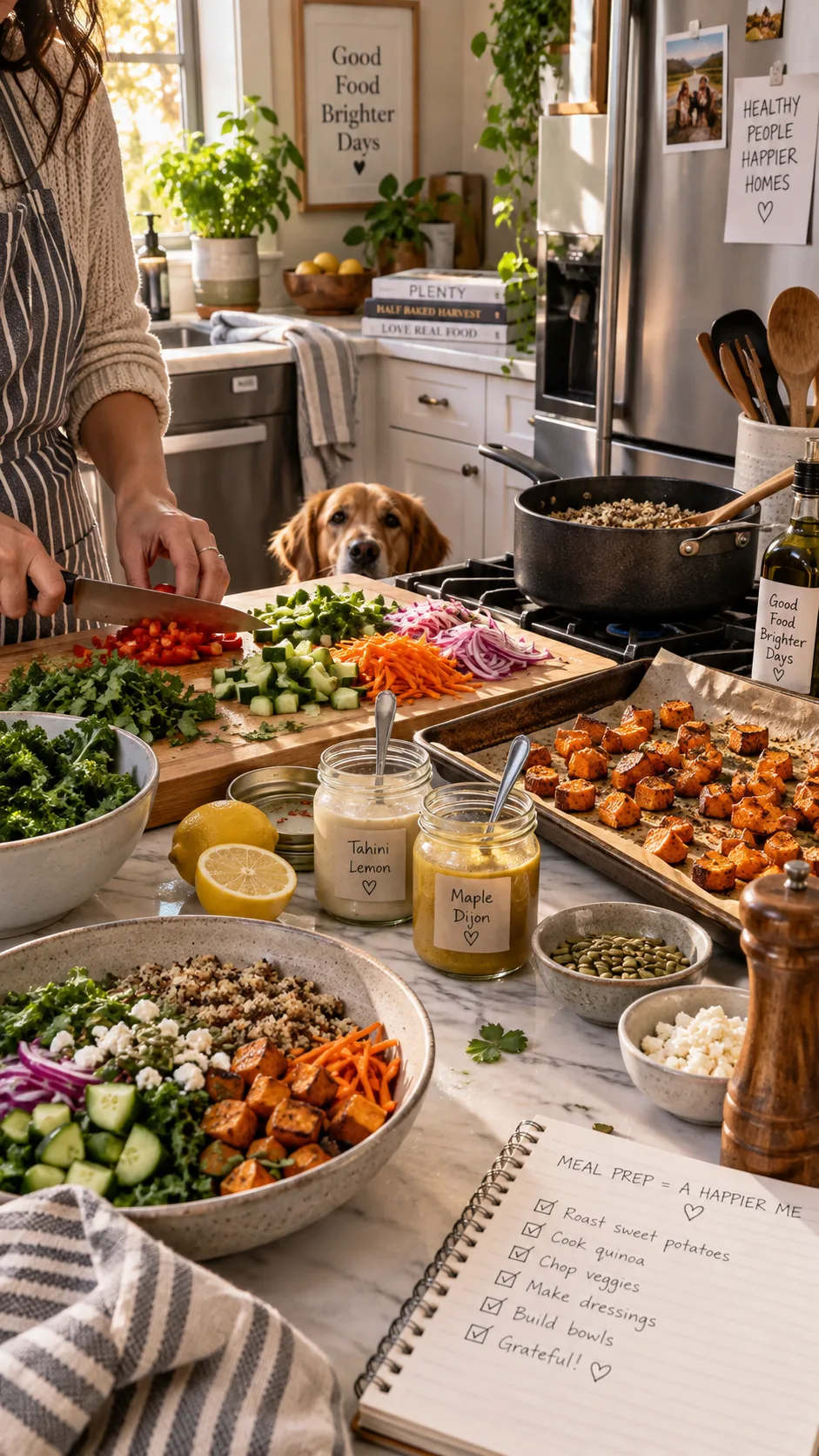
My Sunday prep routine (90 minutes, start to finish)
People assume salad prep eats the whole afternoon. It doesn’t, as long as you run things in parallel instead of one at a time.
- 0:00: Oven to 200°C. Sweet potato and beets go in first, since they take longest.
- 0:05: Quinoa and farro on the hob. Set a timer, walk away.
- 0:10: Marinate and pan-sear chicken thighs while the grains cook.
- 0:25: Make all four dressings. Jars, shake, label, fridge.
- 0:40: Chop every vegetable at once. One board, one knife, one session.
- 1:00: Wash and spin the greens. Store with paper towel.
- 1:10: Assemble containers. Proteins and grains in, wet stuff separate.
- 1:30: Done. Kitchen clean. Week sorted.
The trick is batch chopping. Chopping onions five separate times is how people learn to hate meal prep. If you want the wider system beyond salads, the easy meal prep ideas breakdown pairs well with this routine.
Common mistakes I still see people make
- Using iceberg lettuce. It’s 96% water and contributes nothing but crunch and disappointment.
- Skipping salt. Under-seasoned vegetables taste like sadness. Salt your roasted veg properly.
- Prepping seven identical lunches. You will hate lunch five. Make two or three varieties.
- Overfilling containers. Compressed greens bruise. Leave breathing room.
- Forgetting texture. Add nuts, seeds, or croutons the morning you eat. Crunch is 40% of the enjoyment, in my opinion.
- Cutting calories too hard. A 250-calorie lunch guarantees a 700-calorie snack attack at 4 PM. The maths never works out in your favour.
Budget reality check
Salmon and steak every day gets expensive fast. Here’s how I keep costs sane without eating plain lentils forever.
- Buy frozen edamame, corn, and peas. Same nutrition, half the price, zero waste.
- Cook dried chickpeas and lentils in bulk. Roughly a third the cost of canned.
- Rotisserie chicken beats raw chicken on time and often on price.
- Cabbage is the MVP. A whole head costs about a pound and lasts two weeks.
- Buy nuts and seeds in bulk bags and store them in the freezer so they don’t go rancid.
Cheap doesn’t mean joyless. Two of my favourite salads on that list cost under £2.50 per serving.
The bottom line
Meal prep salads keep you full once you stop treating them as diet food and start treating them as real meals that happen to contain vegetables. Protein, fiber, fat, volume, flavour. Hit those five and you’ll never eat a sad desk lunch again.
Keep the dressing separate. Layer jars bottom-heavy. Dry your greens obsessively. Prep twice a week instead of once. None of this is complicated, it’s just specific.
Pick two recipes from this list (not seven, you’ll burn out) and make them this Sunday. Notice how you feel at 3 PM on Tuesday. That feeling is the whole point, and it’s what turns meal prep from a chore into a habit you keep.
Now go buy a salad spinner. Seriously.