

Your toddler ate three blueberries and a crayon for lunch yesterday. Today they want pasta, but only the “curly kind,” and only if it touches absolutely nothing else on the plate. Sound familiar?
I’ve spent years cooking for tiny humans who negotiate like tiny lawyers, and I’ll tell you the one thing that saved my sanity: meal prep. Not the Instagram kind with 14 matching glass containers and a label maker. The real kind: messy, flexible, and built around what your kid will swallow.
This guide gives you a full week of toddler meal prep ideas, a realistic Sunday plan, storage rules that keep food safe, and the reasoning behind why picky eaters suddenly say yes.
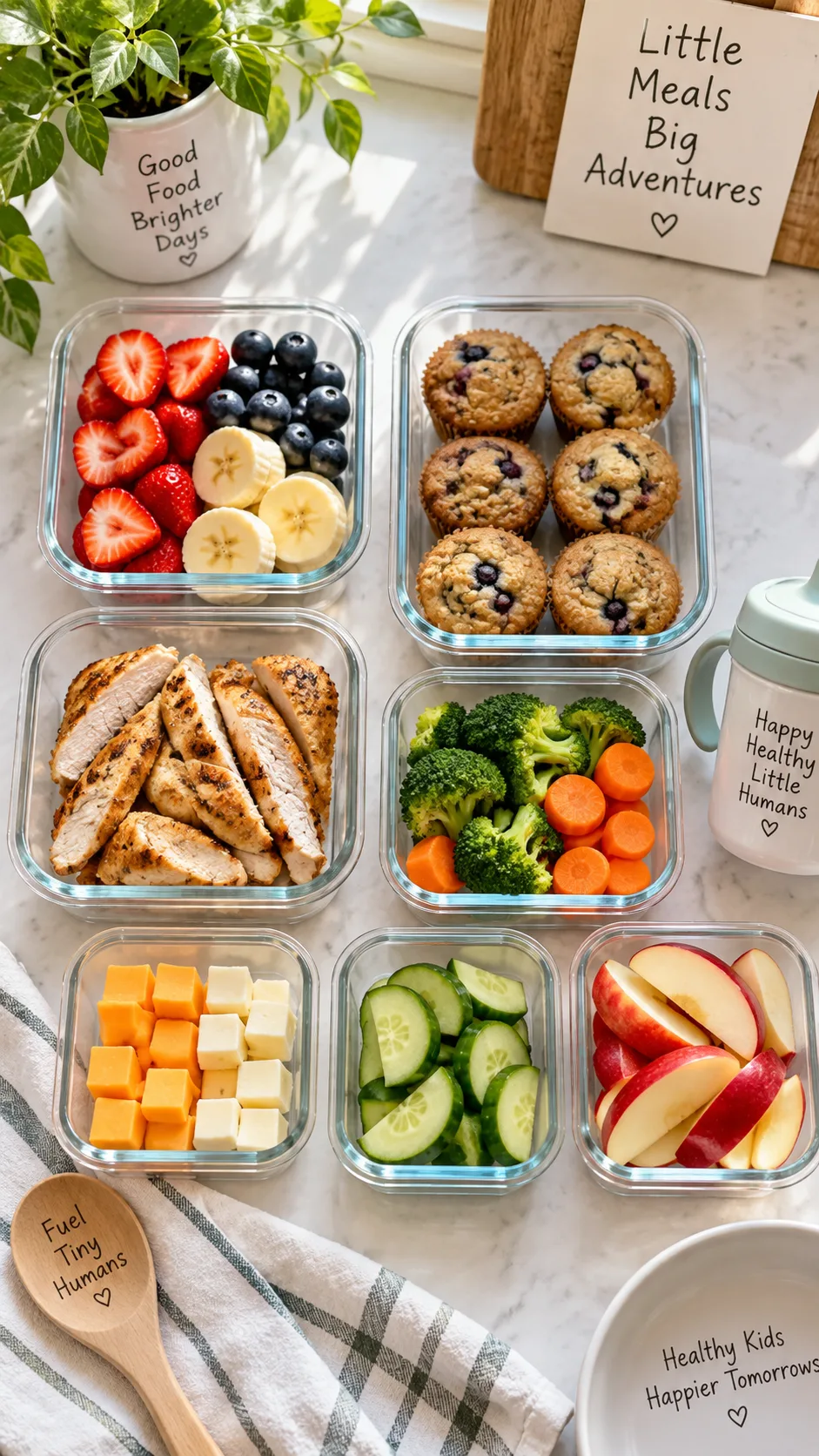
Why toddler meal prep beats winging it
Picture 5:47 PM. Your toddler hangs off your leg making a sound like a dying kettle. You open the fridge and stare at half an onion and some questionable yogurt. We’ve all lived that moment.
Meal prep removes the decision-making from the worst hour of your day. When you already have cooked chicken, roasted veg, and a container of rice waiting, dinner becomes assembly instead of cooking. That difference matters more than any recipe.
Here’s the other benefit nobody mentions: repeated exposure. Research from the American Academy of Pediatrics shows toddlers often need to see a new food 10 to 15 times before they accept it. Prepped food means you can offer that same roasted sweet potato on Monday, Wednesday, and Friday without cooking it three separate times.
The three real wins
- Less food waste. You buy with a plan, so the spinach doesn’t liquefy in the crisper drawer.
- Better nutrition balance. You see the whole week at once and notice you’ve served zero vegetables since Tuesday.
- Your own sanity. This is the big one. Calm parent, calmer mealtime.
What toddlers need (the quick nutrition rundown)
Before we plan, let’s talk portions, because most parents wildly overestimate how much a toddler eats. A one to three year old needs roughly 1,000 to 1,400 calories a day, spread across three small meals and two snacks.
A toddler-sized serving usually equals about one tablespoon of each food per year of age. So your two-year-old needs two tablespoons of rice, not a bowl that would satisfy a construction worker. Ever wondered why so much food comes back uneaten? That’s often why.
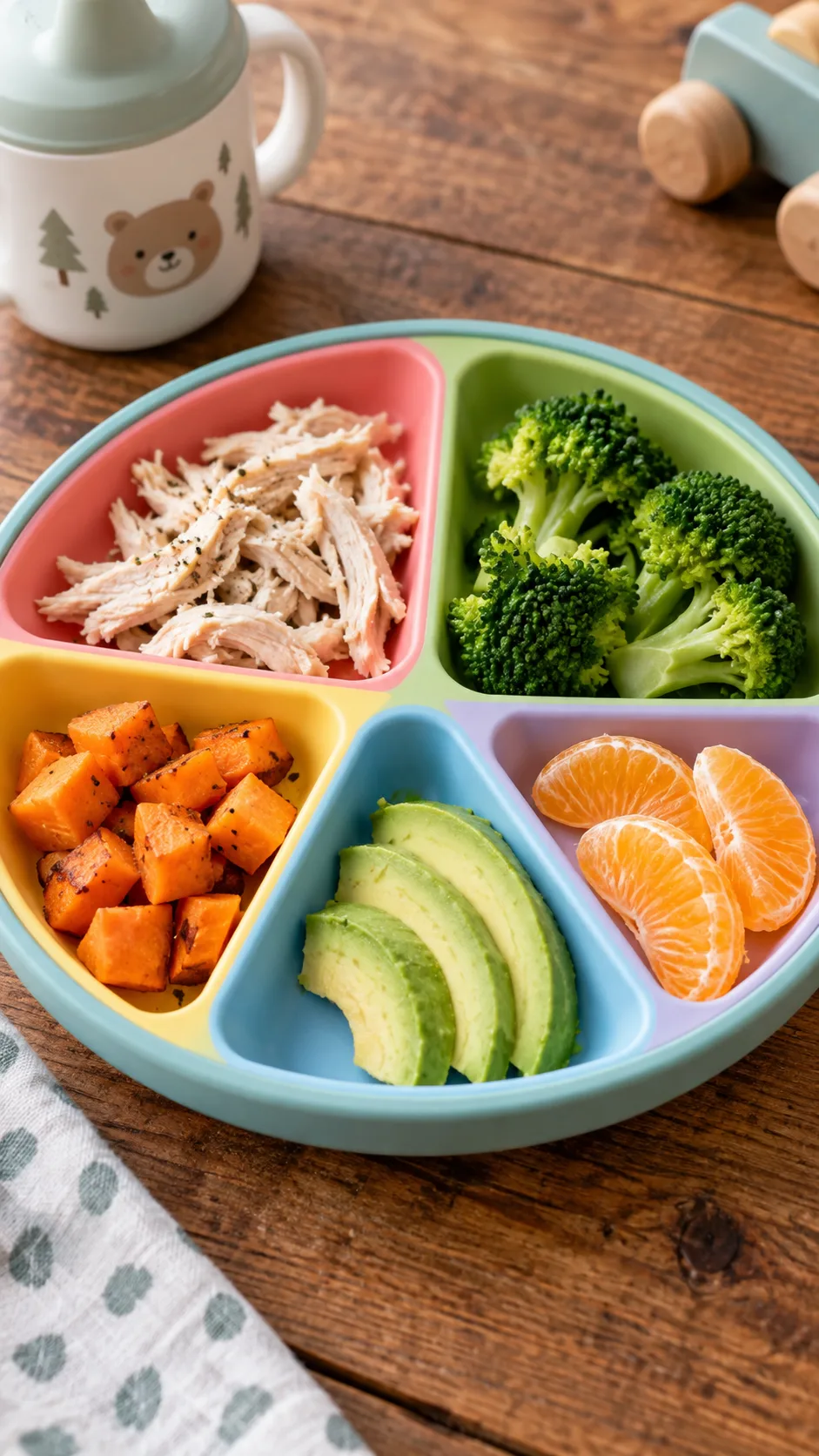
Build every meal from these four blocks
- Protein: eggs, chicken, beans, fish, Greek yogurt, cheese, ground turkey, lentils, tofu
- Complex carbs: sweet potato, oats, brown rice, whole wheat pasta, plantain, yam, wholegrain bread
- Healthy fats: avocado, olive oil, nut butters (thinly spread), full-fat dairy, salmon
- Fruit or veg: whatever is in season, cheap, and not currently on your kid’s banned list
Toddlers need fat, and a lot of it. Roughly 30 to 40% of their calories should come from fat because their brains are building at a ridiculous pace. This is not the moment for skim milk and low-fat everything. Save that for yourself.
Iron matters too. The CDC lists iron deficiency as one of the most common nutrient gaps in toddlers. Pair iron-rich foods (red meat, beans, fortified cereal) with vitamin C (orange slices, bell pepper, tomato) so the body absorbs more of it. Simple trick, big payoff.
The Sunday prep session: 90 minutes, one week sorted
You don’t need a whole day. You need about 90 focused minutes and a willingness to let the kitchen look like a crime scene temporarily. Here’s the exact sequence I use.
Step-by-step prep order
- Turn the oven on first (200°C / 400°F). Everything roasts while you handle the rest. Sheet pans do the heavy lifting.
- Roast two trays of vegetables. Tray one: sweet potato cubes, carrot sticks, bell pepper. Tray two: broccoli, courgette, butternut squash. Olive oil, tiny pinch of salt, 25 minutes.
- Cook one big protein. Shred a whole rotisserie chicken, or bake chicken thighs, or brown a kilo of ground turkey with mild seasoning.
- Boil a batch grain. Rice, pasta, or quinoa. Make double what you think you need.
- Hard-boil six eggs. They keep for a week and solve breakfast emergencies.
- Bake one “hidden veg” item. Muffins, fritters, or mini frittatas. This is your secret weapon.
- Wash and chop fruit last. Berries, melon, grapes (quartered lengthwise, always), apple slices in lemon water.
- Portion into containers. Small ones. Toddler-sized. Label with masking tape and a marker if you’re fancy.
Total hands-on time? Maybe 45 minutes. The oven does the rest while you fold laundry or scroll through your phone pretending you’re “supervising.”
15 toddler meal prep ideas that genuinely get eaten
I’ve tested every single one of these on real, deeply unreasonable toddlers. These survived.
Breakfast wins
- Baked oatmeal squares. Mix oats, mashed banana, egg, milk and cinnamon. Bake in a tray, cut into squares, freeze. Kids eat them like cake. You know it’s basically porridge. Everyone wins.
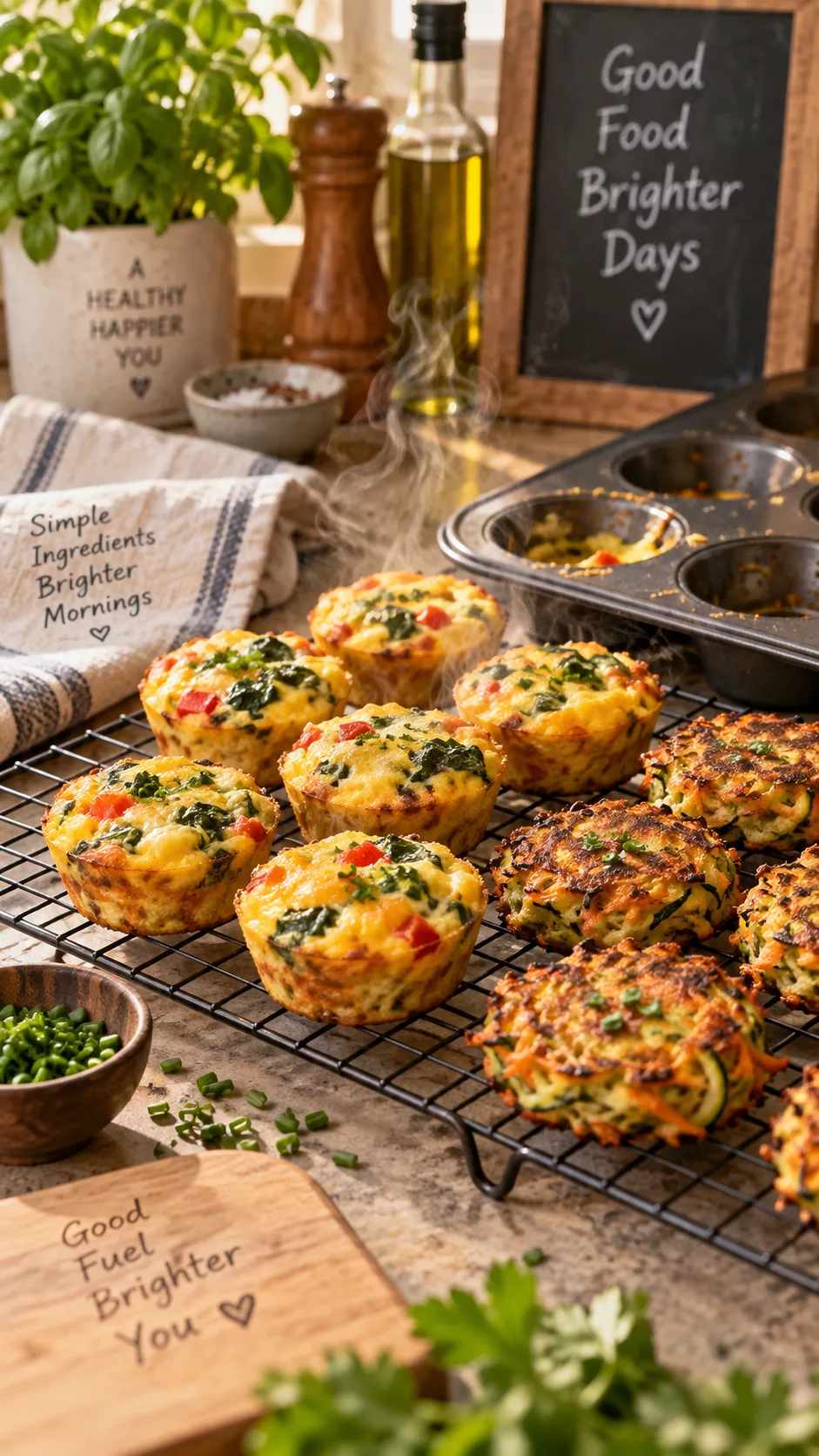
- Mini egg muffins. Whisk eggs with grated cheese, finely chopped spinach and sweetcorn. Bake in a mini muffin tin for 15 minutes. Makes 24. Freezes beautifully.
- Overnight oats with yogurt. Layer oats, full-fat yogurt, and mashed fruit in small jars. Ready for three days in the fridge. Related idea: check the health benefits of parfait if you want to build this out with layers your toddler will dig into.
- Freezer pancakes. Make a triple batch on Sunday, freeze with parchment between them, toast straight from frozen on weekday mornings.
- Banana oat bites. Three ingredients: banana, oats, a handful of raisins. Roll, bake 12 minutes. Zero added sugar.
Lunch winners
- Deconstructed lunch boxes. Cheese cubes, cucumber sticks, crackers, shredded chicken, grapes. Nothing touches. Toddlers respect boundaries, at least food ones.
- Pasta salad with hidden veg. Small pasta shapes, finely diced pepper, sweetcorn, shredded chicken, olive oil and a squeeze of lemon. Keeps four days.
- Mini quesadillas. Tortilla, cheese, mashed black beans. Cook, cool, cut into triangles, freeze. Reheat in a dry pan for 90 seconds.
- Veggie fritters. Grated courgette and carrot, egg, flour, a little cheese. Pan-fry into small discs. My personal MVP, because they taste good cold, which matters at 3 PM in the park.
- Chicken and rice bowls. Prepped rice, shredded chicken, roasted veg, drizzle of mild yogurt sauce. Assemble in 60 seconds.
Dinner heroes
- Batch bolognese. Ground beef or turkey, blended tomatoes, grated carrot and courgette hidden inside. Freeze in portions. Serves pasta, rice, or jacket potato.
- Salmon fish cakes. Tinned salmon, mashed potato, herbs. Bake instead of fry. Good source of omega-3, and toddlers love anything shaped like a puck.
- Slow cooker chicken stew. Chicken thighs, carrots, potatoes, mild stock. Dump everything in, walk away for six hours.
- Mini meatballs. Ground meat, breadcrumbs, grated onion, egg. Bake 40 at a time and freeze. Serve with sauce, in wraps, or plain.
- Lentil and sweet potato mash. Cheap, iron-rich, and freezes in ice cube trays for perfect portions.
Storage, safety and reheating (the boring bit that matters)
Nothing ruins meal prep faster than a fridge full of food you’re not sure about. Here are the rules I follow without exception.
Fridge timelines
- Cooked chicken, beef, fish: 3 to 4 days
- Cooked rice and pasta: 3 days maximum (rice grows nasty bacteria fast, so cool it within one hour and refrigerate)
- Hard-boiled eggs (shell on): 7 days
- Cut fruit: 3 days
- Roasted vegetables: 4 days
- Homemade purées: 2 to 3 days
Freezer rules
Most cooked toddler food freezes well for 2 to 3 months. Use silicone ice cube trays for portions, then transfer the frozen cubes into labelled freezer bags. Write the date. You will not remember. Nobody remembers.
Reheat everything to steaming hot (74°C / 165°F), then stir well and let it cool before serving. Microwaves create hot spots that can burn little mouths, so always stir and test. The FoodSafety.gov temperature chart is worth bookmarking.
Choking hazards: non-negotiables
- Quarter grapes and cherry tomatoes lengthwise. Never serve them whole.
- Cut hot dogs and sausages lengthwise, then into small pieces
- Skip whole nuts, popcorn and hard sweets until age four
- Spread nut butter thinly. Thick globs stick to the palate.
- Cook hard vegetables like carrots until soft, or grate them raw
How to handle the picky eater who rejects your beautiful prep
You spent 90 minutes making colour-coordinated containers. Your toddler looks at Monday’s lunch and says “no.” Cool. Totally normal.
Picky eating peaks between 18 months and 3 years and it’s developmental, not a personal attack. Toddlers gain independence by controlling the one thing they can control, which is their mouth. Understanding that changed everything for me.
Tactics that move the needle
- Serve one “safe” food at every meal. If bread and butter is the guaranteed win, put it on the plate alongside the new thing. It cuts mealtime panic instantly.
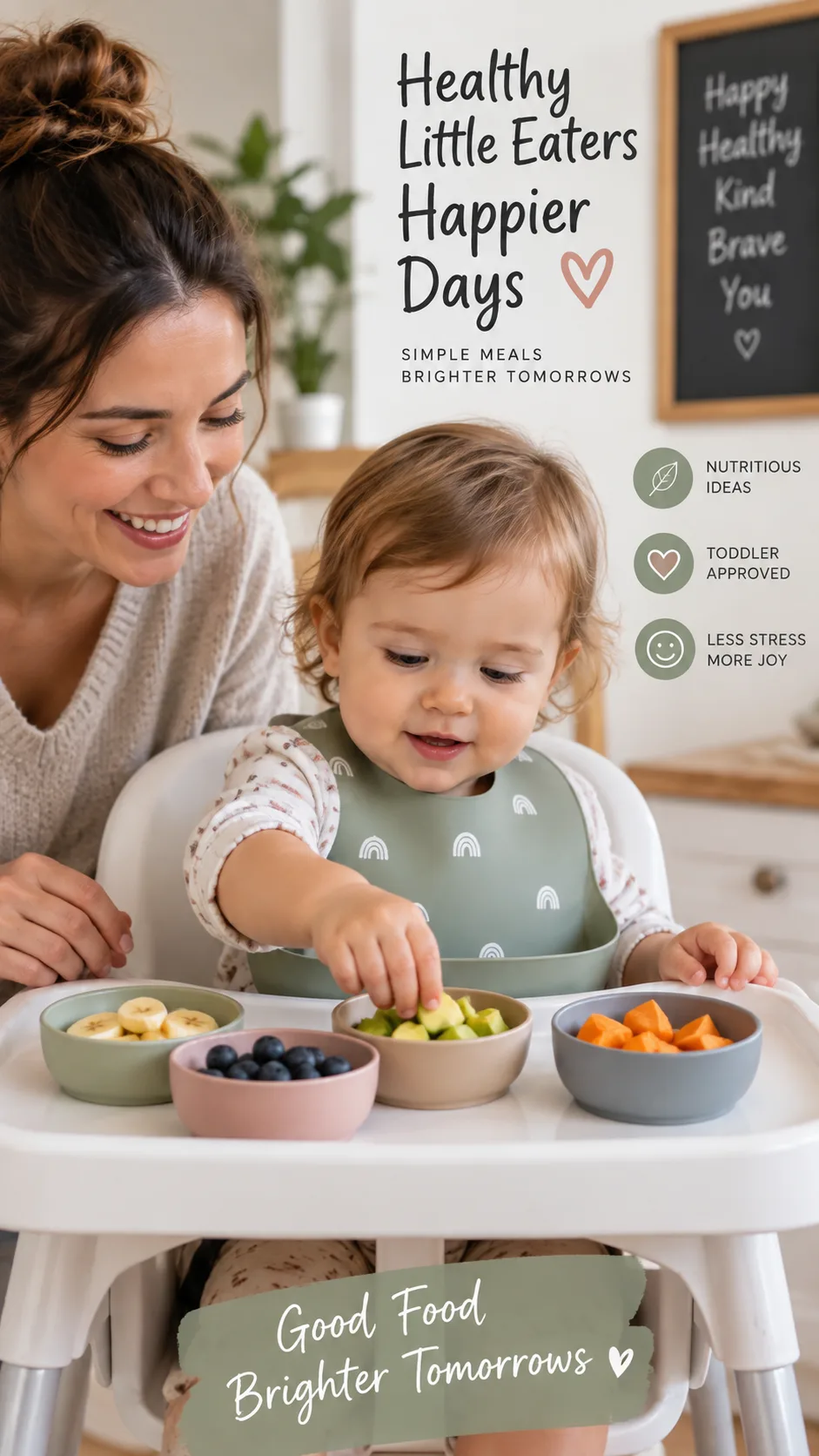
- Let them serve themselves. Put food in small bowls with tongs. Autonomy makes kids eat more. It’s weird but it works.
- Don’t comment on eating. No “just one bite,” no praise, no bribery. Pressure backfires every time, and the science supports this hard.
- Involve them in the prep. A two-year-old can wash grapes, stir batter, and tear lettuce. Kids eat what they help make. I’ve watched a toddler devour broccoli purely because she’d put it on the tray herself.
- Serve the same food differently. Rejected roasted sweet potato? Try it mashed, in a muffin, or as a wedge with dip. Same nutrient, new outfit.
- Eat together. Modelling beats instructing. They watch you more than they listen to you.
One caveat: if your child eats fewer than 20 foods total, refuses entire food groups, gags frequently, or loses weight, talk to your pediatrician or a feeding therapist. That crosses from picky into something worth professional eyes.
A real sample week (copy this if you want)
Here’s a genuine week built from one Sunday prep session. Notice how components repeat. That’s the entire point.
- Monday: Egg muffin + fruit / Pasta salad + cheese cubes / Bolognese with pasta
- Tuesday: Baked oatmeal square + yogurt / Chicken rice bowl / Mini meatballs + roasted veg
- Wednesday: Overnight oats / Quesadilla + cucumber / Slow cooker chicken stew
- Thursday: Freezer pancakes + banana / Veggie fritters + hummus / Salmon fish cakes + sweet potato mash
- Friday: Egg muffin + orange slices / Deconstructed lunch box / Leftovers roulette (a proud tradition)
- Weekend: Whatever survives, plus something new you try together
Notice there’s no pressure to make 21 unique meals. Toddlers love repetition, and they’d eat the same lunch for eleven years if you let them. Use that to your advantage.
Budget tips and time-savers I swear by
- Buy frozen vegetables. Frozen peas, sweetcorn and spinach cost less, last longer, and often pack more nutrients than sad “fresh” produce that’s travelled 3,000 miles.
- Cook once, split twice. Make the family dinner, then remove the toddler portion before you add salt and spice.
- Use silicone muffin trays. Perfect portion size for freezing anything liquid or soft.
- Prep in two shorter sessions. Sunday and Wednesday beats one exhausting marathon.
- Keep a “prep list” on your phone. Three proteins, three carbs, three veg. Rotate. Done.
If this whole batch-cooking thing appeals to you beyond toddler food, the same principles apply to adult eating. My high protein meal prep recipes use identical batch logic, and plenty of those components double as toddler-friendly with a bit of chopping. Working on your own goals? The 1200 calorie deficit meal plan uses the same Sunday-prep backbone.
Common meal prep mistakes parents make
- Prepping too much variety. Five different meals means five things going bad. Prep components, not complete dishes.
- Using giant containers. Toddler portions are tiny. Big containers waste food and intimidate kids.
- Forgetting texture. Reheated food goes soggy. Keep crunchy items (crackers, cucumber, apple) separate and add them fresh.
- Over-seasoning. Keep added salt below 2g per day for toddlers. Their kidneys can’t handle adult levels. Use herbs, garlic and lemon instead.
- Giving up after one bad week. Kids’ appetites swing wildly with growth spurts, teething and illness. Judge intake across a week, not a meal.
The bottom line
Toddler meal prep isn’t about perfection or pretty containers. It gives you a fighting chance at 5:47 PM when the tiny kettle starts screaming.
Cook components, not complete meals. Keep portions small. Repeat foods without shame. Offer the same rejected vegetable ten more times without making a big deal about it. Trust that your toddler’s weird eating phase will pass, because it will.
Start this Sunday with just three things: one protein, one tray of roasted veg, and a batch of egg muffins. That’s it. You’ll feel the difference by Tuesday, and your future self will thank you.
Now go quarter some grapes.