

Thinking about trying the carnivore diet because you want a real change, not another sad salad situation? You are not alone.
Women post dramatic carnivore diet before and after photos every day: smaller waistlines, clearer skin, fewer cravings, and energy that does not crash at 3 p.m. Those photos rarely tell the whole story. They leave out the adjustment period, health risks, training habits, and plain old calorie intake.
The carnivore diet can produce noticeable changes for some women, but it cannot work magic. It cuts out most food choices, and that often makes it easier to eat less. That simplicity can feel life changing when you have spent years bouncing between strict diets and late night snack raids.

What women mean by carnivore diet before and after results

Most carnivore diet before and after stories focus on weight loss. Many women also report less bloating, calmer digestion, fewer sugar cravings, and steadier energy.
Those changes can feel surprising if you previously ate plenty of ultra processed foods, sugary drinks, refined carbs, or snack foods that vanish while you “just have one.” We have all met a bag of chips with suspiciously persuasive powers.
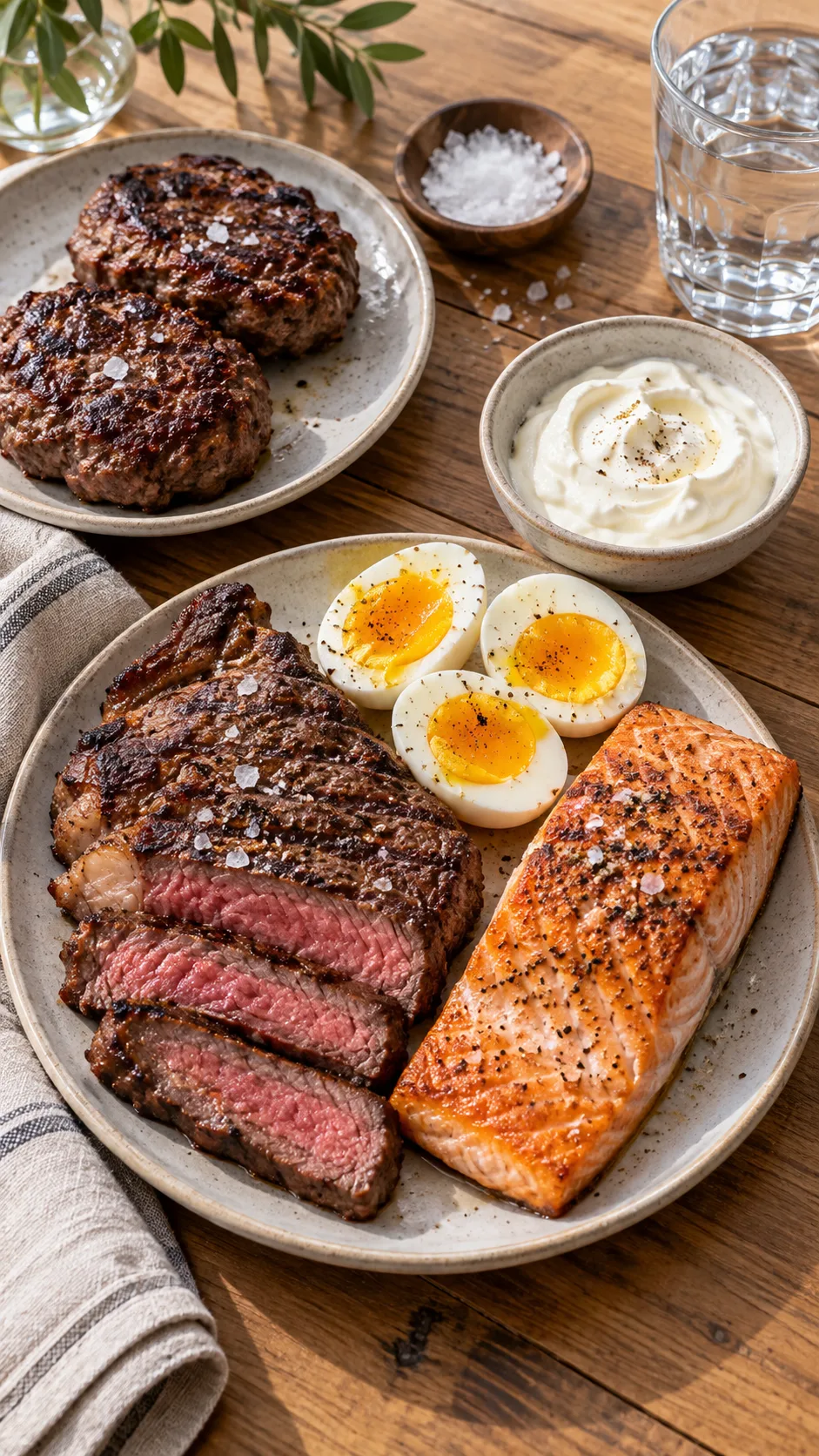
The diet centers on animal foods and cuts out plant foods almost completely. Most followers eat meat, fish, eggs, and some dairy. Strict carnivore plans cut out dairy too.
What a typical carnivore diet includes
- Beef, lamb, pork, poultry, and game meat
- Fish and shellfish
- Eggs
- Animal fats such as butter, tallow, and ghee
- Full-fat dairy for women who tolerate it
- Salt, water, and sometimes black coffee
A strict approach cuts out fruit, vegetables, grains, legumes, nuts, seeds, sugar, alcohol, and most sauces. Yes, that includes your “healthy” oat milk caramel situation.
Before you start, read our carnivore diet for beginners guide for women. A clear plan works better than a fridge full of random steak and panic.
Realistic before and after changes women commonly report
Women do not get identical results on carnivore. Your age, starting weight, hormones, sleep, activity, medications, food history, and calorie intake all affect the outcome.
Still, many women notice similar patterns in the first few months. Social media can blur the line between normal changes and fantasy.
1. Fast water weight loss in week one
Many women lose several pounds in the first week. Your body stores carbohydrate as glycogen, and glycogen holds water. When you cut carbs, your body can release a lot of water quickly.
That first drop does not mean you lost pure body fat. It can still motivate you, but the scale cannot tell you exactly what changed.
You may also notice less puffiness in your face, fingers, and stomach. Less sodium from processed foods, fewer carbs, and changes in gut contents can all alter your appearance.
2. Less bloating and fewer digestive symptoms
Some women report a flatter stomach and less gas after they cut out high FODMAP foods, sugar alcohols, processed snacks, and foods they do not tolerate well. That can feel huge if bloating made you avoid fitted clothes or meals with friends.
However, carnivore cannot solve every digestive problem. Some women get constipation, diarrhea, nausea, or reflux, especially when they add a lot of fat too quickly.
The National Institute of Diabetes and Digestive and Kidney Diseases lists several causes of constipation, including low fiber intake, dehydration, medications, and changes in routine. Read more at NIDDK’s constipation overview.
3. Fewer cravings and more control around food
For many women, this ranks among the most persuasive carnivore diet before and after changes. Protein and fat can keep you full longer than a breakfast pastry that leaves you hungry before your inbox settles down.
A meat based diet also removes many trigger foods. You cannot binge on cookies you did not buy, and you cannot “accidentally” eat half a pizza when pizza no longer counts as dinner.
Restriction can backfire for some people. If food rules make you obsess, binge, hide eating, or feel anxious around social meals, step back and speak with a registered dietitian or therapist who understands eating behavior.
4. A smaller waistline over time
Women can lose body fat on carnivore when the diet helps them maintain a calorie deficit. The diet does not override energy balance, no matter what a dramatic reel with ominous music claims.
High protein meals can make a deficit easier because protein supports fullness and helps protect lean mass during weight loss. Strength training, daily movement, and enough sleep can also change how your body looks and feels as your weight shifts.
If fat loss tops your list but you do not want to give up every plant food forever, compare this approach with our guide to the belly fat diet mistakes women make. You have options. “All meat forever” does not need to become your whole personality.
5. Better energy for some, lower energy for others
Some women describe smooth, steady energy after the first few weeks. They often point to fewer blood sugar swings, better fullness, and more regular meals.
Others feel flat, irritable, weak during workouts, or mentally foggy while they adapt. Your body needs time to adjust to low carbohydrate intake. Some women simply feel and perform better when they eat carbohydrates.
Pay attention to more than the scale. Can you lift, walk, work, sleep, focus, and enjoy your life? Those answers count.
Why carnivore diet results can look so dramatic
Before and after photos can look wild because people often start carnivore after months or years of struggling. They may stop drinking soda and alcohol, eating desserts and takeout, grazing between meals, and buying “healthy” snacks that somehow add 900 calories.
That major behavior change drives many early results. The carnivore framework gives people one simple rule: eat animal foods and skip everything else.
Simplicity can cut down on decision fatigue. You no longer stand in the pantry at 9 p.m. and negotiate with a granola bar like it holds classified information.
Protein changes the game
Protein supports fullness, muscle maintenance, and recovery. Women often eat too little protein during traditional dieting, then wonder why they feel ravenous and lose strength.
A carnivore plan usually raises protein intake, though fatty cuts can raise calorie intake too. You can overeat ribeye, cheese, cream, and butter if fat loss is your goal.
The International Society of Sports Nutrition says active adults often benefit from higher protein intake, especially during fat loss or muscle building phases. See its position stand on protein and exercise for a detailed review of the evidence.
Elimination can reveal food triggers
A short elimination phase can help some women spot foods that trigger cravings, digestive symptoms, migraines, or skin flare ups. You need a structured reintroduction phase if you want to learn from the experiment.
Without one, you only know that cutting back on food changed something. You will not know whether dairy, gluten, high FODMAP vegetables, alcohol, processed sugar, or another food caused the problem.
Keep notes on meals, symptoms, sleep, cycle changes, bowel movements, and training. Your own notes can tell you more than guesswork.
Carnivore diet before and after timeline for women
Your timeline will not match anyone else’s, but many women go through a similar progression. The first stretch can get messy.
- Days 1 to 7: You may lose water weight quickly. Headaches, fatigue, cravings, cramps, loose stools, or constipation can also show up as your food intake and fluid balance change.
- Weeks 2 to 4: Cravings may ease, meals may feel simpler, and bloating may improve. Your workout performance can still dip while your body adjusts.
- Months 1 to 3: Women who maintain a calorie deficit may notice visible fat loss, looser clothing, and a steadier appetite. Others may hit a plateau if they eat a lot of calorie dense dairy and added fats.
- Months 3 to 6: Habits matter more than novelty at this point. Check your lab work, menstrual health, digestion, strength, energy, and your ability to keep following the plan.
Take progress photos, waist measurements, and strength notes. The scale tells one part of the story. Your jeans, energy, and barbell can tell you the rest.

Women’s health concerns you should not ignore
Carnivore diet testimonials can make this plan sound risk free. It is not.
Very restrictive diets can leave nutrient gaps, especially when people avoid seafood, eggs, organ meats, dairy, and any planned variety. Researchers still have limited long term data on strict carnivore eating, so nobody can promise decades of safety.
Menstrual cycle and hormone changes
Some women report lighter, more regular, or less painful periods after weight loss and dietary changes. Others report missed periods, cycle shifts, or worse symptoms.
Low energy availability can disrupt reproductive hormones, especially when you combine hard training, rapid weight loss, and very low calorie intake. If your period disappears or changes significantly, contact your clinician. Do not treat it like a badge of honor.
The American College of Obstetricians and Gynecologists gives practical advice on menstrual health and when to seek care at ACOG Women’s Health.
Cholesterol and heart health
Some carnivore followers see lower triglycerides and higher HDL cholesterol. Others see a sharp rise in LDL cholesterol, particularly when they eat large amounts of saturated fat from butter, fatty red meat, and cream.
Get blood tests instead of making assumptions. Ask your clinician to monitor your lipid panel, blood pressure, glucose markers, kidney function when appropriate, and personal risk factors.
Family history matters. If you have familial hypercholesterolemia, cardiovascular disease, diabetes, kidney disease, gallbladder issues, or high cholesterol, seek medical guidance before you start.
Pregnancy, fertility, and breastfeeding
Pregnancy and breastfeeding require extra nutritional care. Do not start a highly restrictive diet during either stage without support from your obstetric provider and a qualified registered dietitian.
If you want to support fertility, focus on enough energy, protein, healthy fats, important micronutrients, and an eating pattern you can maintain. Our fertility diet guide explains common mistakes that can derail those goals.
How to try carnivore more safely
You do not need to jump from cereal to thirty days of butter coffee and steak. Start with a plan and give yourself a better chance to learn what works for you.
- Talk to your healthcare professional first if you take medication, manage a health condition, might be pregnant, breastfeed, or have a history of disordered eating.
- Start with whole animal foods. Build meals around meat, fish, eggs, and dairy that you tolerate, if you choose to include it.
- Prioritize variety. Rotate beef, poultry, fish, shellfish, eggs, and different cuts instead of living on bacon and cheese.
- Manage fluids and electrolytes. Drink water, salt food to taste unless your clinician limits sodium, and watch for dizziness, palpitations, or severe weakness.
- Do not force extra fat. Eat enough fat to feel satisfied, but do not turn every meal into a dairy fat competition.
- Track meaningful markers. Write down digestion, mood, sleep, cycle health, measurements, training performance, and lab results.
- Set a review date. Check in after 30 to 90 days instead of drifting into a restrictive plan without a reason.
If you want more structure, use our carnivore diet meal plan for beginners as a starting point. Then adjust it around your health, preferences, and results.
Can you build muscle on a carnivore diet?
Yes, women can build muscle on carnivore because animal foods provide complete protein. Muscle growth still requires progressive strength training, enough total calories, enough protein, and recovery.
You do not need to fear carbohydrates. Some women train very well without them, while others lift heavier and recover better when they include carbs around workouts.
The best diet supports your training instead of making every gym session feel like you wrestled a bear before breakfast. For a solid lifting foundation, read our strength training guide for women.
Focus on progressive overload. Add reps, improve your form, increase resistance gradually, and give your body enough food to recover.
The bottom line on carnivore diet before and after women’s results
Carnivore diet before and after results can look impressive because the plan often cuts ultra processed foods, raises protein, reduces cravings, and makes eating simpler. Many women lose water weight quickly. Steady fat loss takes longer and depends on a calorie deficit they can maintain.
The best “after” photo should show more than a smaller body. It should show better energy, strength, confidence, health markers, and a way of eating you can live with.
Try the carnivore diet with curiosity rather than blind faith. Track your response, check your health, keep what helps, and drop what does not. Your body deserves more than a viral promise 🙂