

You do not need a pocket calculator, a sad desk salad, or a lifelong feud with bread to eat well. Parisian eating habits offer a saner approach: eat real food, enjoy it properly, and stop treating every meal like a maths exam.
That does not mean everyone in Paris looks like a fashion-week extra. Bodies come in every size, genetics matter, and “the French diet” does not hand out magical croissants with invisible calories. Still, many French food habits encourage fullness, pleasure, and a healthier relationship with eating.
Why can someone enjoy cheese, bread, butter, and dessert without constantly talking about a “cheat day”? The answer usually lies in how they eat, not in one miraculous ingredient.
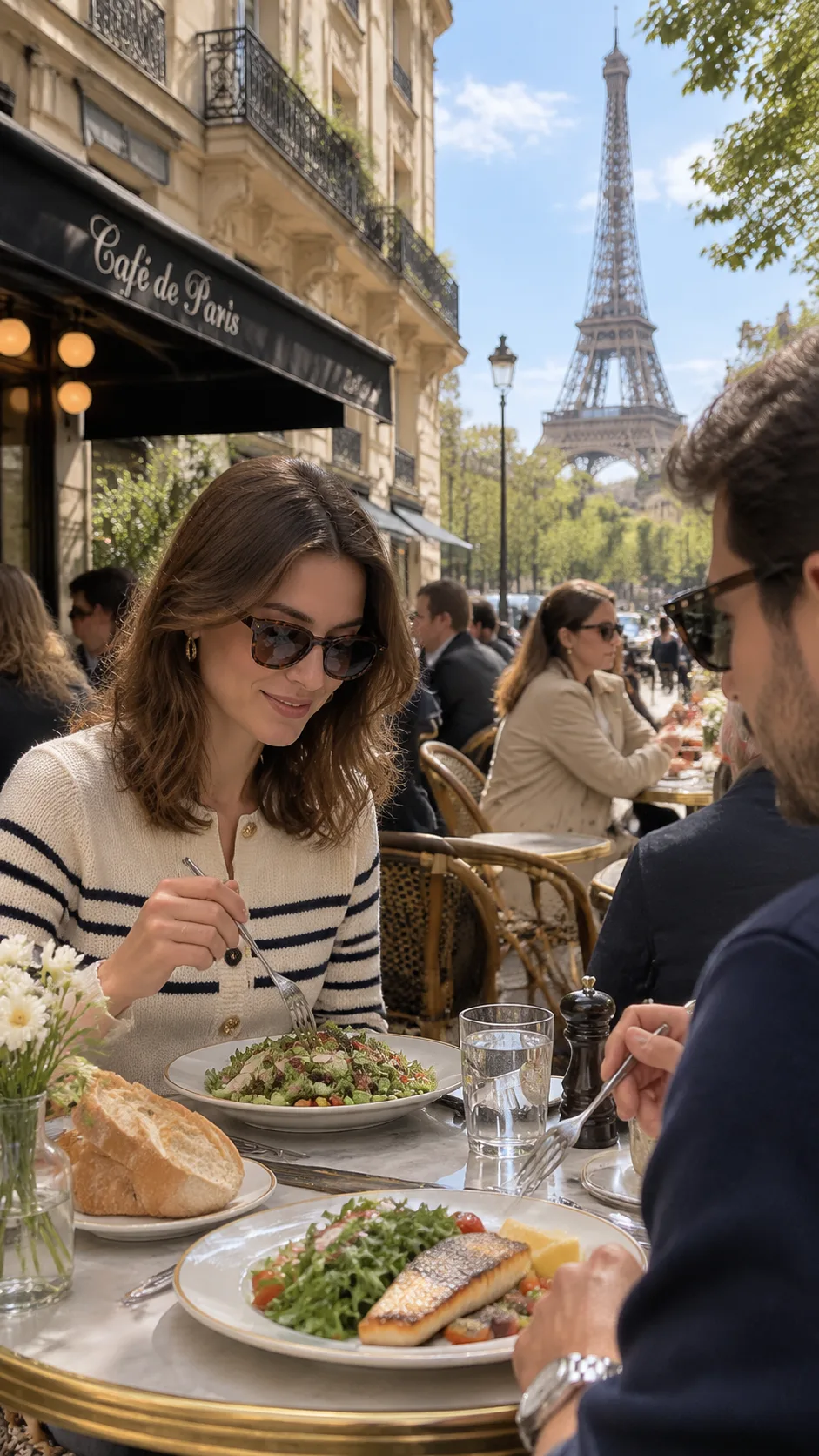
The French diet does not ban pleasure
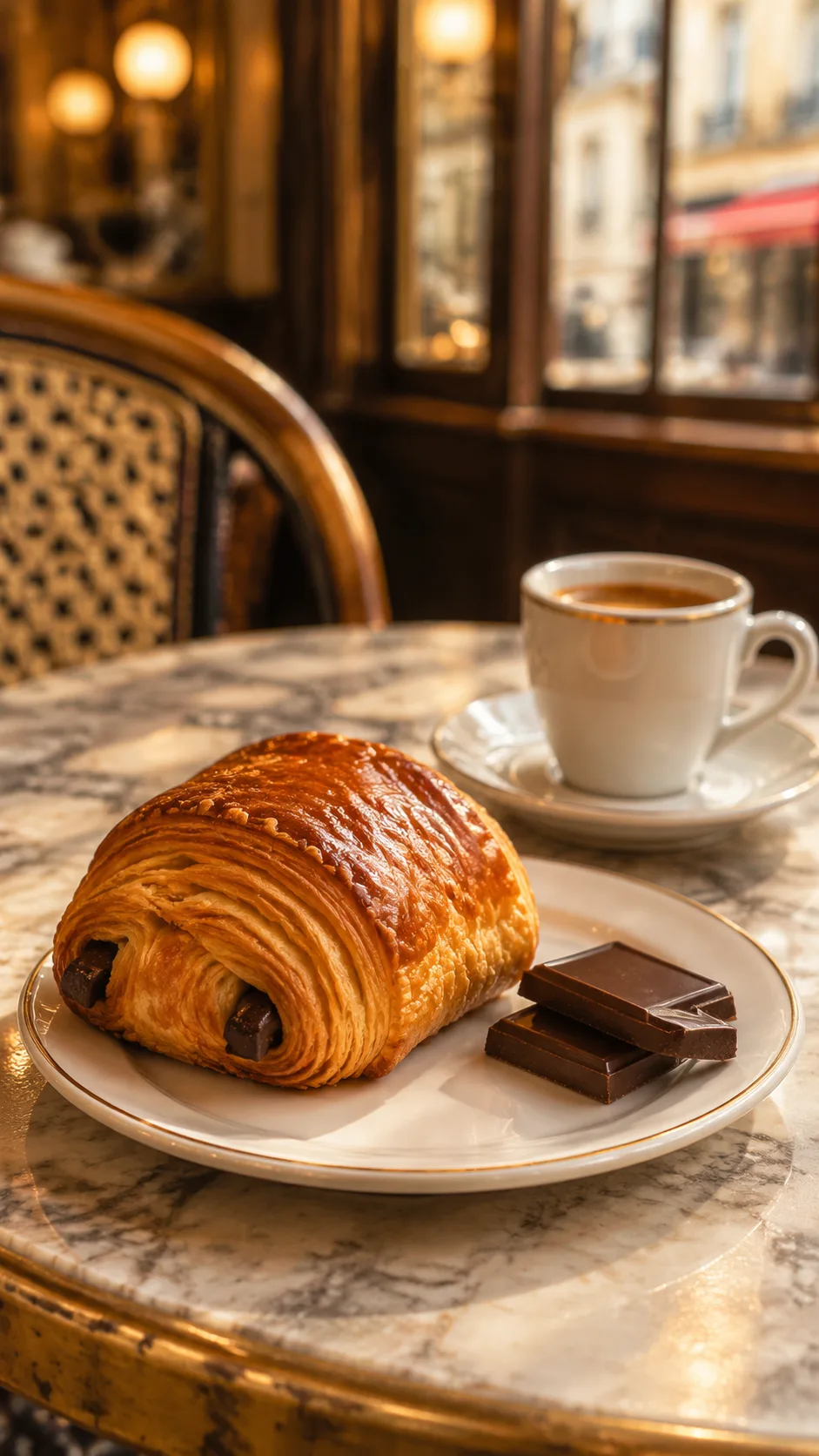
Many restrictive diets begin with a long list of foods to fear. French eating culture often takes another view: food should taste good, satisfy you, and fit into an ordinary life. That attitude can prevent the familiar “I blew it, so I may as well eat the whole fridge” spiral.
French people often eat rich foods in modest amounts, then get on with their day. They do not need a family-sized tub of anything to prove they enjoy it. This approach sounds far more peaceful than arguing with yourself over one square of chocolate.
Enjoyment can help you stop earlier
When you eat food you truly like, you may feel satisfied with less. A carefully chosen piece of dark chocolate can feel more complete than a rushed pile of low-calorie snacks that taste like packing material. Your brain notices flavour, texture, aroma, and the pleasure of the occasion.
That does not turn butter into a health supplement. It means that satisfaction matters. You can build meals around nutrient-rich foods and still leave room for foods you love.
Researchers and dietitians often encourage flexible eating patterns instead of harsh food rules. Harvard’s Healthy Eating Plate focuses on vegetables, whole grains, protein, healthy fats, and water rather than obsessive calorie tracking.
Portion awareness beats portion panic
One French diet habit comes down to portion size. A Parisian café may serve a proper plate of food, but it rarely brings enough pasta to feed a school football team. Smaller portions let people enjoy richer foods without letting those foods take over every meal.
You still get the experience. You eat the cheese. You enjoy the pastry. You stop before your stomach sends an angry customer-service email.
What moderate portions look like
You do not need to weigh every grape. Use simple visual cues and notice your hunger before, during, and after a meal.
- Protein: Aim for about a palm-sized serving of chicken, fish, eggs, beans, tofu, yogurt, or lean meat.
- Vegetables: Let vegetables fill a generous part of your plate whenever you can.
- Starches: Enjoy bread, potatoes, rice, pasta, or grains in a portion that satisfies you.
- Fats: Use olive oil, butter, cheese, nuts, and sauces for flavour, not as a construction material.
- Dessert: Choose a small serving that feels worth eating instead of a huge one you barely notice.
You do not need perfection. You can eat more at a birthday dinner and eat less later because your appetite guides you. Consistency beats compensation.
Parisians often eat meals, not constant snacks
French food culture traditionally gives meals a clear place in the day. Breakfast stays fairly simple, lunch matters, dinner invites people to slow down, and random grazing does not control the day. That rhythm can make hunger easier to read.
Many people mistake boredom, stress, habit, or office biscuits for physical hunger. Regular meals give your body a better chance to recognize hunger and fullness. Have you ever wandered into the kitchen at 4 p.m. because your brain needed a break from emails?
Snacks can fit into a healthy diet. Active people, growing children, people with medical needs, and anyone with a long gap between meals may need them. Ask yourself, “Do I need food right now, or do I need a pause?”
Try a more intentional eating schedule
- Eat a breakfast with protein or fibre if morning hunger hits you hard.
- Plan lunch before you become hungry enough to order everything with melted cheese.
- Choose fruit, yogurt, nuts, or another filling food for an afternoon snack when you need one.
- Sit down for dinner and put aside obvious distractions when you can.
- Stop treating every craving like an emergency.
You do not need rigid meal times. This structure simply gives food a place in your day instead of letting it fill every empty moment.
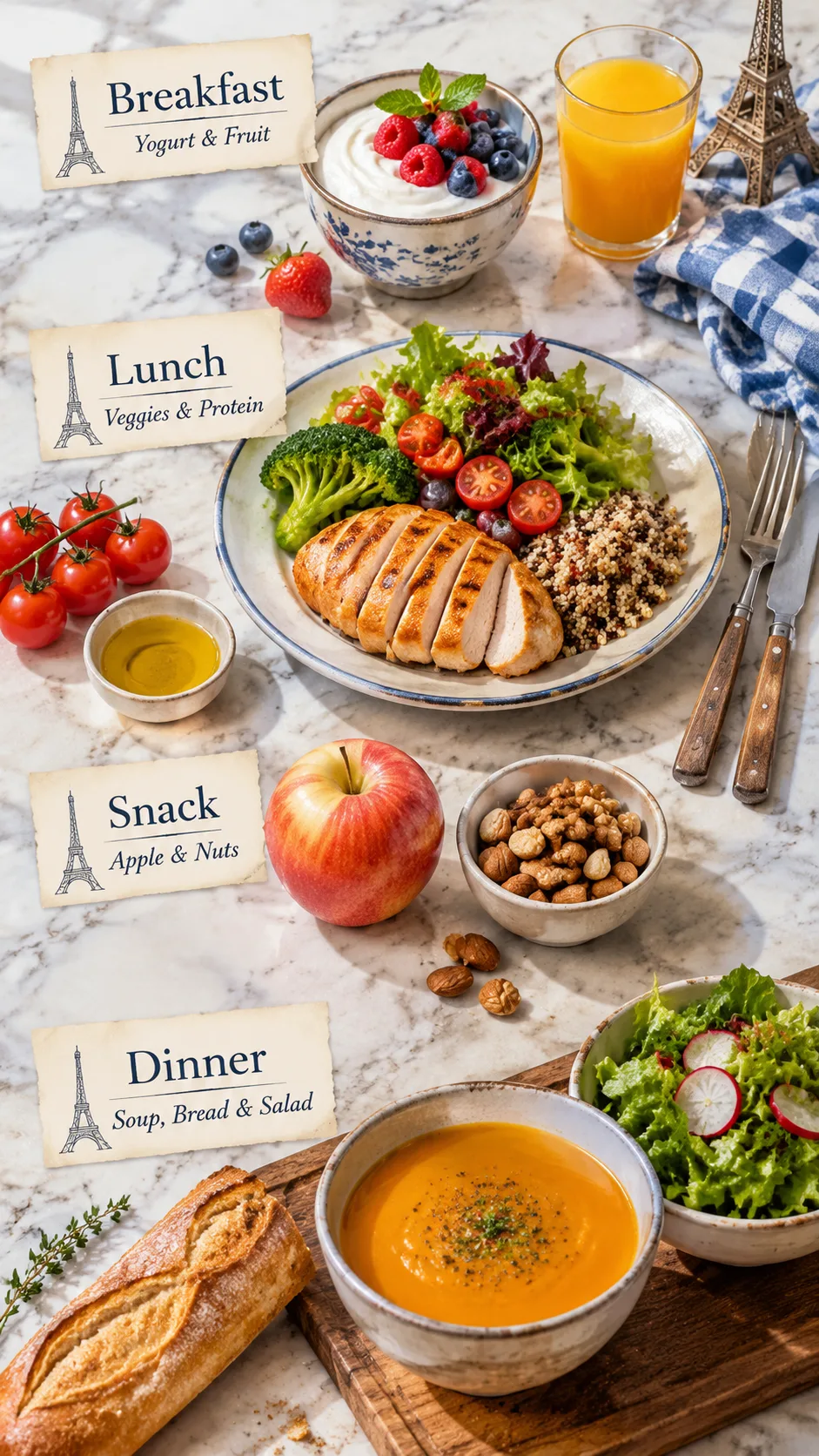
The French diet puts real food before “diet food”
Walk through a French market and you will see vegetables, fruit, fish, cheese, bread, yogurt, herbs, and produce in season. You will not find a nation running entirely on neon protein bars and zero-calorie gummy bears. Thank goodness, because some of those bars taste like sweetened drywall.
Traditional French meals often use recognizable ingredients. Cooks combine vegetables, legumes, eggs, fish, poultry, grains, fruit, dairy, and small amounts of richer foods. This approach supports good nutrition without making meals feel like punishment.
The whole foods diet approach follows a similar idea: choose foods close to their original form more often, then leave room for flexibility. You do not need to ban every packaged food to benefit from that habit.
Build a French-inspired plate at home
A French-inspired meal does not require a Paris address, a striped shirt, or confident “ratatouille” pronunciation. Start with simple ingredients and make them taste good.
- Roast chicken with green beans, potatoes, and a mustard vinaigrette.
- Make lentil soup with carrots, onions, herbs, and a piece of crusty bread.
- Serve salmon with roasted vegetables, lemon, and a small portion of rice.
- Eat an omelette with mushrooms, salad, and fresh fruit.
- Finish plain Greek yogurt with berries and a drizzle of honey.
These meals offer enough flavour and texture to satisfy you. They also provide protein, fibre, vitamins, and minerals without requiring a spreadsheet.
Slow eating gives your brain time to catch up
French meals often encourage people to sit down, talk, and eat at a calmer pace. Your body does not send instant fullness notifications. Your brain needs time to register what your stomach receives.
Fast eating can push you past comfortable fullness before you notice. Slower eating gives you more chances to taste your food, chew properly, and decide whether you want more. You do not need theatrical tiny bites, either.
Put your fork down after a few bites. Sip water. Talk to the person across from you. If you eat alone, set your phone aside for part of the meal and give lunch five minutes of your full attention.
Mindful eating does not require perfect zen. It asks you to notice your food before it disappears. That habit can change how satisfied you feel after a meal.
French food culture keeps eating social
Food brings people together in France. Friends meet for coffee, families gather around dinner, and long lunches still matter culturally. Social meals can slow eating and make food feel like an occasion rather than a private response to stress.
Social meals can include extra bread, wine, and dessert. Your overall pattern matters more than one restaurant meal. A relaxed Saturday dinner will not erase a week of sensible choices.
Shared meals can also create natural boundaries. You plate food, sit at a table, enjoy the conversation, and finish. Compare that with eating chips from the bag while watching three episodes of something you do not even like anymore.
Walking forms a quiet part of Parisian life
The French diet does not work alone. Many Parisians walk to metro stations, shops, schools, cafés, and appointments because city life makes walking practical. Daily movement adds up without matching gym outfits or a motivational speech at 5 a.m.
Walking does not “earn” food, and you should never use exercise as punishment. Regular movement supports heart health, fitness, mood, and energy balance. The World Health Organization recommends regular physical activity for adults, including aerobic activity and muscle-strengthening work.
You can borrow this French habit wherever you live. Park farther away, take a walk after dinner, use stairs, walk during phone calls, or visit nearby shops on foot. Small movement habits rarely impress anyone on Instagram, but they help.
Movement that feels like normal life
You do not need to train like an athlete to benefit from more movement. Start with actions that fit your schedule and that you can repeat.
- Walk for 10 to 20 minutes after lunch or dinner.
- Carry groceries when you can do so safely.
- Choose a weekend walk with a friend instead of another seated coffee catch-up.
- Add two short strength sessions each week for muscle and bone health.
- Use movement to lift your day, not to erase your lunch.
If you want a beginner-friendly way to add strength work, start with solid basics. This guide to proper push-up form can help you build upper-body strength without making your wrists grumpy little protestors.
French women and men do not “save up” for binge meals
Diet culture often tells people to starve all day before a big dinner. That plan often backfires because intense hunger makes sensible choices harder. You arrive at the meal ready to eat the decorative centerpiece.
A more balanced French approach keeps meals fairly regular. You might eat a lighter lunch before a richer dinner, but you still eat lunch. You choose nourishing food first, then enjoy the special meal without panic.
This idea can help during holidays, restaurant meals, and weekends. Do not call one indulgent meal a failure. Return to your normal routine at the next meal and skip the dramatic Monday punishment plan.
One meal never defines your health. Your repeated habits tell the real story.
Wine, cheese, and bread: The part everyone gets wrong
People love to point to French wine, cheese, and baguettes as though they hold a secret code to effortless slimness. They do not. These foods can fit into a balanced diet, but they contain calories and portions still matter.
French eating culture often includes these foods as part of a meal rather than as all-day snacks. A piece of good bread goes with soup or salad. A small portion of cheese ends a meal. Wine may accompany dinner rather than become an oversized weekday coping mechanism.
Alcohol carries health risks, so nobody should start drinking for supposed French diet benefits. The Centers for Disease Control and Prevention explains that alcohol can affect health in several ways. If you drink, follow local health guidance and keep your intake moderate.
Choose quality over quantity with bread and cheese. Buy bread you enjoy, eat it with a meal, and stop when you feel satisfied. It sounds almost suspiciously simple, right?
Seasonal food makes healthy eating less boring
French markets celebrate produce in season because it often tastes better and costs less. Spring brings asparagus and strawberries. Summer brings tomatoes and peaches. Autumn brings squash and mushrooms. Winter brings root vegetables, citrus, and warming soups.
Seasonal eating gives you variety without asking you to chase every new wellness trend. Your meals change through the year, so you avoid the chicken, broccoli, sadness routine. Variety also helps you eat a wider range of nutrients.
Choose one seasonal fruit and two seasonal vegetables each week. Build meals around them until you want something else. That small habit can make grocery shopping easier and cooking more interesting.
How to use French diet habits without pretending you live in Paris
You can borrow useful French diet habits without copying another culture word for word. Your budget, schedule, medical needs, activity level, and favourite foods matter. A good way of eating should work in your own kitchen on a busy Tuesday.
Your practical French-inspired food plan
- Eat seated meals more often. Give meals a clear beginning and end instead of grazing all day.
- Fill half your plate with plants when practical. Use vegetables, fruit, beans, soups, and salads.
- Include protein at meals. Protein helps meals satisfy you and supports fullness.
- Choose treats you enjoy. Eat foods you love in portions that leave you feeling good.
- Slow down. Give hunger and fullness signals time to speak up.
- Walk more. Add ordinary movement to your day whenever you can.
- Drop the guilt. Eat your next meal normally after a richer meal.
If you need more structure, meal prep can make these habits easier. These chicken breast meal prep ideas can help you prepare filling lunches that beat a last-minute vending machine rescue mission.
When you should seek personal nutrition advice
The French diet offers useful habits, but it cannot replace medical advice. Talk with a registered dietitian or healthcare professional if you manage diabetes, digestive disease, kidney disease, food allergies, pregnancy nutrition needs, or an eating disorder history.
You also deserve personal support if food rules, guilt, bingeing, or body worries take up too much mental space. A qualified professional can help you build a healthier relationship with food without handing you another impossible rulebook.
Healthy eating should support your life. It should not become your full-time hobby, your personality, or your most stressful group chat.
The bottom line on the French diet
The French diet does not rely on magic, starvation, or a mystical baguette blessed by a Parisian grandmother. It relies on regular meals, satisfying portions, real food, slower eating, daily walking, and genuine enjoyment.
You do not need to count every calorie to make progress, though calorie awareness can help some people in specific situations. Start by eating more intentionally, choosing foods that satisfy you, and letting yourself enjoy them.