

You don’t need a spreadsheet addiction to eat by your macros. You need a plan simple enough to survive a Tuesday night when you’re tired, hungry, and out of chicken.
Most beginners quit macro tracking within two weeks. The math isn’t the problem. The plan is. It has too many rules, too many weighed-out almonds, and no room for real life.
This guide fixes that. You’ll set your numbers in about ten minutes, then plug them into a free, copy and paste macro meal plan template that flexes with your schedule.
Why most macro meal plans fall apart by week two
Ever wonder why your last meal plan lasted exactly nine days? It usually comes down to three predictable mistakes.
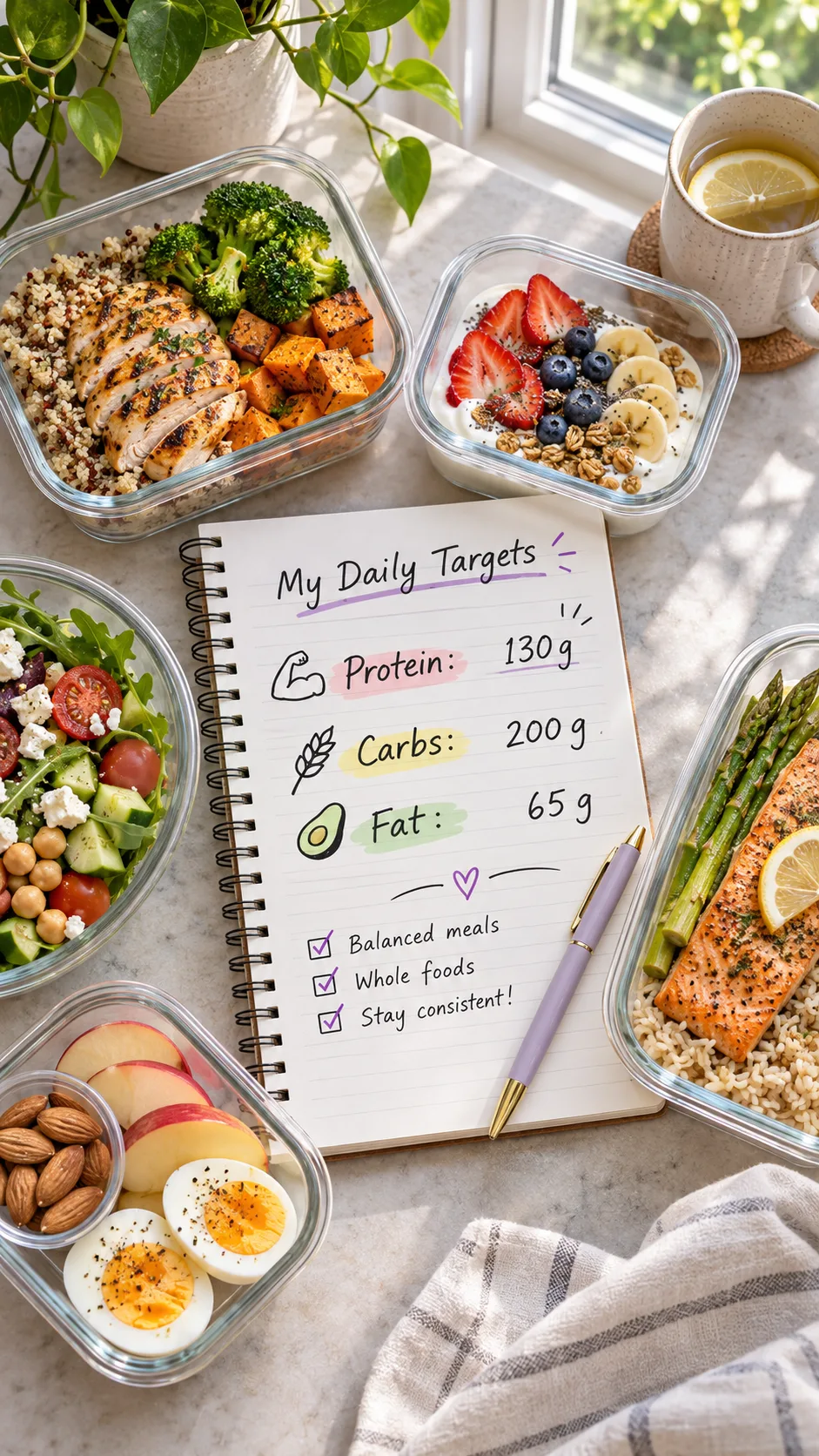
- The plan demands perfection. You have to hit 150 grams of protein, 200 grams of carbs, and 67 grams of fat to the gram, or the day counts as a failure. That’s a fast track to quitting.
- The meals never repeat. Seven days of seven different dinners sounds fun until you shop, chop, and track all of it.
- The plan ignores your real life. It skips restaurants and birthdays, and it has no answer for the days you just want toast.
A plan you follow at 80% beats a perfect plan you drop after a week. Every single time.
Macros in 60 seconds
Macros (short for macronutrients) are the three nutrients that supply your calories. Vitamins and minerals matter too, but they don’t count as macros.
- Protein has 4 calories per gram. It builds and repairs muscle and keeps you full.
- Carbohydrates have 4 calories per gram. They fuel your workouts and your brain.
- Fat has 9 calories per gram. It supports hormones and helps you absorb certain vitamins.
Fat packs more than twice the calories per gram, which is why a “small” drizzle of olive oil can quietly add 120 calories. I learned that the hard way with a very generous pour over a salad. Sneaky stuff.
Want the deeper theory? Our macros diet for beginners guide covers the full framework. This article turns the numbers into food.
Step 1: Set your daily calories (no math degree required)
Start with a calorie target, because your macros divide up that number. The simplest route takes three moves.
- Estimate your maintenance calories. Use an online calculator built on the Mifflin-St Jeor equation, a standard formula for estimating resting energy needs. It asks for your age, height, weight, sex, and activity level.
- Pick your goal. To lose fat, subtract about 300 to 500 calories. To build muscle, add roughly 200 to 300. To maintain, stay put.
- Treat the result as a starting point. Calculators guess. Your body gives you the real answer over two to three weeks.
FYI, a gentle deficit wins for beginners. Cut too hard and you’ll spend your evenings staring into the fridge like it owes you money.
An example we’ll use throughout
Say your target lands at 2,000 calories per day. I’ll use that number for the rest of this guide so the math stays easy to follow. Swap in your own numbers when you build your plan.
Step 2: Set protein first, then fat, then carbs
The order matters. Protein goes first because it does the most work for the least effort.
Protein: your anchor
The International Society of Sports Nutrition suggests 1.4 to 2.0 grams of protein per kilogram of body weight for most exercising adults. You can read the details in their position stand on protein and exercise. That works out to roughly 0.6 to 0.9 grams per pound.
For a 165-pound (75 kg) person, 150 grams of protein sits near the upper end. A target of 120 to 135 grams works fine too. Pick a number in the range and move on. Perfection isn’t on the menu.
Fat: your floor
The Dietary Guidelines for Americans and related National Academies ranges put fat at about 20 to 35% of daily calories for adults. Most beginners feel good around 25 to 30%. Going much lower often leaves you hungry and cranky.
At 2,000 calories, 30% fat equals 600 calories. Divide by 9 and you get about 67 grams of fat.
Carbs: everything left over
Carbs fill the remaining calories. Start with 150 grams of protein (600 calories) and 67 grams of fat (about 600 calories). That leaves roughly 800 calories, or 200 grams of carbs.
Your example macros at 2,000 calories: 150 g protein / 200 g carbs / 67 g fat. That’s roughly a 30/40/30 split.
Sound like a lot of food? It is, and that’s the fun part. IMO, hitting your protein number beats worrying about whether you’re 5 grams off on carbs.
The free macro meal plan template
This is the part you came for. The template splits your day into four eating slots: breakfast, lunch, snack, and dinner. Each slot gets a macro target, so you never stare at a blank tracking app wondering what to eat.
Copy the table below into a note, a spreadsheet, or onto a sticky note on your fridge. The numbers add up to the 2,000-calorie example above.
| Meal | Protein (g) | Carbs (g) | Fat (g) | Approx. calories |
|---|---|---|---|---|
| Breakfast | 35 | 45 | 15 | 455 |
| Lunch | 45 | 60 | 18 | 580 |
| Snack | 20 | 30 | 8 | 270 |
| Dinner | 50 | 65 | 26 | 695 |
| Daily total | 150 | 200 | 67 | 2,000 |
How to customize the template in four steps
- Replace the daily totals with your own protein, carb, and fat numbers.
- Divide protein roughly evenly across meals. Aim for 20 to 50 grams per sitting.
- Put more carbs around your workout. If you train in the morning, load up breakfast. If you lift in the evening, shift carbs to dinner.
- Adjust the snack slot up or down to hit your daily totals. It’s your flex meal.
Check food labels, or look up foods in the free USDA FoodData Central database. It lists macros for thousands of whole foods, with no ads and no upsell.
What a full day looks like
Numbers on a page don’t feed anyone. Here’s how that template looks on a plate. Treat the amounts as approximate, since brands and portions vary.
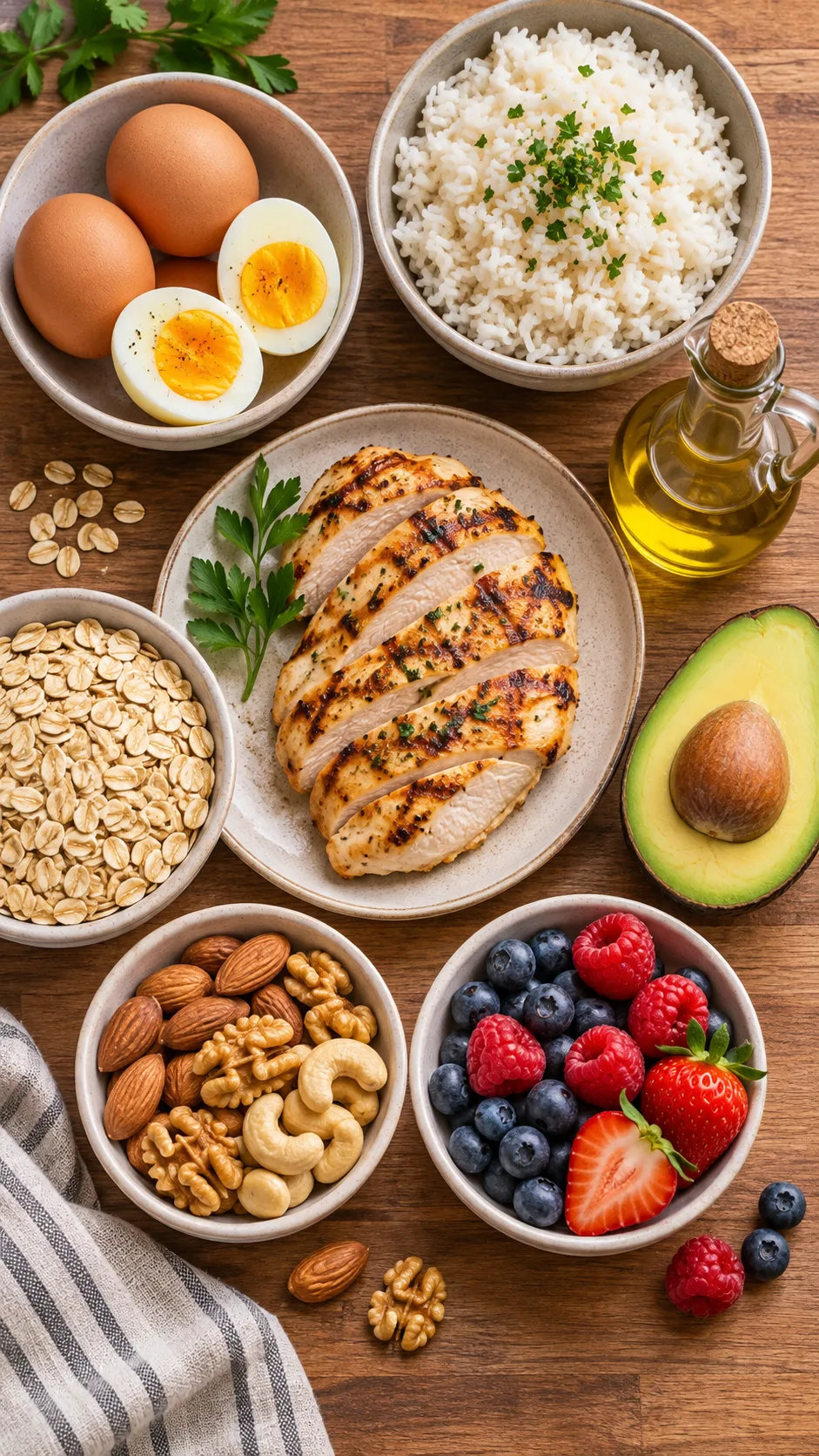
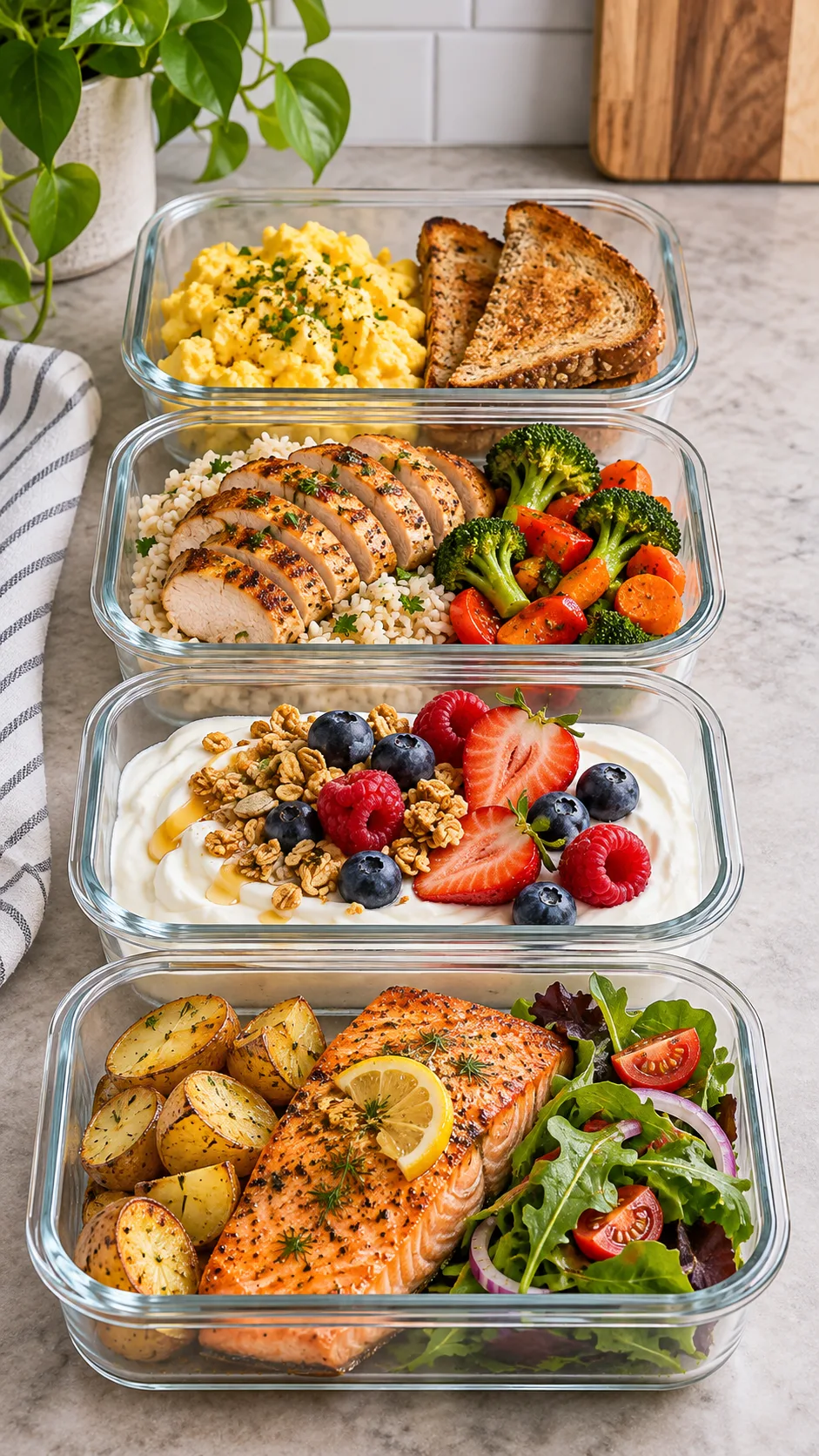
- Breakfast (35P / 45C / 15F): two whole eggs plus three egg whites scrambled, two slices of whole grain toast, and a small apple.
- Lunch (45P / 60C / 18F): grilled chicken breast over a cup and a half of cooked rice, with roasted vegetables and a teaspoon of olive oil.
- Snack (20P / 30C / 8F): plain Greek yogurt with berries and a tablespoon of almonds.
- Dinner (50P / 65C / 26F): baked salmon, a medium baked potato, and a big green salad with dressing.
Notice what’s missing? Anything exotic. You won’t find rice cakes dusted with protein powder or a “macro friendly” dessert pizza. You eat regular food in sensible amounts.
5 rules that make it stick
A good template only helps if you use it. These five rules separate the people who last six months from the people who last six days.
- Repeat your meals. Eat the same breakfast and lunch most days. Boring works, and it cuts your decisions in half.
- Hit protein first, then relax. If you land within 5 to 10% of your targets, call it a win. Close enough counts.
- Plan for a flex meal. Leave room for pizza night or dinner out. Estimate it, log it roughly, and keep going.
- Weigh your food for two weeks, then stop. A cheap kitchen scale teaches you what 150 grams of chicken looks like. After that, eyeball more often.
- Judge progress over weeks, not days. Your scale weight bounces around with water, salt, and sleep, so track a weekly average instead.
That last rule deserves extra attention. If you also watch sodium or blood pressure, our low sodium diet guide explains why water weight swings so wildly.
Let meal prep do the heavy lifting
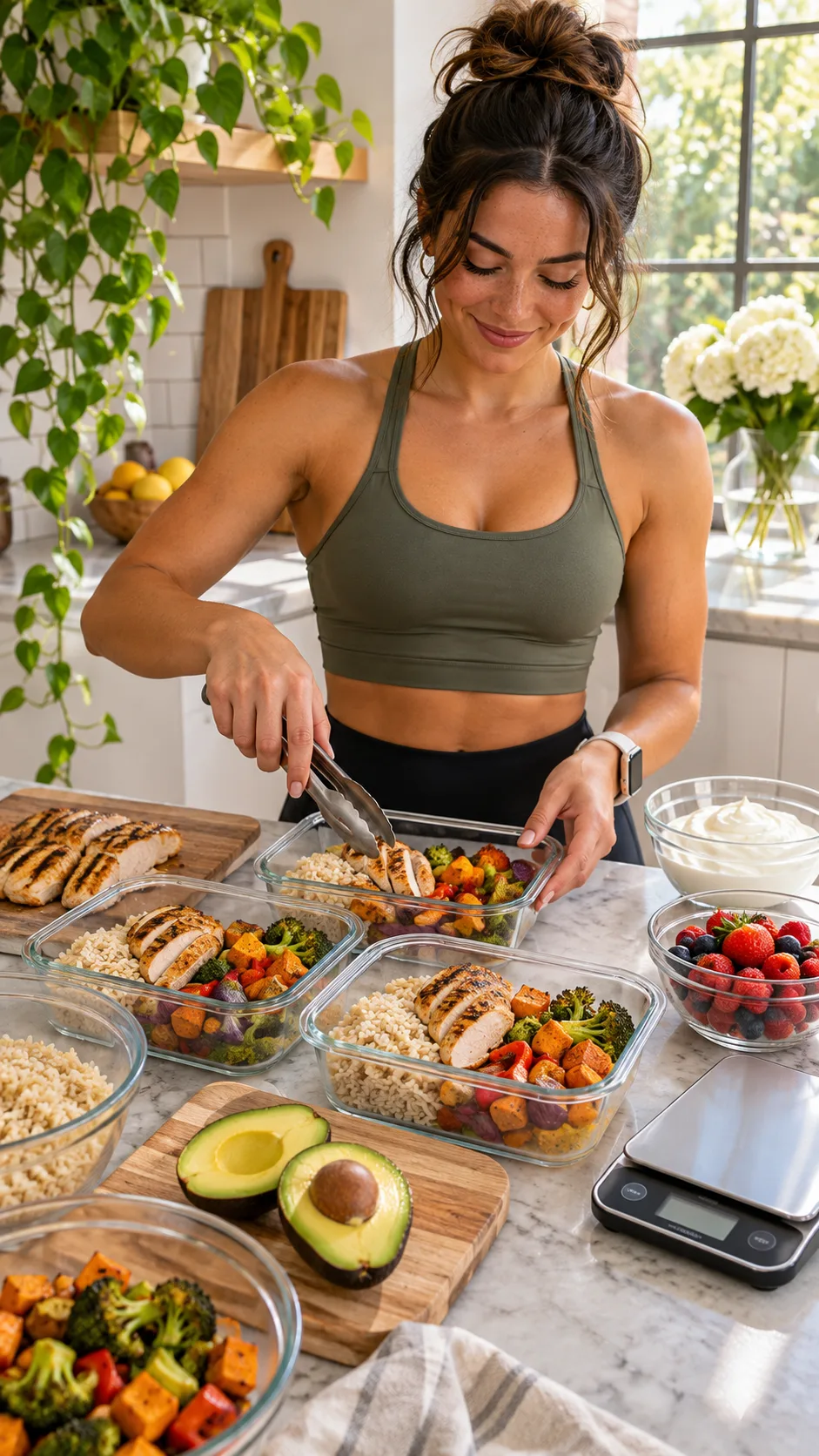
Macro tracking gets ten times easier when you cook in batches. You log the meal once, then eat it four times.
Try this simple Sunday routine:
- Cook one big protein, like chicken thighs, lean ground turkey, or baked tofu.
- Make one big carb, like rice, potatoes, or pasta.
- Roast a tray of vegetables.
- Portion everything into containers and label them with the macros.
The whole thing takes about 90 minutes. Need a full walkthrough? Our easy meal prep for beginners system shows you how to do it without losing your whole Sunday.
Watch a macro meal prep walkthrough
Sometimes seeing it done beats reading about it. This video shows a full week of macro friendly meal prep from start to finish.
Smart swaps when your numbers don’t fit
You’ll hit days when the math fights back. Maybe you’re 20 grams short on protein at 9 p.m. Maybe fat ran over because you got heavy-handed with the peanut butter.
Need more protein?
- Add a scoop of whey or plant protein to a smoothie or yogurt.
- Swap regular yogurt for plain Greek yogurt or skyr.
- Toss canned tuna or chicken into your lunch.
- Grab cottage cheese as a snack.
Too much fat?
- Measure oils with a spoon instead of pouring from the bottle.
- Choose leaner cuts, like chicken breast over thighs.
- Use cooking spray for pans.
Not enough carbs for training?
- Add a banana, rice cakes, or a bowl of oats before your workout.
- Keep fruit within arm’s reach.
Planning to follow a more restrictive pattern instead? Our 1200 calorie low carb meal plan takes a very different approach, so you can compare which style suits you.
Common beginner mistakes (and quick fixes)
Tracking everything obsessively
Logging every blueberry burns you out. Track the big items, estimate the small ones, and skip the black coffee. Consistency beats precision.
Eating too little protein early in the day
Many people eat a breakfast heavy on carbs and cram protein into dinner. Spread it out. A 35-gram breakfast keeps your hunger quiet until lunch.
Ignoring fiber and micronutrients
Macros don’t tell the whole story. You can hit your numbers on pastries and protein bars and still feel lousy. Build most meals around whole foods, and aim for vegetables at lunch and dinner.
Changing the plan every week
You can’t judge a plan after three days. Give it two to three weeks, then adjust calories by 100 to 200 if your weight trend stalls.
Who should skip DIY macros?
Macro counting works well for most healthy adults, but it doesn’t suit everyone. If you have a history of disordered eating, talk with a doctor or registered dietitian first, because tracking can trigger unhealthy patterns. The same goes for pregnancy, diabetes, kidney disease, and any condition that needs medical nutrition guidance.
Digestive issues call for a different approach too. Our low FODMAP diet guide covers one example of a medically guided eating pattern. This article offers general education, not personal medical advice.
Frequently asked questions
How long does it take to see results on a macro meal plan?
Most people notice changes in energy and hunger within one to two weeks. Visible body changes usually take four to eight weeks of steady effort. Track a weekly average weight and take a few photos, then judge after a month.
Do I have to count macros forever?
Nope. Many people track for a few months to learn portion sizes, then switch to a lighter routine. Think of tracking as training wheels, not a life sentence.
Can I eat out while following my macros?
Yes. Look up the restaurant’s nutrition info online, pick a grilled protein with a side of vegetables or rice, and log your best estimate. An imperfect log beats no log at all.
The bottom line
A macro meal plan works when it respects your real life. The short version:
- Set your calories with a simple calculator, then adjust after a few weeks.
- Lock in protein first at roughly 1.4 to 2.0 grams per kilogram of body weight.
- Fill in fat and carbs to match your calorie target.
- Use the four slot template so every meal has a clear job.
- Repeat meals, prep in batches, and leave room for a flex meal.
Your macro plan only has to work on your worst day. Copy the template, plug in your numbers, and eat your first planned meal today. Future you will say thanks.