

You open the fridge at 6:45 p.m. and find a sad lemon, half an onion, and a jar of mustard. Sound familiar? Mediterranean diet meal prep fixes that scene before it starts.
I started prepping Mediterranean-style meals a few years ago after one too many Wednesday-night drive-thru runs. I didn’t want a complicated system. I wanted food that tastes great and doesn’t require a decision when I’m tired.
This guide walks you through how I do it. You’ll get a shopping list, a 90-minute Sunday routine, a sample menu, and storage rules that keep everything fresh.
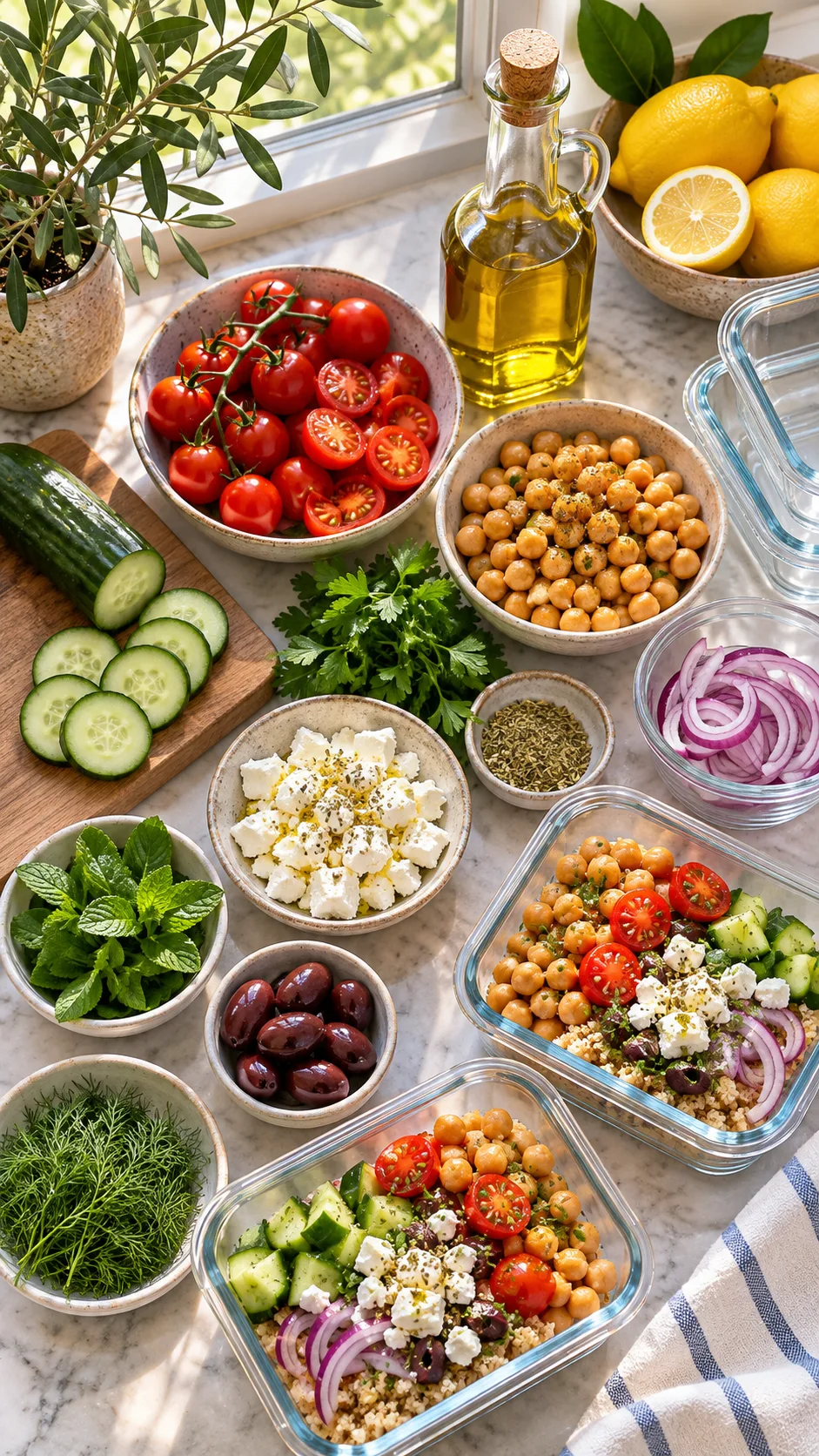
Why Mediterranean diet meal prep works so well
Most diets ask you to cut things out. The Mediterranean way asks you to add more of the good stuff: vegetables, beans, whole grains, fish, nuts, and olive oil. Nobody has to count anything.
The research backs it up. The large PREDIMED trial appeared in the New England Journal of Medicine and found that people who followed a Mediterranean diet with extra-virgin olive oil or nuts had roughly 30% fewer major cardiovascular events than the control group. That’s a serious result from eating food you’d happily order at a restaurant.
So why pair it with meal prep? Because the Mediterranean diet leans on simple, modular ingredients. Roasted vegetables, cooked grains, beans, and a few sauces mix and match into dozens of meals. You cook a handful of building blocks instead of seven different dinners.
The “building block” mindset
Forget rigid recipes for a moment. Think in components:
- One or two whole grains (brown rice, farro, quinoa, bulgur)
- One or two proteins (chicken, salmon, chickpeas, lentils, eggs)
- Two or three roasted or raw vegetables
- Two sauces or dressings
- A few “finishers” like olives, feta, nuts, and fresh herbs
Each combination makes a different meal, so one round of prep never gets boring.
Stock the Mediterranean pantry first
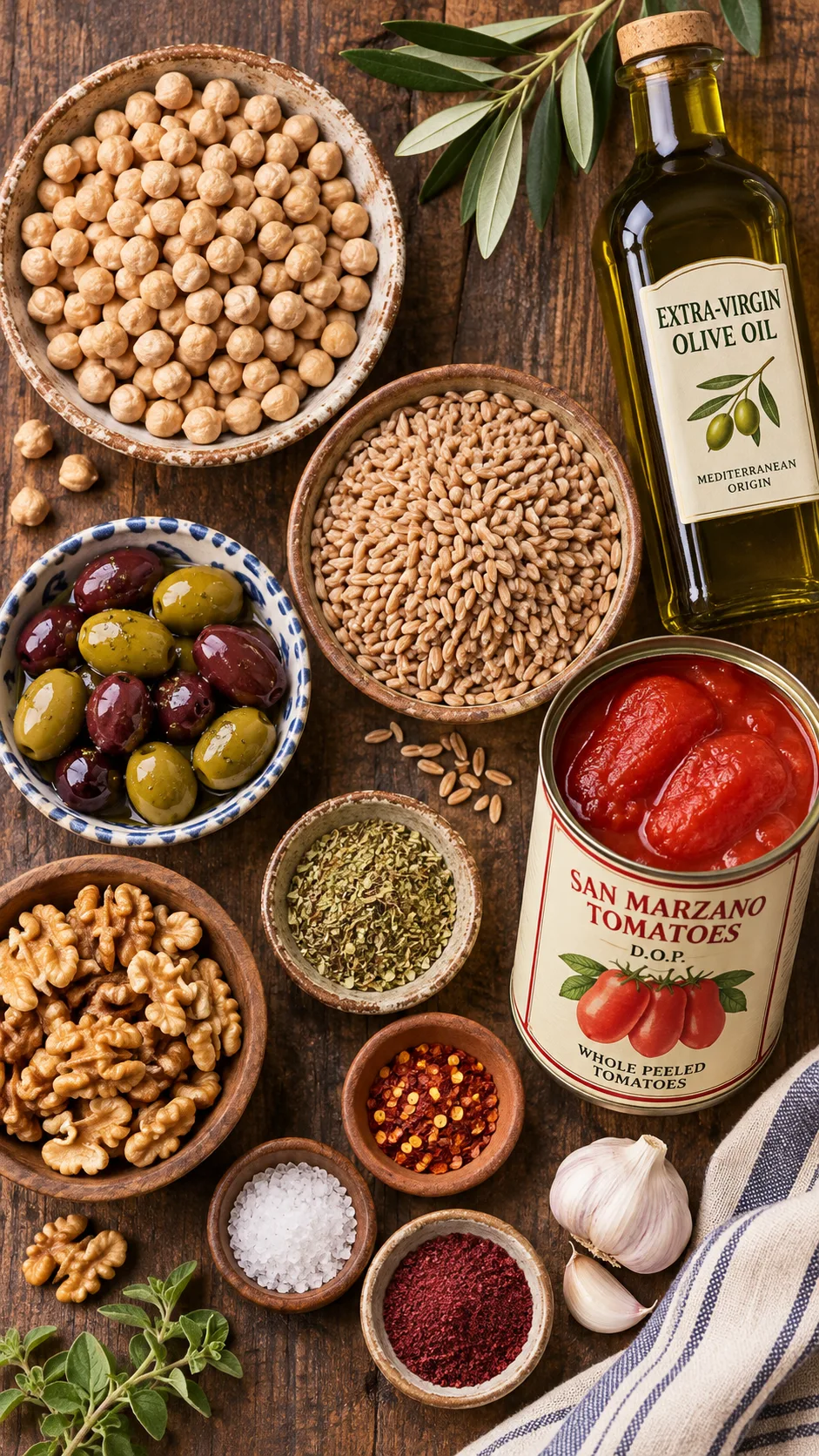
You can’t prep without ingredients. The good news? Most Mediterranean staples last for months, so you buy them once and coast.
If you want the bigger picture on what to eat daily versus occasionally, read our breakdown of the Mediterranean diet pyramid. For now, here’s the shopping list I use.
Pantry and freezer essentials
- Extra-virgin olive oil: your main cooking fat and dressing base
- Canned chickpeas, cannellini beans, and lentils: instant protein and fiber
- Whole grains: farro, quinoa, bulgur, brown rice, whole-wheat pasta
- Canned tuna or sardines in olive oil: shelf-stable omega-3s
- Canned crushed tomatoes and tomato paste
- Nuts and seeds: walnuts, almonds, pistachios, sesame seeds
- Frozen vegetables and wild-caught fish fillets: your backup plan when the fridge runs low
- Spices: oregano, cumin, smoked paprika, za’atar, red pepper flakes
Fresh weekly shopping list
- Leafy greens (spinach, arugula, romaine)
- Cucumbers, cherry tomatoes, bell peppers, zucchini, eggplant
- Lemons (buy more than you think you need)
- Fresh parsley, mint, or dill
- Feta, plain Greek yogurt, and maybe some Parmesan
- Chicken thighs or breasts, plus one fish option such as salmon
- Fresh fruit for snacks and dessert
The 90-minute Sunday prep routine
Ever wonder why most meal prep plans collapse by Wednesday? They demand four hours of cooking and a mountain of dishes. Mine takes about 90 minutes because I run everything at the same time.
I follow this order:
- Heat the oven to 425°F (220°C). Everything starts here.
- Start the grains. Put farro or brown rice on the stove and let it simmer while you work.
- Chop and roast vegetables. Toss zucchini, peppers, red onion, and eggplant in olive oil, salt, and oregano, then spread them on two sheet pans.
- Season and bake the protein. Slide chicken thighs or salmon onto a third pan once the vegetables are halfway done.
- Whisk two sauces. One lemon-herb vinaigrette and one garlicky yogurt sauce cover nearly every meal.
- Wash and chop raw veggies. Cucumbers, tomatoes, and greens stay crunchy if you store them separately.
- Boil a few eggs. They take ten minutes and rescue you at breakfast or lunch.
- Portion and label. Use glass containers and jot the date on masking tape.
The oven does most of the work. You watch the timer and drink your coffee.
Watch a Mediterranean meal prep in action
Seeing the workflow sometimes beats reading about it. This walkthrough shows a full week of Mediterranean prep from start to finish.
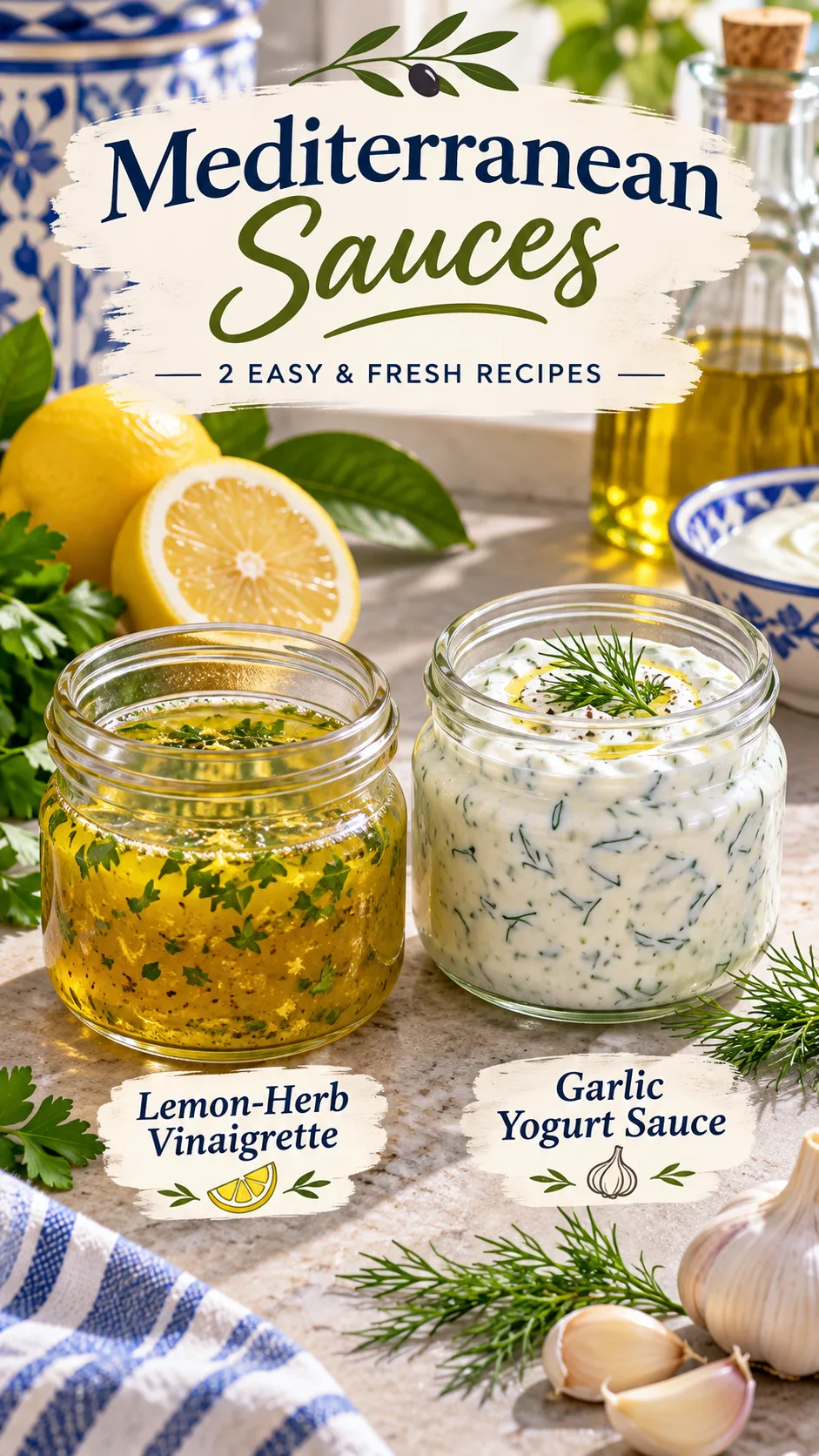
Two sauces that do all the heavy lifting
In my opinion, sauce separates a sad desk lunch from a great one. Plain chicken and rice tastes like punishment. Add a bright dressing and you start looking forward to lunch.
Lemon-herb vinaigrette
- 1/3 cup extra-virgin olive oil
- 3 tablespoons lemon juice
- 1 small minced garlic clove
- 1 teaspoon dried oregano
- Salt and pepper to taste
Shake everything in a jar. It keeps in the fridge for about a week. The oil may solidify slightly, so let the jar sit on the counter for a few minutes before you use it.
Garlicky Greek yogurt sauce
- 1 cup plain Greek yogurt
- 1 grated garlic clove
- Juice of half a lemon
- 2 tablespoons chopped dill or mint
- A drizzle of olive oil and a pinch of salt
Use it as a dip or a sandwich spread, or spoon it over grain bowls. It also cools down spicy dishes.
A sample week of Mediterranean meal prep
Not sure how these pieces fit together? This realistic week uses the Sunday batch above. For a more detailed roadmap, our beginner Mediterranean meal plan lays out full days with shopping lists.
Breakfasts
- Greek yogurt parfait: yogurt, berries, walnuts, and a little honey
- Veggie egg muffins: eggs, spinach, tomatoes, and feta baked in a muffin tin
- Overnight oats: oats, milk, chia, and chopped figs or apples
Short on mornings? Our guide to breakfast bowls meal prep has more grab-and-go ideas.
Lunches
- Chickpea farro bowl: farro, roasted vegetables, chickpeas, and lemon vinaigrette
- Greek chicken salad jars: dressing on the bottom, then chicken, cucumbers, tomatoes, olives, and greens on top
- Tuna and white bean salad: canned tuna, cannellini beans, red onion, parsley, and olive oil
Dinners
- Sheet-pan salmon: salmon with roasted zucchini and baby potatoes
- Lemon chicken thighs: served over bulgur with yogurt sauce
- Lentil tomato stew: a big pot that freezes beautifully
Snacks
- A handful of almonds and an orange
- Hummus with cucumber and carrot sticks
- Olives and a small piece of cheese
Need more options? Browse our list of healthy meal prep snacks for extra ideas.
How to keep everything fresh (and safe)
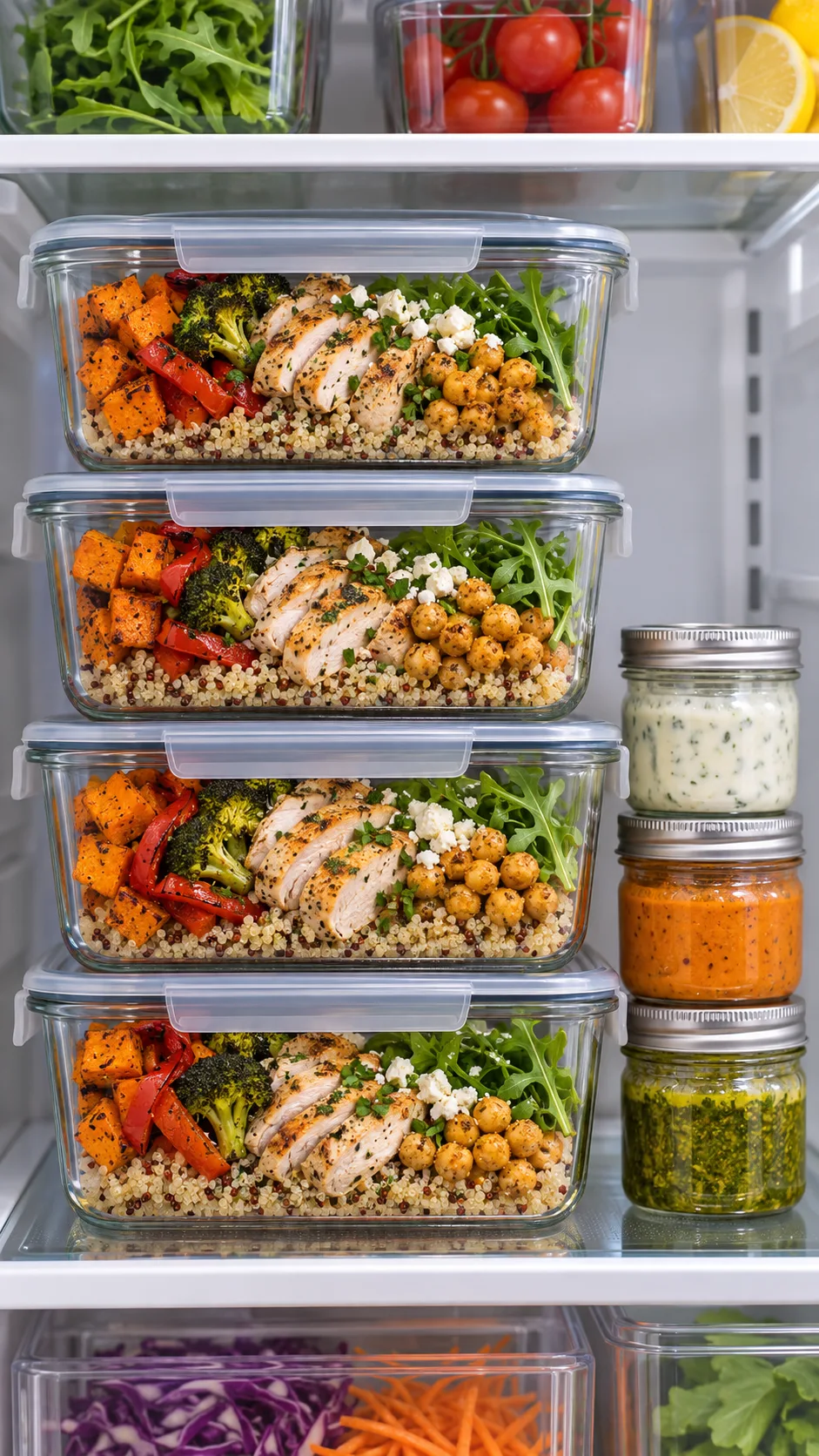
Nothing kills motivation faster than a soggy salad or a questionable container of chicken. Smart storage solves both problems.
The USDA says you should eat refrigerated leftovers within three to four days. I follow that rule strictly. If I won’t eat a meal by Thursday, I freeze it on Sunday.
Storage rules I follow
- Cool food quickly before you seal containers, then refrigerate within two hours.
- Keep dressings separate from greens until you eat.
- Store wet and dry ingredients apart. Cucumbers and tomatoes release water and turn grains mushy.
- Use glass containers when you can. They don’t hold onto garlic smell, and they reheat evenly.
- Freeze soups, stews, and cooked beans in single portions.
Freezing opens up even more flexibility. Our freezer meal prep guide covers the full make-ahead system if you want to go further.
What freezes well (and what doesn’t)
Lentil stew, tomato sauce, cooked chicken, and cooked grains all freeze well. Fresh salads, cucumbers, and yogurt-based sauces do not. In my experience, a frozen cucumber ends badly.
Common meal prep mistakes (I made most of them)
I learned these lessons the hard way, so you don’t have to.
- Prepping too many recipes. Three components beat seven dishes, so keep it simple.
- Skipping the sauce. Dry food gets boring by day two, so always make at least one dressing.
- Overcooking fish. Salmon reheats poorly if you bake it until it’s dry. Pull it slightly early, or cook fish for the first two days only.
- Ignoring your schedule. If you eat out on Friday, don’t prep Friday’s lunch. Plan for real life.
- Forgetting to taste. Season each component, because bland roasted vegetables never improve in the fridge.
Eating Mediterranean on a budget
People assume this diet costs a fortune because of fancy olive oil and fresh fish. That’s a myth. The foundation of the diet is beans, lentils, grains, and seasonal produce, which rank among the cheapest foods in the grocery store.
I keep costs low in a few ways:
- Buy dried beans and lentils in bulk. One bag makes a dozen servings.
- Use canned fish and frozen fillets instead of fresh every week.
- Shop seasonally. Tomatoes in January taste like wet paper anyway.
- Buy one good bottle of olive oil and a cheaper one for high-heat cooking.
- Grow herbs on a windowsill. A $3 basil plant beats a $4 plastic clamshell.
The American Heart Association also says the pattern centers on plants, whole grains, and healthy fats, not expensive specialty products.
Make it work for your lifestyle
Meal prep doesn’t need to look the same for everyone. Adjust it to fit your life.
If you cook for one
Halve the recipes and lean on the freezer. A big pot of lentil stew becomes six lunches, and you wash only one pot.
If you feed a family
Prep components and let everyone build their own bowl. Kids who refuse “mixed” dishes often happily assemble their own plate of chicken, cucumbers, hummus, and pita.
If you’re new to meal prep
Start with just lunches. Once that feels easy, add breakfast, then dinner. Our beginner’s blueprint for weekly meal prep breaks that progression down step by step.
If you want the fundamentals first
Read Mediterranean diet for beginners to learn the basic rules before you start shopping. A little background makes your prep sessions faster.
What about portions and protein?
The Mediterranean diet doesn’t prescribe strict portion sizes, but a simple plate formula helps. Fill about half your plate with vegetables, a quarter with whole grains or starchy vegetables, and a quarter with protein. Add a drizzle of olive oil and a small handful of nuts or olives.
Do you need more protein? Add extra beans, eggs, or fish, and save poultry and dairy for moderate portions. The Mayo Clinic’s Mediterranean diet overview recommends fish and poultry at least twice a week and limits red meat to a few times a month.
If you have a medical condition, take medications, or have specific nutritional needs, talk to your doctor or a registered dietitian first. I’m a home cook sharing what works for me, and my advice does not replace personal medical advice.
Your first week game plan
Ready to start? Keep it small this week:
- Pick two grains, two proteins, and three vegetables.
- Shop on Saturday so Sunday feels easy.
- Block 90 minutes on Sunday and follow the routine above.
- Make both sauces. They carry the whole week.
- Freeze anything you won’t eat by Thursday.
- Note what you loved and what you skipped, then adjust next week.
Want more variety once you find your rhythm? Our roundup of the best meal prep recipes has plenty. Don’t feel pressured, though. Even a week of plain roasted vegetables, rice, and chicken counts as a win.
The bottom line
Mediterranean diet meal prep works because it stays simple and flexible. You cook a few building blocks, make two good sauces, and mix them into meals all week. You skip the tracking, the deprivation, and the 6:45 p.m. panic.
The main points:
- Think in components, not complicated recipes.
- Run the oven and stove at the same time to finish in about 90 minutes.
- Always make a sauce. It turns basic food into real meals.
- Store with care. Eat within three to four days or freeze.
- Start small and build the habit before you chase perfection.
So what’s stopping you? Grab a lemon, a bottle of olive oil, and a sheet pan this weekend. Future you, standing hungry in front of the fridge on Wednesday night, will say thanks.